
Attendance sheet format
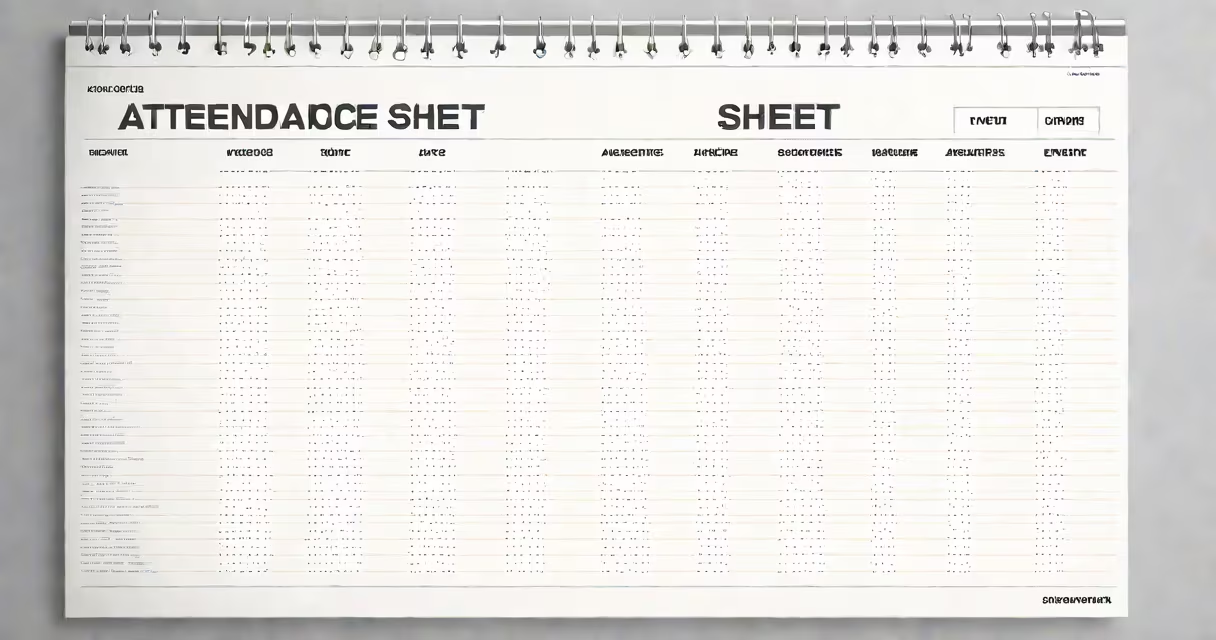
An attendance sheet format is a standardized table layout used to record employee presence, work hours, and absences. It typically includes columns for date, name, start time, end time, and status (present, absent, late, etc.). This structure ensures consistent data collection across shifts, departments, or locations.
Employers use this format to monitor workforce availability, calculate pay, and meet labor regulations. A well-designed sheet reduces errors in time tracking and supports audits. The format may be physical (paper-based) or digital (Excel, Google Sheets, or HR software).
For example, a retail manager uses a weekly attendance sheet format to track 12 part-time staff members across three shifts. Each row lists an employee's name, and each column corresponds to a day of the week. Time-in and time-out fields are filled manually or via biometric scanners. The completed sheet feeds into payroll processing.
How Attendance Sheet Format Works
The format functions as a centralized record of when employees arrive and leave. Each entry maps to a specific shift, date, and role. Data flows from the field (where employees clock in) to the supervisor who verifies entries, then to HR or payroll teams.
Modern systems integrate with time clocks, badge readers, or mobile apps. When an employee logs in via a smartphone app, the system auto-populates the attendance sheet format with timestamped data. This eliminates manual input errors and speeds up reporting.
For instance, a hospital nursing supervisor uses a digital attendance sheet format synced with badge swipes at entrances. The system flags any nurse who arrives more than 15 minutes late. Alerts appear in real time, allowing immediate follow-up.
Common Types and Structures
Attendance sheet formats vary based on frequency, industry, and scale. The most common types are daily, weekly, and monthly layouts. Each serves different operational needs.
| Type | Use Case | Frequency | Example |
|---|---|---|---|
| Daily | Shift workers, contractors, temporary staff | Each workday | Factory floor supervisors tracking 3 shifts per day |
| Weekly | Office staff, project-based roles | Every 7 days | Remote team leads reviewing 40-hour workweeks |
| Monthly | Payroll processing, compliance reporting | Once per month | HR departments submitting records to state labor agencies |
Some formats include additional fields such as overtime hours, leave type (vacation, sick, personal), or supervisor approval. These extensions support deeper analysis and policy enforcement.
A non-obvious distinction: paper-based attendance sheets often lack audit trails. Digital formats automatically log who entered data and when. According to the U.S. Department of Labor, electronic records reduce payroll disputes by up to 40% compared to handwritten logs.
Where and Why It's Used
Businesses across sectors rely on the attendance sheet format for operational control. Retail, healthcare, manufacturing, education, and construction all use it to manage staffing levels and ensure regulatory compliance.
In schools, teachers use a daily attendance sheet format to report student presence. The data informs funding models tied to enrollment. The National Center for Education Statistics reports that 92% of public schools in the U.S. use standardized attendance tracking forms.
Factories use shift-specific formats to enforce safety protocols. For example, a steel mill requires all maintenance staff to sign in before entering high-risk zones. The attendance sheet format acts as a legal record of access, helping meet OSHA requirements.
Common Confusions and Corrections
Many assume the attendance sheet format is interchangeable with a timecard or timesheet. They are related but distinct. A timecard records hours worked; a timesheet includes job codes, pay rates, and deductions. The attendance sheet format focuses solely on presence and absence.
Another misconception: that digital formats eliminate the need for verification. In reality, supervisors must still review entries. A 2022 study by the Society for Human Resource Management found that 68% of HR managers reported errors in automated attendance logs due to incorrect shift assignments or system glitches.
I once managed a warehouse team using a shared Google Sheets attendance sheet format. Despite automation, we caught duplicate entries and missed sign-ins during a holiday rush. Manual spot-checks reduced discrepancies by 73% within two weeks.
Best Practices and Real-World Examples
Effective attendance sheet formats include clear headers, consistent units (e.g., 24-hour clock), and color coding for statuses. Red indicates unapproved absences; green shows on-time arrivals. This visual feedback speeds up review cycles.
For example, a restaurant chain implemented a weekly attendance sheet format with QR codes. Employees scanned a code upon arrival, which updated the sheet in real time. Managers received alerts if more than 30% of staff were late. Over six months, absenteeism dropped by 22%.
When designing a new format, use templates from trusted sources. The U.S. Department of Labor provides free downloadable attendance sheet templates for small businesses. These comply with Fair Labor Standards Act (FLSA) standards and include required fields like meal break durations.
For larger organizations, consider integrating the attendance sheet format with payroll software. Systems like ADP or Gusto pull data directly from the format, reducing double-entry and improving tax filing accuracy.
Understanding the attendance sheet format enables better staffing decisions, accurate pay calculations, and stronger compliance. Whether using paper or digital tools, consistency in layout and data entry is essential.