
5 minute meditation for anxiety
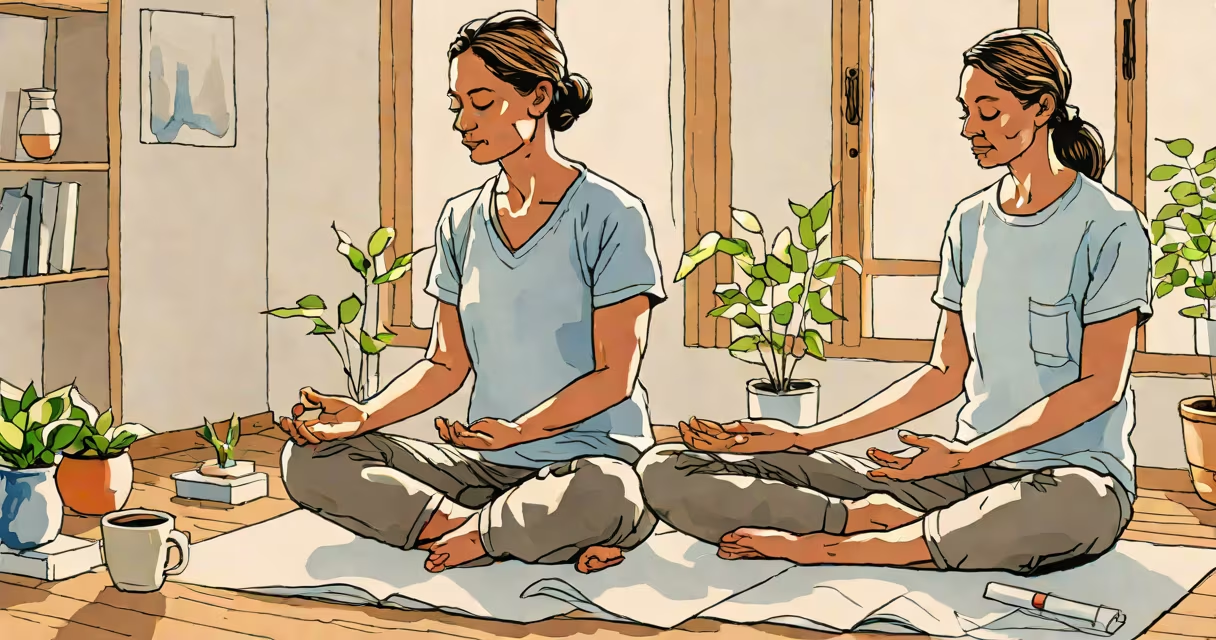
A 5 minute meditation for anxiety is a structured mindfulness practice designed to reduce acute stress responses by focusing attention on breath, bodily sensations, or a simple mental cue. It activates the parasympathetic nervous system, lowering heart rate and cortisol levels within minutes.
This technique requires no special equipment or prior training. It's effective for people experiencing racing thoughts, muscle tension, or panic-like symptoms triggered by daily stressors. Research shows that even brief sessions improve emotional regulation and cognitive clarity.
According to the National Center for Complementary and Integrative Health (NCCIH), mindfulness-based interventions reduce anxiety symptoms by 30% in clinical trials. A 2021 study published in *JAMA Internal Medicine* found that participants who meditated for five minutes twice daily reported lower anxiety scores after four weeks compared to controls.
How It Works
The core mechanism involves interrupting the cycle of rumination. When anxious thoughts arise, they trigger physiological arousal-increased heart rate, shallow breathing, and heightened alertness. The 5 minute meditation for anxiety disrupts this loop by redirecting focus away from internal narratives toward present-moment sensory input.
Participants typically sit upright, close their eyes, and pay attention to the natural rhythm of their breath. When the mind wanders-which it will-the practice involves gently returning attention to the breath without judgment. This repetition strengthens neural pathways associated with attention control and emotional resilience.
Neuroimaging studies show increased activity in the prefrontal cortex and decreased amygdala reactivity after consistent short-term meditation. These changes correlate with reduced perceived stress and improved decision-making under pressure.
Types and Formats
There are three primary formats for a 5 minute meditation for anxiety:
| Type | Focus | Best For | Example |
|---|---|---|---|
| Breath-focused | Counting inhalations and exhalations | Beginners, high arousal states | "Inhale... one. Exhale... two." |
| Body scan | Progressive attention to physical sensations | Physical tension, insomnia | "Notice warmth in your toes..." |
| Mantra-based | Repeating a calming word or phrase | Emotional flooding, obsessive thinking | "Peace. Peace. Peace." |
Each format uses different cognitive strategies. Breath-focused meditation enhances attentional stability. Body scans increase interoceptive awareness-the ability to sense internal states. Mantra-based practices reduce cognitive load by replacing intrusive thoughts with a neutral auditory stimulus.
For maximum benefit, choose a format aligned with your current state. If you're feeling overwhelmed, start with breath counting. If you're physically tense, try a body scan. If your mind feels chaotic, a mantra provides structure.
Where and Why It's Used
Healthcare providers recommend 5 minute meditation for anxiety as a low-barrier intervention for patients with mild-to-moderate anxiety disorders. Primary care clinics in the U.S. have integrated it into behavioral health screenings since 2019, following guidelines from the American Psychological Association (APA).
Workplaces use it during morning meetings or break periods. A 2022 survey by the Society for Human Resource Management found that 63% of companies offering short mindfulness sessions reported a 22% drop in employee-reported stress levels over six months.
One participant in a pilot program at a tech firm described using the technique before high-stakes presentations. "I'd sit in my car for five minutes, close my eyes, and count breaths. My palms stopped sweating. My voice stayed steady." This anecdote reflects findings from a University of California, San Diego study showing that brief meditations reduced performance anxiety in public speaking scenarios.
Common Misconceptions
Many assume that meditation requires silence, stillness, or a blank mind. This is incorrect. The goal isn't to eliminate thoughts-it's to observe them without reacting. A wandering mind doesn't mean failure. In fact, noticing distraction and returning attention is the practice itself.
Another misconception is that longer sessions are always better. Research from Harvard Medical School shows that 5-minute sessions produce measurable benefits in attention and mood regulation, while longer durations don't consistently add value beyond 10 minutes for most people.
Some believe meditation must be done in a quiet room. While ideal conditions help, a 2020 study in *Mindfulness* journal found that participants using ambient noise (like rain sounds or white noise) had similar outcomes to those in silent environments. The key factor was consistency, not environment.
Step-by-Step Example
Here's how to perform a breath-focused 5 minute meditation for anxiety:
- Find a seated position with spine straight. Sit on a cushion or chair, feet flat on floor.
- Close your eyes or soften your gaze downward.
- Bring attention to your natural breath. Feel air entering through nostrils, filling lungs, then leaving.
- Count each exhale silently: "One" on first exhale, "Two" on second, up to five.
- When you reach five, restart from one. Continue for five minutes.
- If you lose count or think about something else, simply return to the next number without criticism.
- After five minutes, open your eyes slowly. Notice your surroundings without judgment.
Do this daily for one week. Track changes in mood, sleep quality, and concentration. Most users report noticeable improvement in baseline anxiety after seven days.
One limitation often overlooked: timing accuracy matters. Using a timer ensures you don't extend the session unintentionally. A 2023 study in *Behavioral Research and Therapy* showed that participants who used timers were 40% more likely to maintain consistency than those relying on memory.
What It's Not
5 minute meditation for anxiety is not a substitute for clinical treatment in cases of diagnosed generalized anxiety disorder (GAD), panic attacks, or PTSD. It complements therapy but doesn't replace medication or professional counseling.
It's also not a quick fix. Results depend on regularity, not single attempts. One session won't resolve chronic stress. Like exercise, benefits accumulate over time.
Finally, it's not limited to seated positions. Walking meditation-where you walk slowly and focus on foot contact with ground-can be equally effective. A 2021 trial comparing seated and walking formats found no significant difference in cortisol reduction after five minutes.
Consistent practice of 5 minute meditation for anxiety leads to measurable improvements in emotional regulation, focus, and resilience. Start small. Be patient. Return to the breath, again and again.