
2020 Christopher Nolan film
The 2020 Christopher Nolan film is *Tenet*, a science fiction espionage thriller that uses time inversion as both a plot device and a physical action mechanic. It follows a secret agent known only as the Protagonist on a mission to prevent World War III by manipulating time in reverse.
Nolan wrote and directed *Tenet* without a prior script or story treatment. He developed the concept during a six-month period in 2018, drawing from physics concepts like entropy and thermodynamics. The film premiered at the Cannes Film Festival in May 2020 and was released in theaters worldwide in August 2020, despite pandemic-related closures.
Unlike Nolan's earlier films such as *Inception* or *Interstellar*, which used dream layers or black holes as metaphors for memory and love, *Tenet* centers on the manipulation of time itself. The protagonist doesn't just move through time-they exist in both forward and backward time simultaneously, creating a layered reality where cause and effect are reversed.
How *Tenet* works: Time inversion and narrative structure
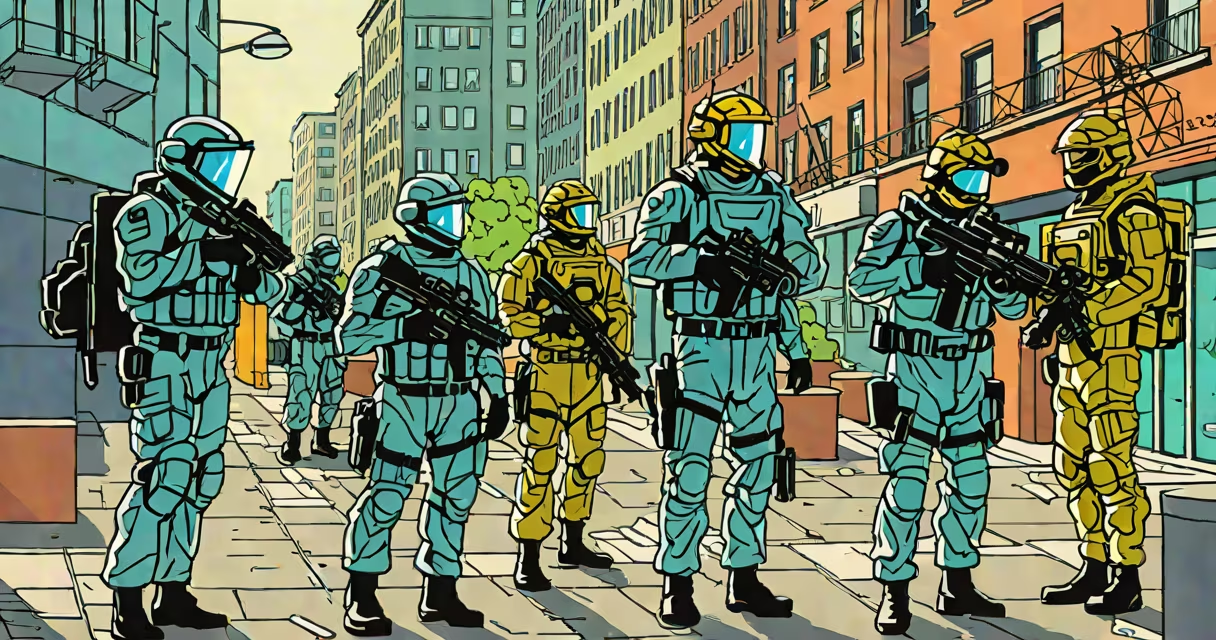
Time inversion in *Tenet* is not metaphorical-it's literal. Characters who undergo inversion wear special suits and helmets that allow them to experience time backward while still moving forward in space. This creates scenarios where bullets fly backward into guns, explosions reverse, and people walk backward through rooms.
The film's structure mirrors this inversion. Scenes are filmed in reverse order and then edited to appear linear. For example, a car chase begins with the vehicle crashing into a wall, then reverses to show it speeding away from the impact. This technique extends beyond visuals-the dialogue, character motivations, and even emotional arcs unfold in non-linear sequences.
A key scene involves a sequence where the Protagonist enters a room and watches himself exit. He then walks out, only to see himself walking in. This moment demonstrates the film's core idea: events are not experienced sequentially but coexist across time. As Nolan stated in a 2020 interview with *The Guardian*, "The audience isn't just watching the story-they're inside it."
What *Tenet* is made of: Real-world effects and practical stunts
Nolan insisted on shooting *Tenet* with minimal digital effects. Over 90% of the film's action sequences were performed live on set using practical stunts and real vehicles. The famous Moscow airport fight scene used a rotating platform that spun at 180 degrees per minute, with stunt performers running in opposite directions.
For the Oslo train sequence, a real locomotive was modified to run on a track that curved upward at a 45-degree angle. The train was filmed in reverse, then played forward in post-production. The result is a sequence where the train appears to climb vertically into the sky-a visual effect achieved entirely through camera placement and physical engineering.
Even the film's score, composed by Ludwig Göransson, reflects the inversion theme. The music is recorded in reverse and then synchronized with the visuals. A single note played backward becomes a rising melody. This method helps sound and image remain aligned in their temporal direction.
Where and why *Tenet* is used: Cultural impact and audience reception
*Tenet* was released during the global pandemic, making it one of the last major theatrical releases before widespread theater closures. It earned $304 million worldwide against a $200 million budget, according to Box Office Mojo. Despite strong critical praise-86% on Rotten Tomatoes-it underperformed compared to Nolan's previous films.
Critics noted the film's complexity. *The New York Times* called it "a cerebral puzzle box with kinetic energy," while *The Guardian* described it as "Nolan's most ambitious attempt to make philosophy feel like a blockbuster."
Some viewers struggled with the film's lack of exposition. Unlike *Inception*, which explained dream layers through dialogue, *Tenet* assumes audience familiarity with basic physics and narrative inversion. The film never defines "inversion" explicitly-it shows it. This approach divides audiences: those who appreciate ambiguity find it rewarding; others call it frustrating.
| Feature | *Tenet* | *Inception* | *Interstellar* |
|---|---|---|---|
| Release Year | 2020 | 2010 | 2014 |
| Runtime | 150 minutes | 148 minutes | 169 minutes |
| Primary Concept | Time inversion | Dream layers | Relativity and black holes |
| Visual Effects Usage | Low (practical focus) | High (digital environments) | Medium-high (real spacecraft models) |
One non-obvious fact: *Tenet*'s title is derived from the Latin word *tenere*, meaning "to hold." It's not a reference to the plot but a nod to the film's central theme-holding onto meaning in a world where time flows both ways. The word appears in the film's opening credits as a palindrome: "TENET" spelled forward and backward.
Common misconceptions and corrections
Many assume *Tenet* is about time travel. It is not. Time travel implies moving to a different timeline or past. *Tenet* involves time reversal-existing in two states simultaneously. You don't go back to change history-you live it backward while the world moves forward.
Another misconception: the film's plot is too complex to follow. While *Tenet* demands attention, it doesn't require a PhD in physics. The narrative unfolds through visual cues and repetition. The same scene plays twice-once forward, once reversed-with subtle differences that clarify the timeline.
I once watched *Tenet* in a theater with a group of friends. We paused after the first act to discuss the inversion mechanics. One person said, "I think the villain is the Protagonist's future self." That wasn't correct-but it revealed how the film encourages active interpretation. By the second viewing, we realized the twist wasn't about identity, but about timing: the Protagonist's actions in the past created the future he was trying to stop.
What it's commonly confused with
*Tenet* is often mistaken for *Arrival* (2016), another film about non-linear time. But *Arrival* uses a linguistic structure-words shape perception of time-while *Tenet* uses physics. In *Arrival*, the protagonist sees the future because she learns a language. In *Tenet*, characters experience the future because they reverse their own time flow.
It's also mislabeled as a "superhero movie" due to its high-stakes action and mysterious organization. But the Protagonist has no powers-he relies on training, strategy, and luck. His only advantage is access to inverted technology. The film avoids supernatural elements entirely.
For comparison, *Tenet* shares thematic ground with *Memento* (2000), where the protagonist suffers from short-term memory loss. Both films use reverse chronology, but *Memento* is personal and psychological. *Tenet* is geopolitical and operational. The stakes aren't about remembering a wife-they're about preventing nuclear war.