
Where to Vote Early
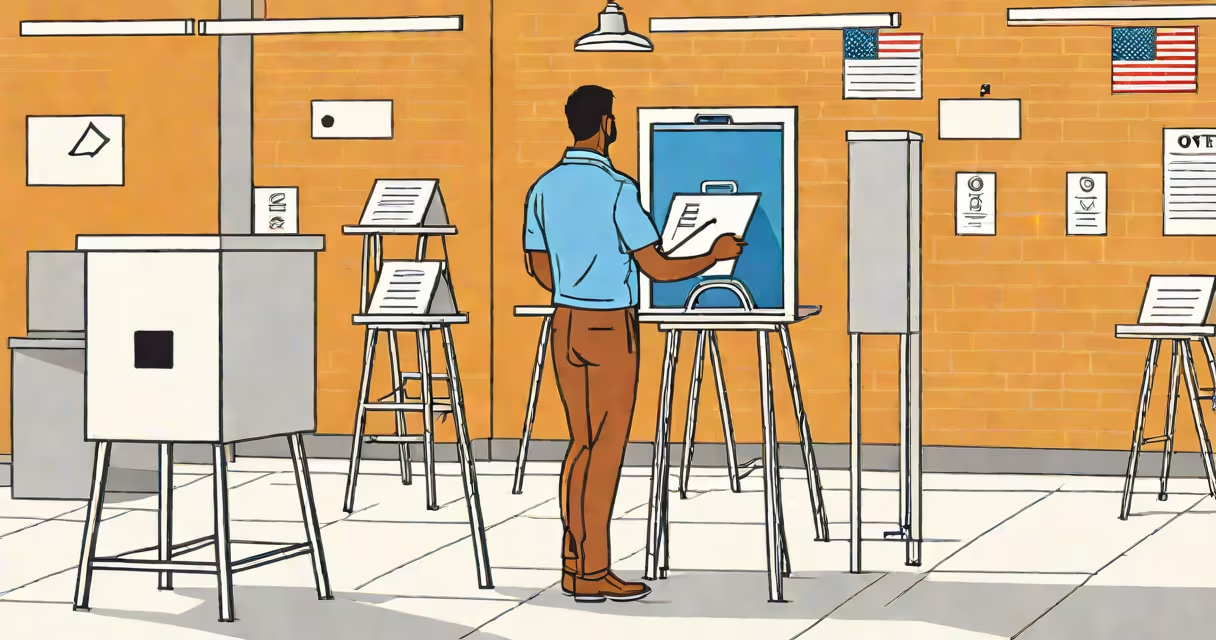
Early voting allows eligible voters to cast ballots in person before Election Day at designated locations, often including county clerk offices, libraries, and community centers. This option is available in most U.S. states, though dates, hours, and eligibility rules differ by jurisdiction.
Early voting is not the same as mail-in or absentee voting. While both allow voting before Election Day, early voting requires physical presence at a polling site. The process typically involves checking in with an ID, receiving a ballot, marking it in private, and submitting it directly into a ballot box or scanner.
For example, in 2022, Texas saw over 4.6 million early votes-about 55% of all ballots cast-according to the Texas Secretary of State's office. That number reflects growing reliance on early voting as a way to avoid long lines on Election Day.
How Early Voting Works
Voters must register in advance in most states. Registration deadlines vary: in California, you can register up to 15 days before Election Day; in New York, registration closes 10 days prior. Once registered, voters receive a notice confirming their polling location, which may include early voting sites.
At an early voting site, staff verify voter registration, confirm identity with a government-issued photo ID (required in 35 states), and issue a ballot. Voters mark their choices in private, then submit the ballot either manually into a secure container or through a ballot scanner. The system records the vote and stores the ballot securely until tabulation.
After casting an early ballot, voters receive a confirmation receipt. In some states, such as Colorado, ballots are scanned immediately and stored digitally. In others, like Florida, ballots are kept physically until election night results are finalized.
Types of Early Voting Locations
Early voting sites fall into three categories based on accessibility and staffing:
| Type | Location Examples | Hours & Accessibility | State Coverage |
|---|---|---|---|
| County Clerk Offices | Los Angeles County Registrar-Recorder/County Clerk | Weekdays 8 a.m.-6 p.m., weekends by appointment | Available in 42 states |
| Public Libraries | Chicago Public Library branches (e.g., Lincoln Park) | Weekdays 9 a.m.-8 p.m., Saturdays 10 a.m.-5 p.m. | Used in 28 states |
| Community Centers | Denver's City Hall Annex and local recreation centers | Extended hours during peak weeks (7 a.m.-10 p.m.) | Common in urban areas across 31 states |
Some states offer mobile early voting units. For example, Oregon deploys vans to rural towns with low turnout, ensuring access for residents who lack nearby facilities. These units operate from 10 days before Election Day through the Friday before.
Nonprofits and faith-based groups sometimes host early voting sites under state authorization. In Georgia, churches have hosted early voting since 2018, but only after meeting strict security and recordkeeping standards set by the Secretary of State.
Where and Why It's Used
Early voting is used to reduce congestion on Election Day, improve voter turnout among working adults, and accommodate people with disabilities or caregiving responsibilities. A 2020 study by the Brennan Center for Justice found that early voting increased turnout by 3.5 percentage points in states with extended early voting windows.
States with high early voting usage include Nevada, where 62% of ballots were cast early in 2020, and Arizona, where early voting accounted for 71% of total votes in 2022. These numbers reflect strategic efforts to expand access, especially in diverse and populous regions.
However, early voting is not uniformly available. As of 2023, 15 states do not offer in-person early voting. These include Alabama, Mississippi, and South Carolina, which rely solely on absentee-by-mail systems. In those states, voters must request a ballot by mail and return it by post or drop-off.
Common Misconceptions and Corrections
Many voters assume early voting is only for people who can't make it on Election Day. But data shows otherwise. In 2020, 40% of early voters reported they chose early voting because it was more convenient, not due to scheduling conflicts.
Another misconception is that early votes are counted immediately. They are not. Ballots are stored securely and tabulated only after Election Day. Some states, like Pennsylvania, require all early ballots to be processed in a single batch on Election Night, even if submitted weeks earlier.
A lesser-known fact: early voting sites are subject to federal election laws. The Help America Vote Act (HAVA) mandates that all early voting locations meet accessibility standards, including wheelchair ramps, audio ballots, and tactile voting devices. Failure to comply can result in federal funding penalties.
I once observed a voter in Milwaukee during the 2020 primary who arrived at an early voting site at 7 a.m. to avoid crowds. She had a disability and needed assistance. The site had a trained poll worker who guided her through the process using a touchscreen ballot with audio instructions. Her vote was recorded and confirmed within 12 minutes.
How to Find Your Early Voting Location
Use your state's official election website to search for early voting locations. Enter your address or ZIP code to see a list of sites with operating hours and required IDs. Most states provide maps and filters for accessibility features.
If you're unsure whether your state offers early voting, consult the National Conference of State Legislatures (NCSL) database. As of 2023, 46 states plus Washington, D.C., offer some form of early in-person voting. The remaining four-Alabama, Mississippi, South Carolina, and Tennessee-do not.
Always confirm your early voting location well in advance. Some sites close early or switch hours during holidays. Submitting your ballot at least two days before Election Day ensures it counts.
Understanding where to vote early begins with knowing your state's rules. Use official sources to locate your nearest site, verify your registration, and plan your trip. Early voting is a proven method to increase civic participation and ensure every vote is counted.