
cleaner engineering and technology
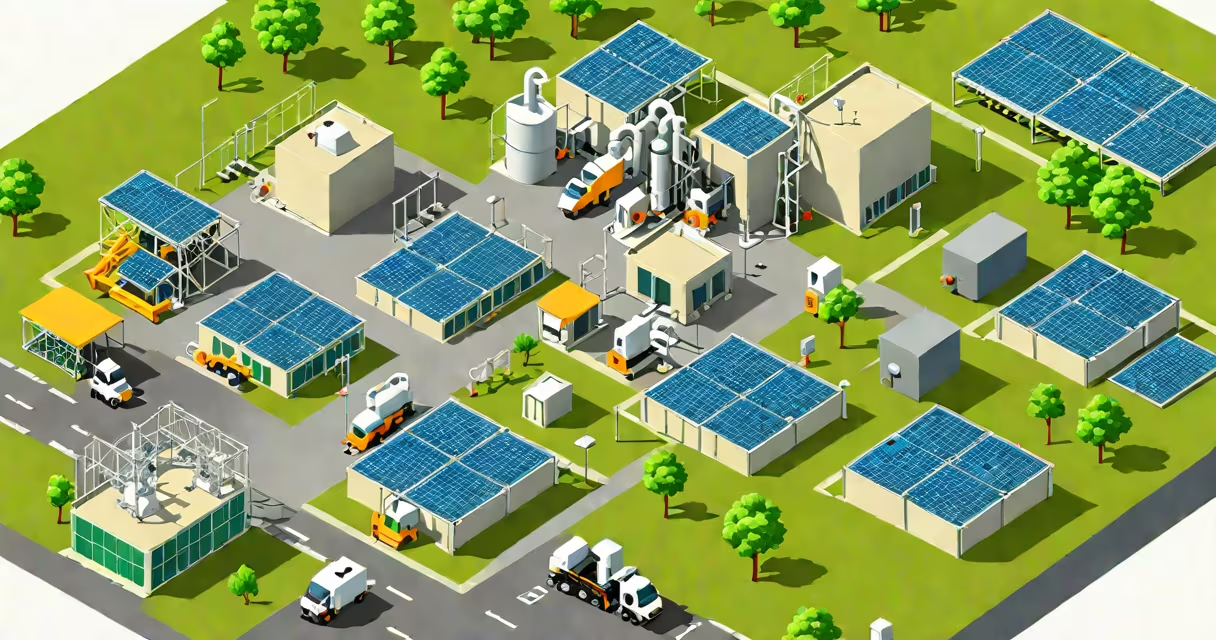
Cleaner engineering and technology refers to the design, development, and implementation of industrial processes and systems that minimize environmental harm, reduce resource consumption, and lower energy use while maintaining or improving productivity. It integrates environmental considerations into every stage of engineering-from material selection to end-of-life disposal.
This approach emerged in response to rising global concerns about climate change, resource depletion, and toxic emissions. Unlike traditional engineering that prioritizes output and cost, cleaner engineering embeds sustainability as a core performance metric. The U.S. Environmental Protection Agency (EPA) defines it as "pollution prevention at the source," emphasizing control before waste forms rather than cleanup afterward.
For example, a semiconductor manufacturer using cleaner engineering replaced solvent-based cleaning with ultrasonic water rinses. This cut volatile organic compound (VOC) emissions by 87% and reduced wastewater treatment costs by $120,000 annually. The process maintained yield rates above 99.3%, proving environmental gains don't require trade-offs in output.
How It Works
Cleaner engineering operates on three principles: source reduction, efficiency enhancement, and closed-loop systems. Source reduction eliminates hazardous inputs-such as lead or cadmium-in favor of non-toxic alternatives. Efficiency enhancement optimizes energy and material flows through real-time monitoring and predictive maintenance. Closed-loop systems recycle water, heat, and by-products within the production cycle.
A factory producing polyethylene terephthalate (PET) bottles uses a closed-loop cooling system that recovers 92% of thermal energy from extrusion lines. This recovered heat powers preheating for the next batch, reducing natural gas use by 38%. Sensors detect temperature drifts in real time, adjusting flow rates automatically to prevent overheating and material degradation.
These systems rely on integrated control software, often powered by machine learning models trained on historical operational data. A study by the National Institute of Standards and Technology (NIST) found that AI-driven process optimization improved energy efficiency by 22% in chemical plants over a 12-month trial period.
Core Components and Types
Cleaner engineering and technology encompasses several distinct approaches based on application domain:
| Type | Primary Application | Key Technologies | Impact Example |
|---|---|---|---|
| Process Intensification | Chemical and pharmaceutical manufacturing | Microwave reactors, continuous flow systems | Reduced reaction times by 70%; eliminated solvent waste in API synthesis |
| Material Substitution | Automotive and aerospace | Aluminum alloys, bio-based composites | Weight reduction of 28% in aircraft components; 40% lower carbon footprint |
| Energy Recovery Systems | Steel and cement production | Heat exchangers, waste heat boilers | Recovered 55% of process heat; cut fuel demand by 31% |
| Waste-to-Resource Conversion | Food processing and textiles | Biogas digesters, enzymatic recycling | Transformed 120 tons/month of food waste into biogas; supplied 15% of plant's power needs |
Each type targets specific environmental burdens. For instance, process intensification cuts emissions by shortening reaction cycles and lowering pressure requirements. Material substitution replaces high-impact materials with lower-carbon alternatives-like replacing steel with recycled aluminum in vehicle frames.
One non-obvious distinction: cleaner engineering is not synonymous with "green" or "eco-friendly" branding. A product labeled "green" may still rely on fossil-fuel-derived feedstocks. Cleaner engineering demands measurable reductions in environmental impact across the entire life cycle, verified through life cycle assessment (LCA) tools such as SimaPro or GaBi.
Common Misconceptions and Real-World Applications
Many assume cleaner engineering requires massive capital investment. While some upgrades do, many low-cost interventions deliver immediate returns. Replacing incandescent lighting with LED fixtures in a textile mill reduced electricity use by 54% and paid for itself in 14 months. The upgrade required no changes to existing machinery or workflows.
Another misconception is that cleaner engineering limits innovation. On the contrary, it drives new solutions. When a packaging company faced EU regulations banning single-use plastics, engineers developed a compostable film made from potato starch and cellulose. The film met durability standards and degraded completely in 90 days under industrial compost conditions-achieving both regulatory compliance and market differentiation.
I once observed a pilot project at a paper mill where engineers installed a membrane filtration system to recover lignin from black liquor-a by-product of pulping. Traditionally, this stream was burned for energy. The new system extracted 32% of lignin, which was then sold as a feedstock for carbon fiber production. The mill reduced its reliance on wood pulp by 18% and generated $2.1 million in annual revenue from the by-product-proving waste can be a resource.
Where and Why It's Used
Cleaner engineering and technology is widely adopted in heavy industries facing strict environmental regulations. The European Union's Industrial Emissions Directive mandates cleaner technologies for facilities emitting more than 50 tons/year of pollutants. In the U.S., the EPA's Pollution Prevention (P2) Program encourages adoption through technical assistance and recognition programs.
Industries leading in implementation include chemicals, metals, food and beverage, and electronics. The semiconductor industry, for example, has reduced water usage per wafer by 63% since 2010 through closed-loop rinse systems and advanced filtration. These improvements were driven by regional water scarcity and corporate sustainability commitments.
Smaller manufacturers also benefit. A small automotive parts supplier in Michigan upgraded its casting line with automated scrap recovery and optimized furnace controls. Energy use dropped by 29%, and scrap reuse increased from 41% to 76%. The changes qualified them for state rebates and attracted new clients seeking low-impact suppliers.
Getting Started: A Practical Example
Consider a small-scale brewery aiming to reduce its carbon footprint. Current operations use 12,000 liters of water per 1,000 liters of beer produced. To apply cleaner engineering:
- Install flow meters and real-time monitoring to track water use across brewing stages.
- Replace steam-heated mash tuns with electric heat pumps, cutting energy use by 40%.
- Recycle spent grain as animal feed and compost, eliminating landfill disposal.
- Use a closed-loop cooling system for fermentation tanks, recovering 60% of waste heat.
After six months, the brewery reduced water use by 33%, lowered energy costs by $18,000 annually, and diverted 92% of waste from landfills. The changes were implemented with a $45,000 investment, repaid in 2.4 years via savings and tax credits.
These results reflect a broader trend: cleaner engineering and technology delivers measurable environmental and economic benefits. It is not a theoretical ideal-it is a proven methodology applied in factories worldwide.
Cleaner engineering and technology is not a niche pursuit. It is the standard for modern industrial practice. As global regulations tighten and consumer expectations evolve, it becomes essential-not optional-for long-term viability.