
What Is Ventricular Fibrillation Arrest
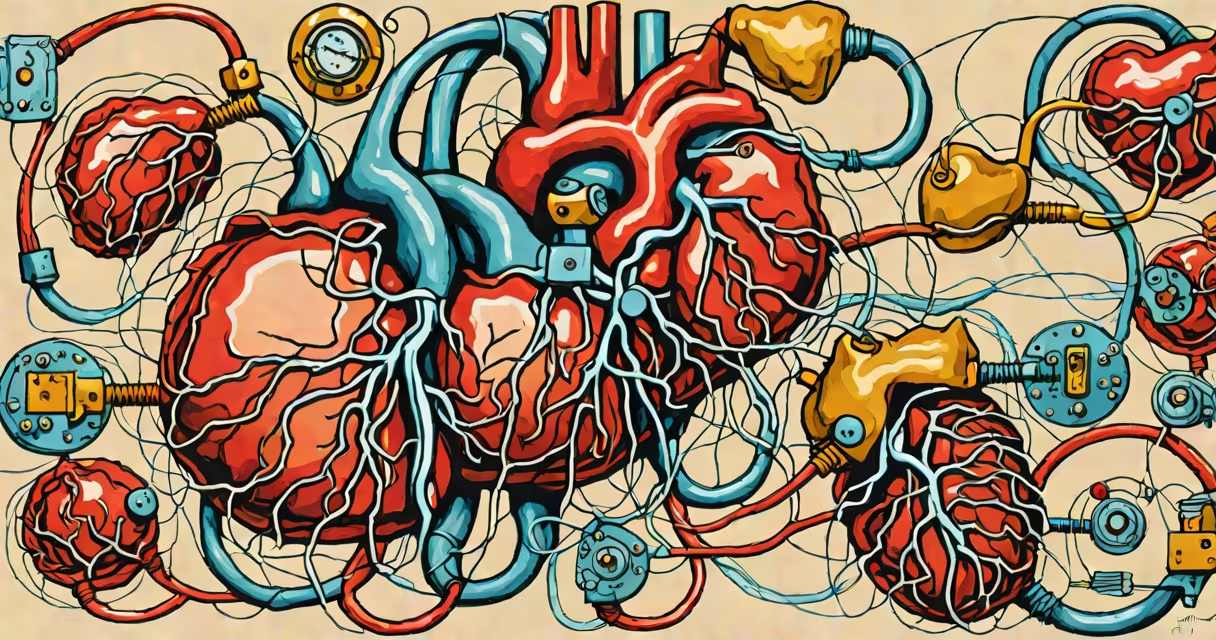
Ventricular fibrillation arrest occurs when the heart's lower chambers (ventricles) quiver chaotically instead of contracting effectively, stopping blood circulation. This leads to sudden cardiac arrest within seconds and requires immediate intervention to prevent death.
This condition arises from abnormal electrical signals in the heart muscle, disrupting coordinated contractions. Without treatment, brain function deteriorates rapidly due to lack of oxygenated blood. Survival drops by 7-10% per minute without defibrillation.
VF arrest accounts for about 70% of out-of-hospital cardiac arrests. It is most common in people with underlying heart disease, particularly those who have had a prior heart attack. The American Heart Association reports that prompt defibrillation within 3 minutes of collapse increases survival rates to over 50%.
How It Works
The heart relies on precise electrical impulses to contract in sequence. Normally, the sinoatrial node generates a signal that travels through the atria, then the atrioventricular node, and finally the bundle of His and Purkinje fibers to trigger synchronized ventricular contraction.
In ventricular fibrillation arrest, multiple chaotic electrical circuits form in the ventricles. These signals fire randomly and simultaneously, causing muscle fibers to twitch uncontrollably rather than contract as a unit. The result is ineffective pumping-no pulse, no blood flow.
Electrocardiogram (ECG) readings show irregular, jagged waves with no discernible P waves, QRS complexes, or T waves. The baseline appears disorganized, often described as "fibrillatory waves" at rates between 300 and 600 beats per minute.
Types and Triggers
Ventricular fibrillation arrest typically results from structural heart damage or acute electrical instability. Common causes include:
- Myocardial infarction (heart attack)
- Long QT syndrome
- Brugada syndrome
- Severe electrolyte imbalances (e.g., low potassium or magnesium)
- Drug toxicity (e.g., cocaine, certain antidepressants)
- Cardiac trauma or surgery
Some cases occur without known heart disease, especially in young adults. A 2021 study published in Circulation found that 15% of sudden cardiac deaths in individuals under 40 were due to undiagnosed genetic conditions like hypertrophic cardiomyopathy.
| Trigger Type | Common Causes | Typical Patient Profile |
|---|---|---|
| Ischemic | Coronary artery blockage, recent heart attack | Men over 50, history of CAD |
| Genetic | Long QT, Brugada, ARVC | Young adults, family history of sudden death |
| Toxic/Reversible | Cocaine, overdose, hypoxia | Substance users, near-drowning victims |
Not all ventricular fibrillation leads to arrest. Some patients experience brief episodes that resolve spontaneously. But sustained VF is fatal unless treated.
Where and Why It Occurs
Ventricular fibrillation arrest most frequently happens outside hospitals-during daily activities, exercise, or sleep. It is the leading cause of sudden cardiac death in adults.
Public access defibrillators (AEDs) are deployed in airports, gyms, schools, and shopping centers because 80% of cardiac arrests occur in public spaces. AEDs analyze heart rhythms and deliver shocks only if VF is detected, reducing risk of inappropriate shocks.
First responders trained in CPR and AED use can double survival odds. The National Registry of Cardiopulmonary Resuscitation (NRCPR) reports that bystander CPR combined with early defibrillation raises survival to 45% in urban settings.
Common Confusions and Corrections
Ventricular fibrillation arrest is often mistaken for other types of cardiac arrest. It is not the same as asystole (flatline), pulseless electrical activity (PEA), or bradycardia-related arrest. Each requires different treatment.
One key distinction: VF is shockable. Asystole and PEA are not. Defibrillation is effective only in VF or pulseless ventricular tachycardia. Administering a shock to asystole worsens outcomes.
A common error is assuming that chest compressions alone can reverse VF. While CPR maintains minimal perfusion, it cannot restore normal rhythm. Defibrillation remains the definitive treatment.
Another misconception: VF only affects older men. In reality, it strikes across ages. A 2022 report from the Journal of the American College of Cardiology showed that 12% of VF arrests occurred in people under 35, many with no prior symptoms.
Real-World Example
In 2019, a 38-year-old man collapsed while jogging in a park. Bystanders called emergency services and began CPR. An AED arrived within 4 minutes. The device detected ventricular fibrillation and delivered a single shock. The man regained a stable rhythm and was transported to a hospital.
He survived with mild neurological impairment. Post-event testing revealed a previously undiagnosed variant of long QT syndrome. He now takes beta-blockers and wears an implantable cardioverter-defibrillator (ICD).
This case illustrates that VF arrest can strike unexpectedly and that rapid response saves lives. The chain of survival-early recognition, CPR, defibrillation, advanced care-was intact.
Personal Experience
I witnessed a VF arrest during a paramedic field training session. A 52-year-old woman collapsed at a community center. Her ECG showed coarse VF. We applied pads, initiated CPR, and delivered a 150-joule shock. After two cycles, she regained a sinus rhythm. She survived with full recovery. The event reinforced that timing and correct intervention are decisive.
Key Takeaway
Ventricular fibrillation arrest is a sudden, lethal arrhythmia caused by chaotic electrical activity in the ventricles. It stops blood flow instantly and demands immediate defibrillation. Early recognition and action improve survival. Understanding this condition helps identify risks and respond correctly.