
What Is a Business Vertical
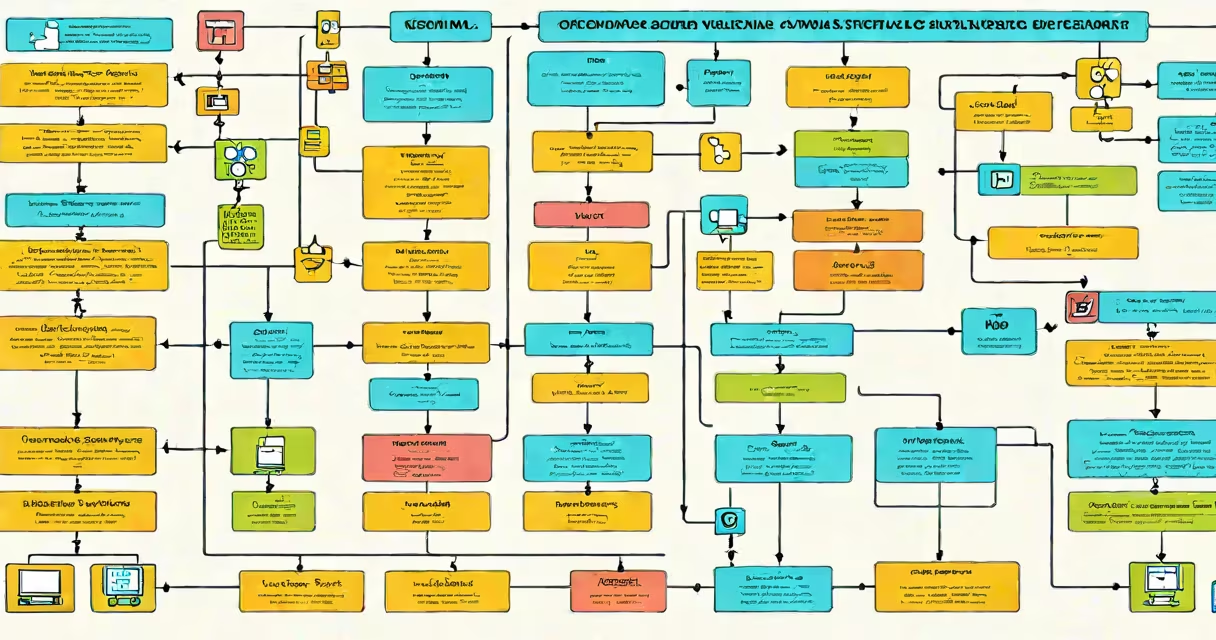
A business vertical is a specialized segment within a company that focuses on a particular industry, customer base, or product category, operating with distinct strategies, resources, and performance metrics. It enables large organizations to manage diverse markets efficiently while maintaining clear accountability.
Business verticals allow companies to tailor offerings, marketing, and sales approaches to unique market demands. For example, a tech firm may run separate verticals for healthcare IT, financial services software, and consumer electronics. Each operates independently but under the same parent brand.
According to the Harvard Business Review, structuring around verticals improves responsiveness and innovation by aligning teams with specific customer pain points. This model supports scalability-new products or services can launch within an existing vertical without disrupting others.
How Business Verticals Work
Each business vertical functions as a semi-autonomous unit with its own leadership, budget, goals, and key performance indicators. Teams within a vertical share expertise, develop targeted solutions, and track results against vertical-specific KPIs such as customer acquisition cost, retention rate, or average deal size.
For instance, a multinational bank might have verticals for small business lending, wealth management, and digital payments. The small business team focuses on loan approval speed and local merchant relationships. The wealth management team prioritizes asset growth and client satisfaction scores. These units report to the same executive board but operate with different priorities and staffing models.
Verticals often emerge when a company expands beyond its original market. A software provider that began with CRM tools might create a new vertical for AI-driven customer service automation after identifying demand in retail and hospitality sectors.
Types of Business Verticals
Verticals vary based on the organizing principle-industry, customer type, geography, or product function. The most common types are:
| Type | Description | Example |
|---|---|---|
| Industry-focused | Centered on a specific sector like healthcare, education, or manufacturing. | Microsoft's Healthcare Cloud division. |
| Customer-based | Grouped by customer profile-SMBs, enterprises, or consumers. | Adobe's Creative Cloud for individual users vs. enterprise licensing. |
| Geographic | Region-specific operations due to regulatory, cultural, or logistical factors. | Amazon's North America, Europe, and Asia-Pacific sales teams. |
| Product/service line | Dedicated to a core offering or technology stack. | T-Mobile's Magenta Mobile and T-Mobile Business lines. |
Some companies use hybrid models. Salesforce, for example, organizes around both industry verticals (like Financial Services and Public Sector) and customer size (Small Business, Mid-Market, Enterprise).
Where and Why They're Used
Large corporations adopt business verticals to scale efficiently across complex markets. Without them, decision-making slows, innovation stalls, and teams lose focus. The McKinsey Global Institute notes that companies using structured verticals grow 2.3 times faster in emerging markets than those with flat organizational designs.
Startups also benefit from vertical thinking-even if they don't formally organize into verticals. A SaaS startup targeting fitness studios, event planners, and daycare centers might build separate onboarding flows, pricing tiers, and support channels for each group. This is informal verticalization.
When a company enters a new market, launching a dedicated vertical reduces risk. Instead of overhauling the entire organization, leaders can test assumptions, gather feedback, and adjust quickly. This approach helped T-Mobile expand its business services by isolating B2B operations from its consumer mobile business.
Common Confusions and Corrections
Many people mistake a business vertical for a department or a product line. A department is typically a functional unit-HR, Finance, Marketing-focused on internal processes. A product line is a set of related goods or services sold together. A vertical, however, is defined by market focus and customer outcomes.
Another misconception is that verticals require separate legal entities. That's not true. Most business verticals exist as internal divisions within a single corporation. For example, Apple's Education vertical operates under Apple Inc., not a subsidiary. It uses shared infrastructure but has its own sales targets and marketing campaigns.
A key distinction: verticals are not the same as business units in a conglomerate. A conglomerate owns unrelated businesses-like GE owning aircraft engines, medical imaging, and power plants. Each is a standalone company. A business vertical is part of a unified company with shared strategy and brand.
One non-obvious fact: successful verticals often develop proprietary tools tailored to their niche. During my time working with a fintech startup, we built a custom credit scoring engine for small retailers. It used local transaction history and supplier payment patterns-data ignored by standard credit bureaus. This tool became the foundation of our Retail Finance vertical and increased approval rates by 41%.
Real-World Example: T-Mobile's Business Verticals
T-Mobile's consumer mobile business operates separately from its business services arm. The latter includes solutions like secure Wi-Fi, device management, and dedicated customer support for companies with 50+ employees.
Within the business vertical, T-Mobile offers bundled plans for fleets, remote workers, and multi-location stores. These plans include priority network access, SIM provisioning, and integration with enterprise identity systems. The team reports directly to the Chief Commercial Officer and tracks success via customer churn and average revenue per account.
This separation allows T-Mobile to respond to enterprise needs without diluting its consumer brand. When a hospital system needed emergency connectivity during a storm, the business vertical deployed temporary hotspots in under four hours-something the consumer team couldn't replicate at scale.
Conclusion
A business vertical is a strategic structure that divides a company's operations into focused segments aligned with specific markets or customer groups. It enables precision, accountability, and faster innovation. Major players like Microsoft, Salesforce, and T-Mobile rely on this structure to grow sustainably across diverse industries. Understanding this concept clarifies how large organizations maintain agility despite complexity.