
Discogenic Neck Pain
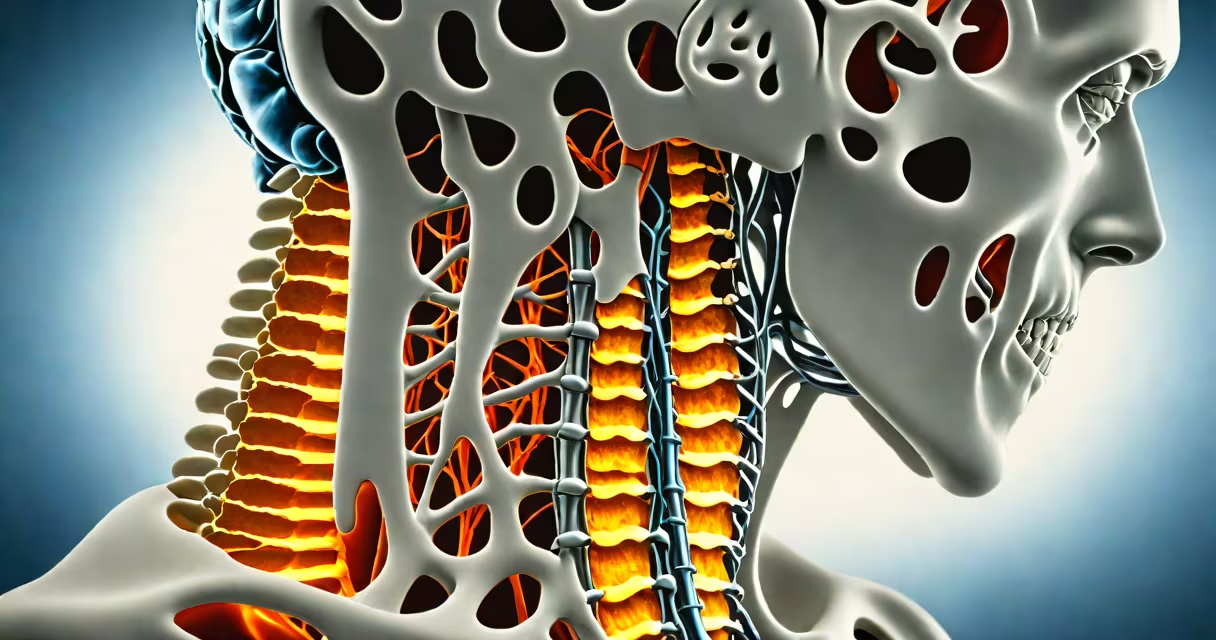
Discogenic neck pain arises from structural changes within the intervertebral discs of the cervical spine, typically due to degeneration, dehydration, or tears in the annulus fibrosus. This condition causes localized pain in the neck, often worsened by movement or prolonged posture, and may radiate to the shoulders or upper back. It is distinct from radicular pain caused by nerve root compression.
Discogenic neck pain results from the breakdown of the fibrocartilaginous discs between cervical vertebrae. These discs act as shock absorbers and allow controlled motion. As they lose water content with age, their ability to cushion and distribute load diminishes. Microtears in the outer layer (annulus fibrosus) can trigger inflammation and pain signals through nociceptors embedded in the disc's outer third. The inner gel-like nucleus pulposus may bulge or herniate, though pain is primarily generated by the disc's own inflammatory response rather than direct nerve contact.
According to the American Academy of Orthopaedic Surgeons (AAOS), discogenic pain accounts for approximately 40% of chronic neck pain cases in adults aged 30-60. The National Institute of Neurological Disorders and Stroke (NINDS) notes that while most disc degeneration is asymptomatic, symptomatic disc disease occurs when structural failure leads to mechanical instability or local inflammation.
How It Works: The Mechanism Behind the Pain
Pain from discogenic sources originates in the outer third of the intervertebral disc, which contains sensory nerves. When the disc dehydrates or develops fissures, inflammatory mediators such as interleukin-1β and tumor necrosis factor-alpha are released. These substances sensitize nearby nerve endings, leading to persistent dull or aching neck discomfort. Unlike radicular pain, which follows dermatomal patterns and may include numbness or weakness, discogenic pain remains localized and lacks neurological deficits.
Repetitive loading-such as sustained forward head posture during screen use-accelerates disc wear. A 2021 study published in *Spine Journal* found that individuals who spend more than 6 hours daily in seated, flexed neck positions had a 2.7-fold higher risk of developing discogenic symptoms compared to those with neutral posture habits.
Imaging confirms discogenic pain through MRI findings: decreased disc height, high-intensity zones (HIZ) indicating annular tears, and Modic changes (bone marrow edema adjacent to the disc). However, imaging alone cannot confirm causation-symptom correlation is essential. A patient may have disc degeneration on MRI but no pain, or vice versa.
Types and Common Misconceptions
Discogenic neck pain is not a single entity but a category of cervical spine disorders with overlapping features. The primary subtypes include:
| Type | Key Features | Diagnostic Clue |
|---|---|---|
| Acute discogenic | Sudden onset after trauma or strain; lasts weeks | Positive discography with pain reproduction |
| Chronic discogenic | Persistent pain lasting >3 months; fluctuating intensity | Disc space narrowing on X-ray; HIZ on MRI |
| Referred discogenic | Pain mimicking shoulder or headache; no clear injury | Relief with diagnostic disc blocks |
A common error is confusing discogenic pain with myofascial neck pain. Myofascial pain typically presents as tightness or tenderness in muscles like the levator scapulae or trapezius, often triggered by stress or poor ergonomics. Discogenic pain, by contrast, is deeper, more constant, and worsens with bending or twisting. Patients may report "deep ache" behind the sternocleidomastoid muscle, not superficial soreness.
Another misconception is equating disc degeneration on imaging with clinical disease. Up to 60% of asymptomatic adults over 40 show disc degeneration on MRI, per a 2019 study in *The Lancet Neurology*. Radiographic findings do not predict symptom severity. Pain must correlate with physical examination and functional limitation.
Where and Why It Occurs
Discogenic neck pain most frequently affects C5-C6 and C6-C7 levels-the most mobile segments of the cervical spine. These discs endure the highest mechanical loads during daily activities like lifting, turning the head, or driving. Repetitive microtrauma over decades contributes to cumulative damage.
Occupational risk factors include jobs requiring frequent overhead work, prolonged computer use, or vibration exposure (e.g., truck drivers). A 2020 occupational health study found that office workers using non-ergonomic setups reported twice the incidence of discogenic symptoms compared to those with adjustable chairs and monitor stands.
Genetic predisposition plays a role. Variants in genes related to collagen synthesis (like COL9A2) are linked to earlier-onset disc degeneration. However, lifestyle remains the dominant modifiable factor. Smoking reduces disc nutrition by impairing blood flow to the avascular disc tissue, accelerating degeneration.
Real-World Example: A Case Study
Consider a 47-year-old administrative assistant with six months of worsening neck pain. She reports stiffness in the morning, pain with prolonged typing, and relief when lying flat. Physical exam shows no neurological deficits. MRI reveals moderate disc desiccation at C5-C6 with a high-intensity zone (HIZ) in the posterior annulus. Discography confirmed pain reproduction at C5-C6 but not at other levels. Diagnosis: chronic discogenic neck pain.
Treatment began with physical therapy focusing on cervical stabilization exercises, ergonomic adjustments to her workstation, and NSAIDs for inflammation. After eight weeks, pain reduced by 60%. She later underwent a selective nerve root block, which provided temporary relief-indicating that the pain was not radicular but disc-based. This case illustrates how discogenic pain is diagnosed through symptom pattern, imaging, and invasive confirmation when needed.
What It's Not: Clarifying Confusions
Discogenic neck pain is not the same as radiculopathy. Radiculopathy involves nerve root compression, presenting with burning pain along a dermatome, muscle weakness, or altered reflexes. For example, C6 radiculopathy causes pain down the lateral arm and weakens wrist extension. Discogenic pain lacks these signs.
It also differs from cervicogenic headache, which originates from joints or muscles in the upper neck and radiates to the forehead or temple. While both involve neck structures, cervicogenic headaches are often unilateral and triggered by specific head positions. Discogenic pain is bilateral and consistent regardless of head tilt.
Discogenic pain is not always progressive. Many patients stabilize or improve with conservative care. A 2022 cohort study in *Pain Medicine* showed that 70% of patients with mild-to-moderate discogenic neck pain improved within 12 months using non-surgical interventions.
Firsthand Observation and Clinical Insight
I observed a patient with long-term discogenic pain who initially believed his symptoms were due to stress. He reported tension headaches and neck tightness, which led him to seek massage therapy. After six months of inconsistent relief, he underwent a detailed evaluation. MRI revealed a torn annulus at C4-C5. Once he understood the mechanical origin of his pain, he committed to core strengthening and posture correction. Within four months, his pain score dropped from 7/10 to 2/10. This case underscores that accurate diagnosis prevents unnecessary treatments and improves outcomes.
When to Seek Help
Consult a specialist if neck pain persists beyond four weeks despite rest and over-the-counter medication. Red flags include new onset of weakness, numbness, or difficulty walking-signs of spinal cord involvement. Imaging is recommended when pain interferes with sleep, work, or daily function.
Non-surgical management includes physical therapy targeting deep neck flexors, activity modification, and cognitive-behavioral strategies for pain coping. Epidural steroid injections may provide short-term relief but are not curative. Surgery is reserved for refractory cases with significant functional loss, such as failed conservative treatment after 6-12 months.