
What Does Pentateuch Mean
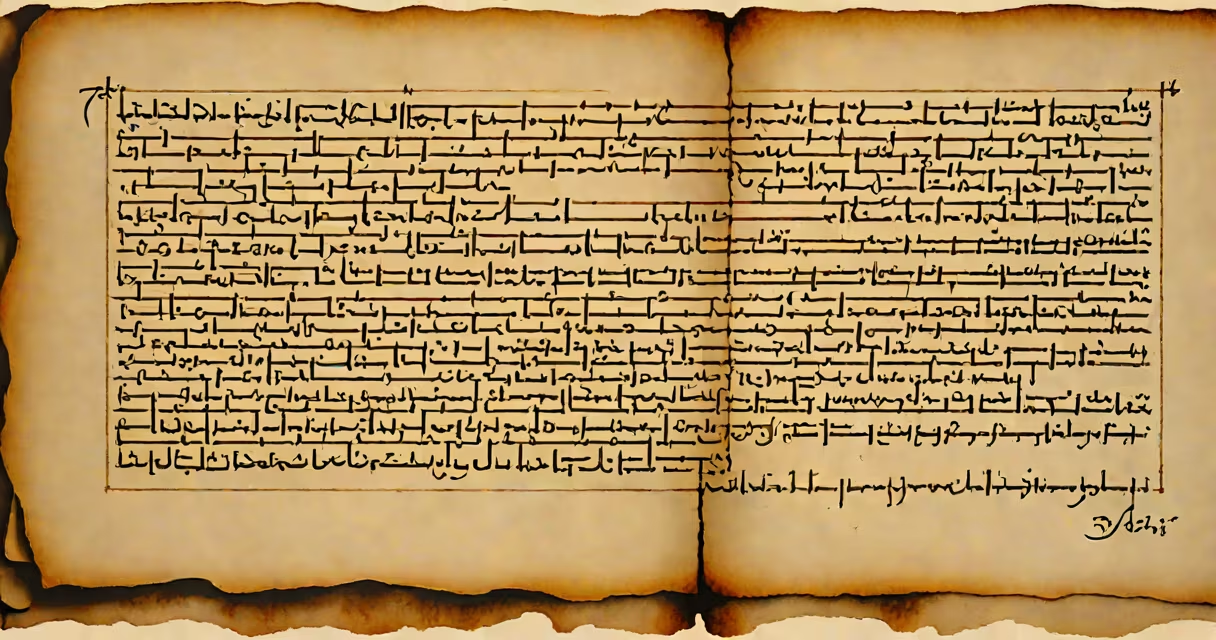
The word "pentateuch" comes from Greek and means "five scrolls" or "five books." It refers to the first five books of the Hebrew Bible-Genesis, Exodus, Leviticus, Numbers, and Deuteronomy-which form the foundation of Jewish law and narrative tradition.
These books are traditionally attributed to Moses, though modern scholarship identifies multiple authors and editing layers over centuries. The term itself was not used in ancient Hebrew texts but emerged in Hellenistic Judaism around the 3rd century BCE, reflecting how Greek-speaking Jews categorized sacred writings.
Within Christian theology, the Pentateuch is part of the Old Proof and serves as the basis for understanding God's covenant with Israel. Its narratives include the creation of the world, the flood, the patriarchs like Abraham and Jacob, the exodus from Egypt, and the giving of the Law at Sinai.
How the Pentateuch Works
The Pentateuch functions as both a historical record and a legal structure. It begins with cosmology and genealogy in Genesis, then shifts to national formation through the story of the Israelites' liberation from slavery in Egypt. This transition sets the stage for the establishment of divine commandments.
Exodus contains the Ten Commandments and detailed instructions for worship, sacrifices, and social justice. Leviticus outlines priestly duties and purity laws. Numbers tracks the Israelites' 40-year process through the wilderness, including census records and military organization. Deuteronomy reiterates laws and prepares the people for entry into the Promised Land under Joshua's leadership.
Each book builds on the last, creating a continuous arc from divine origin to human responsibility. The structure reflects a theological purpose: to show how God establishes order, justice, and holiness among a chosen people.
What It's Made Of and Its Main Types
The Pentateuch is composed of narrative prose, legal codes, ritual instructions, and poetry. It combines storytelling with moral and ceremonial directives. For example, Genesis uses poetic language in the creation account (Genesis 1:1-2:3), while Exodus 20 presents the Decalogue as a formal legal proclamation.
Scholars distinguish between documentary sources within the Pentateuch-J (Yahwist), E (Elohist), D (Deuteronomist), and P (Priestly)-based on differences in vocabulary, style, and theological emphasis. These sources were likely compiled between the 10th and 5th centuries BCE.
| Book | Primary Focus | Key Content |
|---|---|---|
| Genesis | Origins | Creation, Adam and Eve, Noah's flood, Abraham's call, Joseph's story |
| Exodus | Redemption | Plagues, Passover, Sinai covenant, Tabernacle construction |
| Leviticus | Purity and Worship | Offerings, dietary laws, priesthood roles, Day of Atonement |
| Numbers | Process and Judgment | Census, wilderness wanderings, rebellion of Korah, spies' report |
| Deuteronomy | Renewal of Covenant | Moses' farewell speeches, laws for life in Canaan, blessings and curses |
A non-obvious fact: the Pentateuch does not contain a single mention of the word "Torah" in its original Hebrew form. The term appears later in rabbinic literature. The Hebrew word for "instruction" or "teaching" is derived from the root y-r-h, which appears throughout the text, especially in Deuteronomy.
Where and Why It's Used
In Judaism, the Pentateuch is read aloud in synagogues over a three-year cycle during Shabbat services. Each week, a portion called a parashah is chanted from the Torah scroll, ensuring complete coverage annually. The cycle begins in September and ends in August.
Christian denominations use the Pentateuch differently. Protestants treat it as foundational Scripture, often citing it to support doctrines like original sin or divine law. Catholics and Orthodox Christians include additional books in their Old Proof canon but still regard the Pentateuch as central.
Academic institutions study the Pentateuch using literary, historical, and comparative methods. For example, the Documentary Hypothesis-proposed by Julius Wellhausen in the 19th century-suggests that the Pentateuch evolved from four distinct written traditions merged over time. This theory remains influential, though revised by recent archaeological findings.
Common Confusions and Corrections
Many assume the Pentateuch is a single authored work completed by Moses. But textual analysis shows inconsistencies in style, repetition of events, and differing divine names (YHWH vs. Elohim). These indicate multiple redactors over centuries.
Another misconception is that the Pentateuch is purely religious. It contains legal systems, demographic data, and ethical principles that influenced early Mediterranean societies. For instance, the concept of the Sabbath-introduced in Exodus 20:8-11-is echoed in ancient Near Eastern calendars, suggesting shared cultural roots.
Some confuse the Pentateuch with the entire Hebrew Bible. The Hebrew Bible (Tanakh) consists of three divisions: Torah (Pentateuch), Nevi'im (Prophets), and Ketuvim (Writings). The Pentateuch is only the first part.
Concrete Example and Personal Observation
I once stood in a synagogue in Jerusalem during a Shabbat morning service. The cantor unrolled a Torah scroll made of animal parchment, inked with black dye. As he recited the weekly portion-Parashat Vayikra-the congregation responded with "Amen" after each verse. The scroll's worn edges showed decades of handling. This moment revealed how the Pentateuch remains physically present in daily religious practice.
For a numerical example: the Book of Numbers contains 36 chapters and 1,500 verses. Chapter 1 alone lists 603,550 adult males fit for military service among the tribes of Israel. That number aligns with the census data presented in Numbers 1:1-46, illustrating how the Pentateuch integrates narrative with precise counting.
What It's Not
The Pentateuch is not a philosophical treatise. It does not explore metaphysical questions about existence or consciousness. Instead, it centers on relationship-between God and humanity, individuals and community, obedience and consequence.
It is also not a historical document in the modern sense. While it references real places (like Mount Sinai and the Jordan River), it blends myth, memory, and prophecy. Archaeological evidence for the Exodus event remains inconclusive, though some scholars point to the Merneptah Stele (c. 1207 BCE) as mentioning "Israel," suggesting the group existed by then.
Finally, the Pentateuch is not a static text. It has been interpreted across cultures and eras-from medieval commentaries by Rashi to modern feminist readings by Avivah Zornberg. The diversity of interpretation underscores its enduring relevance.
Understanding what does pentateuch mean requires recognizing it as both a sacred text and a complex literary artifact. It shapes religious identity, informs ethical reasoning, and continues to inspire scholarly inquiry. Its influence extends beyond faith communities into literature, law, and art.