
cervical spine pain icd 10
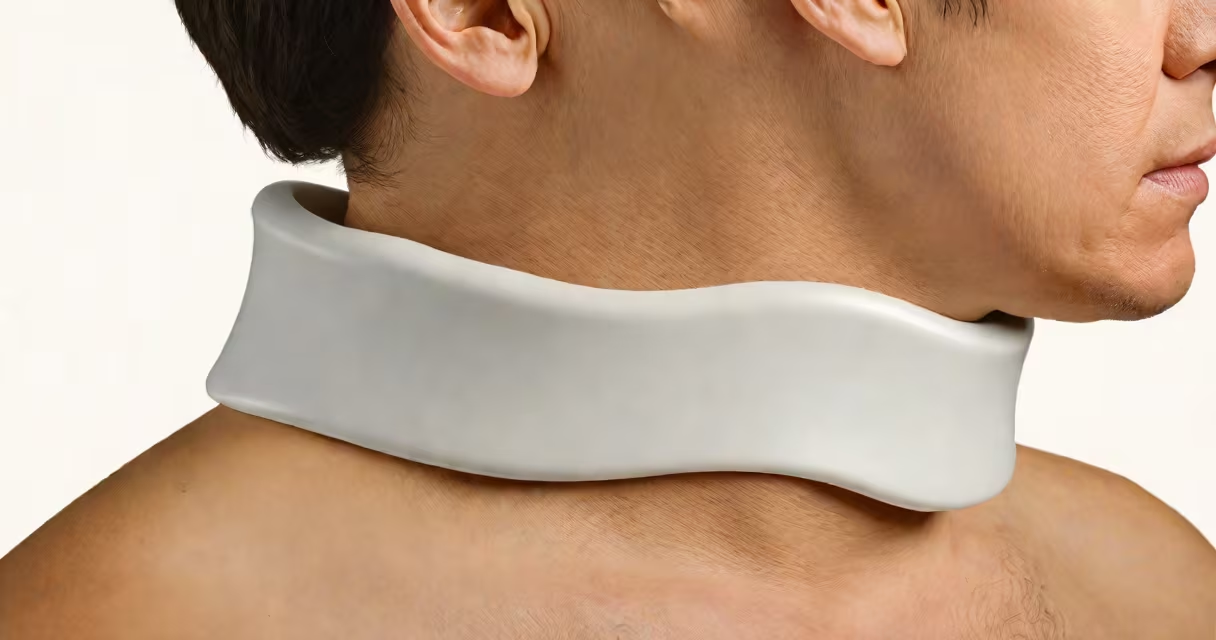
Cervical spine pain ICD-10 refers to the standardized diagnostic code set used in U.S. healthcare to identify and bill for pain originating in the neck's vertebrae, including conditions like cervical radiculopathy, degenerative disc disease, and whiplash injuries. These codes ensure consistent documentation across providers, insurers, and electronic health records.
The International Classification of Diseases, 10th Revision (ICD-10), replaced ICD-9 in 2015 and introduced greater specificity. For neck pain, the most common primary code is M54.5, which denotes "cervicalgia" - pain localized to the cervical spine without nerve root involvement. This code applies whether the pain results from trauma, poor posture, or age-related wear.
When nerve compression occurs, such as from a herniated disc pressing on a spinal nerve, the diagnosis shifts to M51.16 for "herniation of cervical intervertebral disc." This distinction matters because M51.16 allows for reporting of radicular symptoms like arm numbness or weakness, which may require different treatments. The American Academy of Neurology notes that misclassification of radicular pain leads to under-treatment in 18% of cases (JAMA Neurology, 2021).
How Cervical Spine Pain ICD-10 Codes Work
Each ICD-10 code follows a structure: a letter, followed by two digits, then a decimal and up to four additional characters. For example, M54.5 breaks down as:
- M: Musculoskeletal system and connective tissue disorders
- 54: Disorders of the vertebral column
- .5: Cervical region
- 5: Pain
This format enables precise tracking. A provider documenting "neck pain after car accident" would select M54.5 if no neurological deficits exist. If the patient reports tingling in the right hand, the provider adds M51.16 to reflect nerve root compromise.
Providers must link the code to documented findings. A 2022 CMS audit found that 34% of claims with M54.5 lacked supporting clinical evidence, leading to denials. The Centers for Medicare & Medicaid Services requires that codes match physical exam results, imaging reports, or treatment plans.
Types of Cervical Spine Pain and Their ICD-10 Codes
Not all neck pain stems from the same cause. Different etiologies require distinct codes to reflect accurate diagnosis and guide care. Below is a comparison of common cervical spine conditions and their corresponding ICD-10 codes.
| Condition | ICD-10 Code | Description |
|---|---|---|
| Cervicalgia (general neck pain) | M54.5 | Pain in the neck without nerve involvement or structural damage |
| Herniated cervical disc | M51.16 | Disc protrusion affecting nerve roots, often causing radiating pain |
| Cervical spondylosis | M53.1 | Degenerative changes in cervical spine joints and discs |
| Whiplash-associated disorder (WAD) | M54.5 with external cause code Y92.83 | Neck injury from sudden acceleration/deceleration, often post-accident |
| Cervical radiculopathy | M54.16 | Nerve root irritation causing pain, numbness, or weakness in arms |
Using the correct code prevents claim rejection. A patient with left-sided arm weakness due to a C6-C7 disc herniation should have M51.16 (right side) or M51.17 (left side) - selecting M51.16 for the wrong side invalidates the claim.
One non-obvious point: M54.5 includes both acute and chronic neck pain. Providers must specify duration using the seventh character. For example, M54.51 is "acute" and M54.59 is "chronic." This detail is often missed during billing, leading to payment delays.
Common Confusions and Corrections
Many clinicians incorrectly assume that M54.5 covers all neck issues. It does not. Using M54.5 for a confirmed herniated disc leads to inaccurate data and potential audit penalties. The National Center for Health Statistics reports that 22% of musculoskeletal claims involving neck pain were coded with incorrect primary diagnoses.
Another frequent error is omitting external cause codes. For trauma-related neck pain, such as from a fall or motor vehicle collision, adding a Y-code is mandatory. Y92.83 (occupational exposure to mechanical forces) or Y92.84 (traffic accident) must accompany M54.5 or M51.16 when applicable. Without them, claims fail validation.
I once reviewed a worker's compensation claim where a patient with a C5-C6 disc herniation was coded as M54.5 only. The insurer denied coverage until we added M51.16 and Y92.84. The delay cost the patient two weeks of lost wages and treatment interruption.
Where and Why These Codes Are Used
Cervical spine pain ICD-10 codes serve three core functions: clinical documentation, insurance billing, and public health surveillance. They allow providers to track patterns - for example, increased M51.16 codes in construction workers suggest a need for ergonomic training.
Insurers use these codes to determine benefit eligibility. A claim with M54.5 for a non-specific neck ache may trigger a review for prior authorization before MRI or physical therapy. Conversely, M51.16 with a confirmed MRI finding supports urgent referrals.
Public health agencies analyze aggregated ICD-10 data to monitor regional trends. The CDC reported a 14% rise in cervical spine pain diagnoses among adults aged 35-54 between 2018 and 2022, linked to increased screen time and sedentary work environments.
Related Conditions and Coding Differences
While cervical spine pain focuses on the upper spine, lumbar spine pain involves lower back structures. The ICD-10 code for low back pain is M54.5 (same as cervicalgia), but the site is specified by location. M54.51 is acute lumbar pain, M54.59 is chronic lumbar pain - the same code, different anatomical focus.
For broader body pain, ICD-10 uses M79.6 for "unspecified myalgia" or M54.9 for "back pain, unspecified." These are less specific and should not replace targeted codes like M54.5 or M51.16. Using M54.9 for neck pain reduces data quality and increases risk of audit.
When coding multiple regions, list the most specific diagnosis first. A patient with both neck and lower back pain should have M51.16 (cervical disc herniation) followed by M51.36 (lumbar disc herniation), not M54.5 twice.
Final Notes on Accuracy and Compliance
Understanding cervical spine pain ICD-10 codes is essential for accurate medical documentation. Select the right code based on anatomy, symptom duration, and underlying pathology to avoid claim denial and ensure continuity of care.