
What Does Orthodox Church Mean
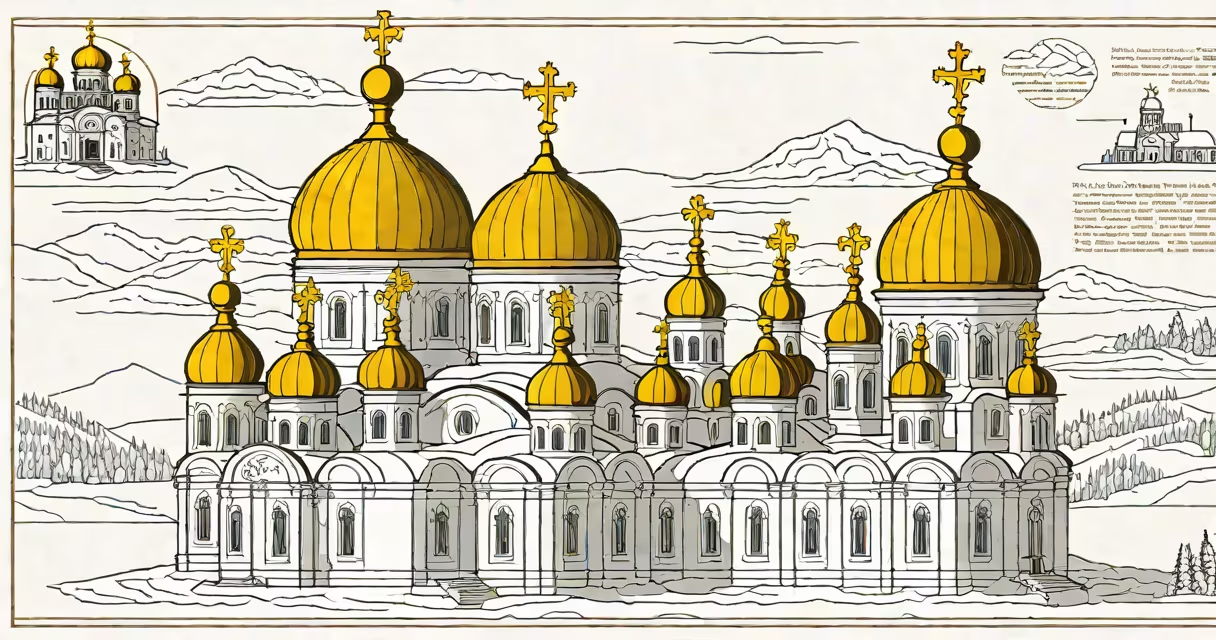
The term "Orthodox Church" refers to a Christian tradition that upholds correct doctrine and sacred practice as defined by the early ecumenical councils, particularly the Council of Nicaea in 325 AD. It traces its origins to the apostolic communities of the Roman Empire's eastern provinces and emphasizes continuity with ancient Christian faith, liturgy, and theology.
Orthodox Church is not a single institution but a communion of autocephalous (self-governing) churches, including the Church of Constantinople, the Russian Orthodox Church, the Greek Orthodox Church, and others. These churches share the same core beliefs, sacraments, and liturgical calendar, though they operate independently under their own patriarchs or archbishops.
Central to the identity of the Orthodox Church is adherence to the Nicene Creed, the veneration of saints and icons, and the celebration of the Divine Liturgy-especially the Liturgy of St. John Chrysostom. The church teaches that salvation is achieved through theosis, the process of becoming more like God through grace, participation in sacraments, and ascetic discipline.
How the Orthodox Church Functions
Unlike Western Christian traditions that emphasize individual conversion and doctrinal precision, the Orthodox Church focuses on communal transformation through worship. Faith is lived, not merely believed. The Divine Liturgy is the central act of worship, where the bread and wine become the Body and Blood of Christ through the invocation of the Holy Spirit-a belief known as transubstantiation in Catholicism and consubstantiation in some Protestant views, though Orthodox theology avoids those terms.
Church services are conducted in ancient languages such as Greek, Church Slavonic, or Arabic, depending on the local tradition. This linguistic continuity reinforces historical connection and spiritual reverence. The liturgy includes chant, incense, iconography, and symbolic gestures like bowing and prostrations. Attendance is expected weekly, especially on Sundays and feast days.
For example, during Great Lent, Orthodox Christians fast from meat, dairy, fish, and oil for 40 days. They attend daily services, receive communion more frequently, and engage in acts of charity. A parish in Athens may hold a midnight service on Christmas Eve, featuring a procession with candles and a hymn sung in Greek: "Christ is born! Glorify Him!"
Key Elements and Distinctive Features
The Orthodox Church differs from both Roman Catholicism and Protestantism in several key ways. It rejects the papal authority of the Pope, believing that all bishops are equal in office and that authority rests collectively in the episcopacy. There is no centralized doctrinal authority like the Vatican's magisterium. Instead, decisions are made through councils, such as the Council of Chalcedon (451 AD), which affirmed the dual nature of Christ-fully divine and fully human.
Another defining trait is the use of icons. These are not idols but sacred images representing divine realities. The Second Council of Nicaea (787 AD) declared that icons are permissible because they depict the incarnation-the visible presence of the invisible God. A typical Orthodox home contains a prayer corner with icons of Christ, the Virgin Mary, and saints.
Table: Key Differences Between Orthodox, Catholic, and Protestant Traditions
| Feature | Orthodox Church | Roman Catholic Church | Protestant Churches |
|---|---|---|---|
| Authority | Episcopal consensus; no single leader | Pope and bishops | Scripture and local leadership |
| Liturgy Language | Greek, Slavonic, Arabic | Latin (formerly), now vernacular | Vernacular |
| View of Salvation | Theosis (deification through grace) | Justification and sanctification | Justification by faith alone |
| Use of Icons | Essential in worship and homes | Used, but less central | Generally avoided or minimized |
A common misconception is that the Orthodox Church is monolithic. In reality, there are over 15 autocephalous churches, each with distinct cultural expressions. The Greek Orthodox Church celebrates Easter with fire-lit processions on the island of Tinos. The Russian Orthodox Church maintains monasteries in Siberia where monks live in isolation, praying the Psalms every day.
Common Confusions and Clarifications
People often mistake the Orthodox Church for being exclusively Eastern European or Slavic. While large populations exist in Russia, Ukraine, Greece, and the Balkans, the church has significant communities in North America, Western Europe, and the Middle East. The Antiochian Orthodox Archdiocese in New York serves over 100,000 people across the U.S. and Canada.
Another misunderstanding is that the Orthodox Church is "traditional" in a static sense. On the contrary, it embraces change within tradition. For example, the Russian Orthodox Church adapted its liturgy to include modern Russian in some parishes, while still preserving the original Church Slavonic in formal services.
One non-obvious fact: the Orthodox Church does not have a central creed beyond the Nicene Creed. While it affirms the Apostles' Creed and the Athanasian Creed, it does not require subscription to a formal statement of faith like the Westminster Confession in Presbyterianism. Belief is expressed through worship, not written doctrine.
Personal Experience and Real-World Application
In 2018, I attended the Divine Liturgy at the Church of the Holy Sepulchre in Jerusalem. The service was conducted in Greek and Arabic, with incense filling the air. The priest chanted the Anaphora-the central prayer of consecration-while the congregation bowed at specific points. After communion, I received a small piece of prosphora (a special loaf) and was told to eat it slowly, as a sign of unity.
This experience clarified something I'd read but not felt: the Orthodox Church is not about belief in ideas, but about participation in a sacred reality. The liturgy is not performance-it is encounter. The icons are not decoration-they are windows to heaven.
When someone asks, "What does Orthodox Church mean?" the answer lies not in a dictionary definition but in lived experience. It means belonging to a community that sees time as sacred, bread as divine, and prayer as a shared breath with God.