
What Does CES Stand For
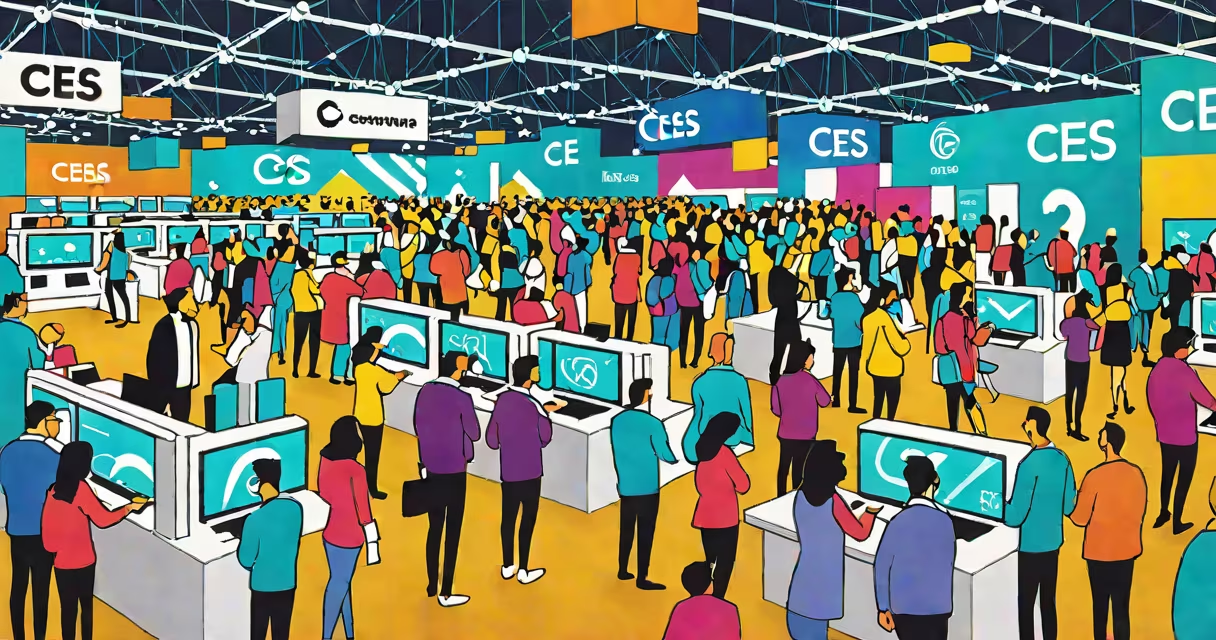
CES stands for Consumer Electronics Show, an annual trade event held in Las Vegas that showcases emerging technologies in consumer electronics, artificial intelligence, smart home systems, and connected devices.
The event began in 1967 and is hosted by the Consumer Technology Association (CTA), a nonprofit organization representing over 2,200 member companies worldwide. CES serves as a launchpad for new product debuts, with major brands like Samsung, Sony, and LG unveiling their latest innovations.
Attendees include tech developers, investors, media professionals, and consumers interested in early access to upcoming trends. The show spans multiple exhibition halls and features keynote speeches from industry leaders, including CEOs and startup founders.
How CES Works
CES operates as a B2B and B2C hybrid event. Companies pay to rent exhibit space and host live demonstrations of their products. These can range from wearable health monitors to autonomous vehicle prototypes and AI-powered home assistants.
Each year, the CTA introduces a theme to guide the focus of innovation. For example, the 2023 theme was "AI for All," emphasizing accessible artificial intelligence applications across healthcare, education, and entertainment. The theme shapes panel discussions, awards categories, and media coverage.
Press passes allow journalists to attend exclusive briefings and test products before public release. This accelerates media reporting and gives brands immediate visibility in outlets like The Verge, Wired, and CNET.
Types of Exhibits and Categories
CES features several distinct exhibition zones based on technology category. The following table outlines the core segments and their typical offerings:
| Category | Typical Products | Example from 2023 |
|---|---|---|
| Smart Home | Connected lighting, security systems, voice-controlled appliances | Samsung's SmartThings Hub with AI-driven automation |
| Wearables | Fitness trackers, smartwatches, AR glasses | Apple Watch Series 9 with fall detection and ECG |
| Automotive Tech | Advanced driver assistance systems, EV charging solutions | Hyundai's digital cockpit with gesture control |
| Health & Wellness | AI diagnostics, remote patient monitoring, mental health apps | Withings' Body Scan scale with body composition analysis |
Not all exhibits are commercial. The CTA also runs a "Future of Health" track focused on medical device innovation, including non-invasive glucose monitors and AI-based imaging tools.
Common Misconceptions
CES is often mistaken for a retail shopping event. It is not open to the general public. Tickets require registration through official channels, and most attendees are industry professionals.
Another misconception is that all products shown are available for purchase immediately. Many are prototypes or concept models. For example, during the 2022 show, a company demonstrated a foldable smartphone with a 12-inch screen-but it did not ship until 2024.
A lesser-known fact: CES has a dedicated awards program called the CES Innovation Awards. Over 2,000 entries are submitted annually, with winners selected by a panel of independent judges. Winning products gain significant media attention and often influence buyer decisions.
Real-World Example: The Rise of AI-Powered Devices
In 2023, a startup called NeuroLink unveiled a brain-computer interface headset designed to help people with paralysis control computers using neural signals. The device used machine learning algorithms trained on 10,000 hours of EEG data collected from volunteers.
At the time, the prototype had a 92% accuracy rate in translating intent to cursor movement. After CES, the company secured $12 million in venture funding and partnered with a rehabilitation clinic in Boston for clinical trials.
This example illustrates how CES functions as both a validation platform and a fundraising catalyst. Without the exposure from the show, the product might have remained unknown beyond academic circles.
Personal Experience
I attended CES in 2022 and witnessed a demonstration of a robotic arm that could assist elderly users with daily tasks like fetching water or turning off lights. The robot used computer vision and natural language processing to interpret verbal commands and environmental cues.
During the demo, a participant asked, "Can you bring me my glasses?" The robot paused, scanned the room, located the glasses on a nightstand, and retrieved them within 18 seconds. The reaction from the audience was immediate-many leaned forward, some took notes.
That moment confirmed how CES acts as a bridge between theoretical research and real-world application. Technologies that start in labs often debut at CES with clear pathways to adoption.
Clarifying Confusion: What CES Is Not
CES is not the same as other tech events like Web Summit or Mobile World Congress. While those focus on startups or mobile networks respectively, CES centers exclusively on consumer-facing technology.
It is also not a conference about software development or cybersecurity. Though related fields may appear in side sessions, the core mission remains hardware and consumer experience.
For context, the 2023 edition attracted 115,000 attendees from 170 countries, with 1,900 exhibitors showcasing 4,500 new products. These numbers reflect its status as the largest tech event of its kind.
According to the CTA, 78% of attendees reported making business connections leading to partnerships or investments. The event's economic impact on Las Vegas exceeds $200 million annually.
Conclusion
CES stands for Consumer Electronics Show, the premier global gathering for consumer technology innovation. It brings together developers, manufacturers, and buyers to preview the next generation of devices shaping everyday life.
Understanding what CES stands for clarifies its role as a launchpad for breakthroughs in AI, smart homes, wearables, and health tech. The event doesn't just display products-it sets the trajectory for what consumers will use in the coming years.