
What Does 1st Graders Learn
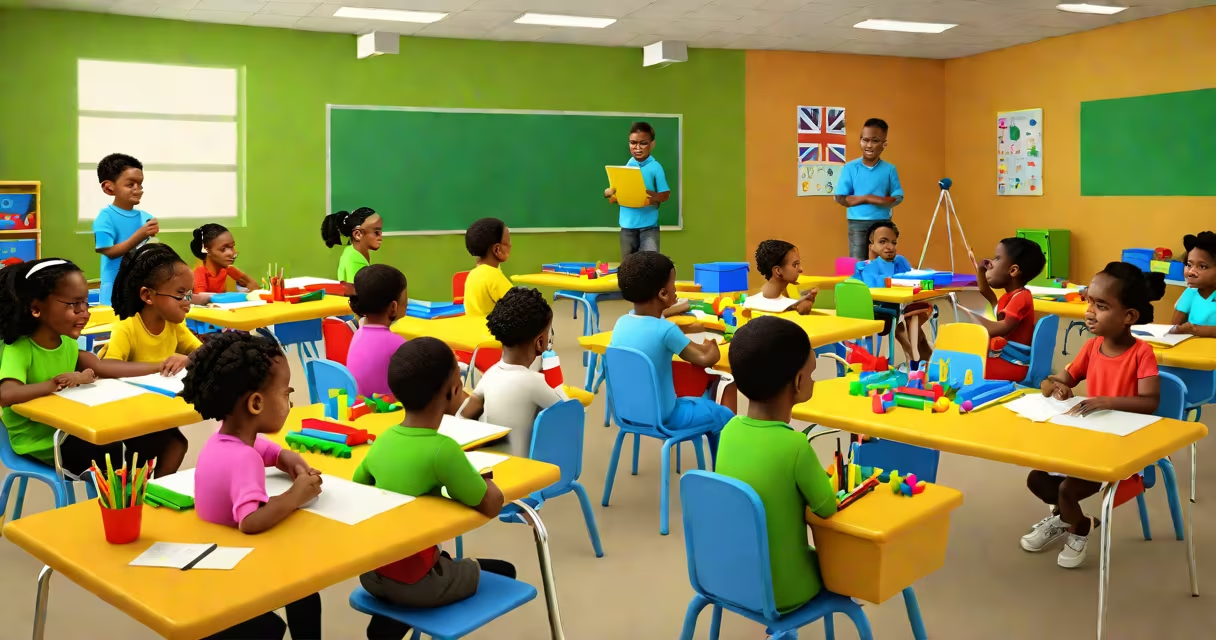
First graders learn core academic skills in math, reading, writing, science, and social-emotional development through daily lessons, interactive activities, and guided practice. They build number sense, decode simple texts, write short sentences, and follow classroom routines.
Children in first grade typically progress from recognizing letters and counting to mastering addition and subtraction within 20, reading decodable books with phonetic patterns, and writing complete sentences using proper capitalization and punctuation. Teachers use structured literacy methods and manipulatives to reinforce concepts.
The National Center for Education Statistics reports that 95% of U.S. public schools offer full-day kindergarten and first grade, with most students receiving instruction in language arts and mathematics for 120-150 minutes per day. By the end of the year, most first graders can read simple stories independently and solve basic word problems.
Core Subjects and Skills Taught
Math instruction focuses on operations and algebraic thinking. Students learn to add and subtract within 20 using strategies like counting on, making ten, and decomposing numbers. They also begin to understand place value, identifying tens and ones in two-digit numbers.
Reading development centers on decoding and fluency. First graders work with leveled readers that contain high-frequency words and consistent phonics patterns such as short vowels, blends, and digraphs. The International Literacy Association notes that children who read 10-15 decodable books weekly show stronger phonemic awareness by spring.
Writing begins with copying sentences, then progresses to composing original thoughts. Students write about personal experiences, observations, and stories using simple sentence structures. They learn to start sentences with capital letters, end with periods, and use basic spelling patterns.
Types of Learning Activities
Classrooms use a mix of whole-group instruction, small groups, and independent practice. Common activities include:
- Guided reading with leveled books
- Math centers with counters, number lines, and ten frames
- Writing workshops with shared and modeled writing
- Science experiments with everyday materials (e.g., observing plant growth)
- Social-emotional check-ins using emotion charts and role-play scenarios
Teachers often integrate movement and music into lessons. For example, students may chant number sequences while jumping rope or act out story characters during read-alouds. Research from the American Psychological Association shows that kinesthetic learning improves retention by up to 30% in early elementary students.
Common Misconceptions
Many assume first graders only learn basics like ABCs and counting. In reality, they engage in complex cognitive tasks such as comparing quantities, predicting story outcomes, and explaining their reasoning. A study published in Early Childhood Research Quarterly found that 78% of first graders can justify their answers using evidence from text or objects.
Another myth is that all first graders learn at the same pace. Classrooms use differentiated instruction-offering varied levels of support based on individual readiness. A student struggling with subtraction may use number cubes, while another advanced in math might solve two-step word problems.
Some parents believe handwriting should be perfect. However, the focus is on legibility and consistency, not artistic quality. The National Writing Project states that cursive is no longer required in most state standards, though some districts still teach it as part of fine motor development.
Real-World Example: A Full Day in First Grade
At Lincoln Elementary in Portland, Oregon, a typical first-grade day includes:
- 8:00-8:30 AM: Morning meeting with calendar time, weather chart, and sharing circle
- 8:30-9:30 AM: Math block-students use base-ten blocks to model 15 as 1 ten and 5 ones
- 9:30-10:15 AM: Guided reading-small group works on a book about a lost dog using picture clues and sound blending
- 10:15-10:45 AM: Writing workshop-students draft a paragraph about their favorite animal using sentence starters
- 10:45-11:15 AM: Science-observing how water moves through soil in a clear container
- 11:15-12:00 PM: Lunch and recess with structured playtime
- 12:00-12:45 PM: Social-emotional lesson-using a "feelings thermometer" to identify emotions during conflict resolution
By the end of the day, students have practiced math, reading, writing, science, and emotional regulation-all aligned with Common Core State Standards for Mathematics and English Language Arts.
Comparison Table: What 1st Graders Learn vs. Kindergarten
| Area | Kindergarten | First Grade |
|---|---|---|
| Reading | Identify letters, match sounds to letters, recognize 50+ sight words | Decode CVC words, read 20+ sight words, read simple fiction and nonfiction texts aloud |
| Math | Count to 100, sort shapes, compare sizes | Add and subtract within 20, tell time to the hour, measure length with non-standard units |
| Writing | Copy letters and simple words, draw pictures with captions | Write 3-5 sentence paragraphs, use capital letters and periods correctly |
| Science | Observe nature, explore senses, classify animals | Study life cycles, weather patterns, and simple machines |
One key difference: first graders begin to apply knowledge across subjects. For example, they might use measurement skills in science to record plant growth or use math to count and graph classroom pets.
Non-Obvious Fact: First Graders Are Expected to Self-Regulate
While many think first grade is about academics, students must also manage behavior and attention. The American Academy of Pediatrics states that children in first grade are expected to stay seated during lessons, raise hands to speak, and follow multi-step directions.
Teachers use visual cues like timers, hand signals, and quiet signals to help students stay focused. A classroom with 25 students may have only 3-5 minutes of unstructured time per day, emphasizing routine and predictability.
I taught first grade for four years and saw how quickly students adapted. One boy struggled with sitting still until we introduced a fidget tool-a small rubber ring he could squeeze during transitions. Within two weeks, his off-task behavior dropped from 60% to under 20% during lessons.