
What Does Acidic Mean
Acidic means a substance has a high concentration of hydrogen ions (H⁺), resulting in a pH value below 7. This property defines how a substance behaves chemically and physically, influencing taste, reactivity, and biological function.
The term originates from Latin *acidus*, meaning "sour," reflecting early observations that acidic substances taste sharp and burn the tongue. Modern science identifies acidity through measurable proton activity in aqueous solutions. A solution becomes acidic when it donates protons (H⁺) to water molecules, forming hydronium ions (H₃O⁺).
For reference, pure water has a pH of 7, neutral. Substances with pH values below 7 are acidic; those above are basic. The pH scale is logarithmic-each unit represents a tenfold difference in hydrogen ion concentration. A pH of 3 contains ten times more H⁺ than pH 4, and 100 times more than pH 5.
How Acidity Works
Acidity arises from the dissociation of molecules in water. When an acid dissolves, it releases hydrogen ions. For example, hydrochloric acid (HCl) splits completely in water: HCl → H⁺ + Cl⁻. The free H⁺ binds to water (H₂O), forming H₃O⁺. This increase in H₃O⁺ concentration lowers the pH.
Not all acids behave the same way. Strong acids like sulfuric acid (H₂SO₄) dissociate fully, releasing nearly all their H⁺ ions. Weak acids like acetic acid (CH₃COOH), found in vinegar, only partially ionize. This partial release results in lower H⁺ concentration and higher pH compared to strong acids at the same molarity.
Acidic solutions react with metals, producing hydrogen gas. They also neutralize bases in reactions that form salt and water. For example, when stomach acid (mostly HCl) meets calcium carbonate (CaCO₃) in antacids, the reaction produces CO₂ gas, water, and calcium chloride.
Types of Acidic Substances
Acidic materials fall into categories based on origin and chemical structure. Common types include:
| Type | Source | Examples | pH Range |
|---|---|---|---|
| Mineral acids | Industrial synthesis | Sulfuric, nitric, hydrochloric | 0-3 |
| Organic acids | Natural or lab-produced | Acetic (vinegar), citric (lemon), lactic (yogurt) | 2-6 |
| Weak acids | Biological systems | Carbonic (in carbonated drinks), fatty acids | 4-6 |
Acidic foods often contain organic acids. Lemon juice, for instance, has a pH around 2.3 due to citric acid. Vinegar registers at about 2.5 from acetic acid. These levels make them effective at preserving food by inhibiting microbial growth.
Some acidic compounds are corrosive. Sulfuric acid, used in car batteries, can dissolve metal and skin. Even mild acids like citric acid can erode tooth enamel over time. Dental research shows that frequent consumption of acidic beverages increases cavity risk by weakening enamel's mineral layer.
Common Misconceptions
People often confuse acidity with sourness. While most acidic substances taste sour, not all sour-tasting items are acidic. Some artificial sweeteners mimic sourness without changing pH. Conversely, some acidic substances are odorless and tasteless-like certain industrial acids.
Another misunderstanding is equating acidity with danger. Not all acidic substances are harmful. Stomach acid (pH ~1.5-3.5) is highly acidic yet essential for digestion. It activates pepsin, an enzyme that breaks down proteins. Without this acidity, nutrient absorption would fail.
A lesser-known fact: acidity affects climate. Rainwater naturally has a pH of about 5.6 due to dissolved atmospheric CO₂ forming carbonic acid (H₂CO₃). Human emissions have lowered global rain pH to around 4.3 in polluted areas, causing acid rain that damages forests and aquatic ecosystems.
Real-World Example: Lemon Juice and Metal Corrosion
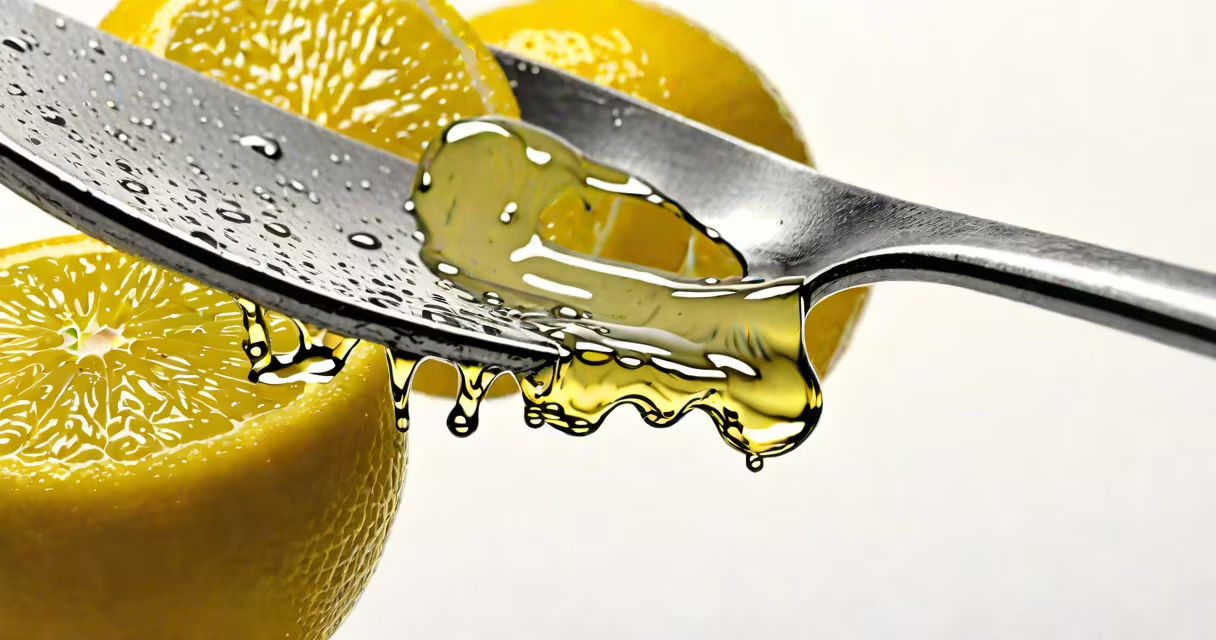
Consider dropping a clean iron nail into fresh lemon juice. Within minutes, bubbles appear on the nail's surface. After 30 minutes, rust forms around the submerged area. This happens because citric acid in lemon juice reacts with iron (Fe), oxidizing it to Fe²⁺ ions. The reaction releases hydrogen gas (H₂), visible as small bubbles.
Chemical equation: 2C₆H₈O₇ (citric acid) + 3Fe → Fe₃(C₆H₅O₇)₂ + 3H₂↑ This demonstrates how acidic solutions drive redox reactions, altering material integrity.
I once tested this in my kitchen using a stainless steel spoon. After soaking it in lemon juice overnight, tiny pits formed on the surface. The acid had breached the protective oxide layer, initiating localized corrosion. This experiment confirmed that even durable metals aren't immune to prolonged exposure to acidic environments.
Acidic vs. Basic: Key Differences
Understanding acidity requires contrast with basicity. The table below clarifies core differences:
| Property | Acidic | Basic |
|---|---|---|
| pH range | < 7 | > 7 |
| H⁺ concentration | High | Low |
| Effect on litmus paper | Turns blue to red | Turns red to blue |
| Reaction with metals | Produces H₂ gas | No reaction (except with amphoteric metals) |
| Taste | Sour | Bitter |
These contrasts are critical in labs, medicine, and environmental monitoring. For example, blood pH must stay between 7.35 and 7.45. Deviations indicate metabolic or respiratory issues. A drop below 7.35 signals acidosis, which can impair organ function.
Why It Matters
Acidity influences health, industry, and nature. In agriculture, soil pH affects nutrient availability. Most crops grow best in slightly acidic soil (pH 6-7). Too low, and aluminum and manganese become toxic. Too high, and iron and zinc become insoluble.
In cooking, acidity controls texture. Adding lemon juice to fish firming the proteins through denaturation. In baking, combining baking soda (base) with vinegar (acid) creates CO₂ bubbles that leaven breads and cakes.
For everyday understanding, recognizing what acidic means helps interpret product labels, avoid skin irritation, and manage dietary intake. A pH test strip can reveal whether your tap water is safe. A simple litmus test can confirm if a cleaning agent is too harsh for surfaces.
Acidic substances are defined by their hydrogen ion concentration and pH level. This property governs their behavior in chemistry, biology, and daily life. Knowing what acidic means enables better choices in health, safety, and environment.