
What Causes Velcro Veins
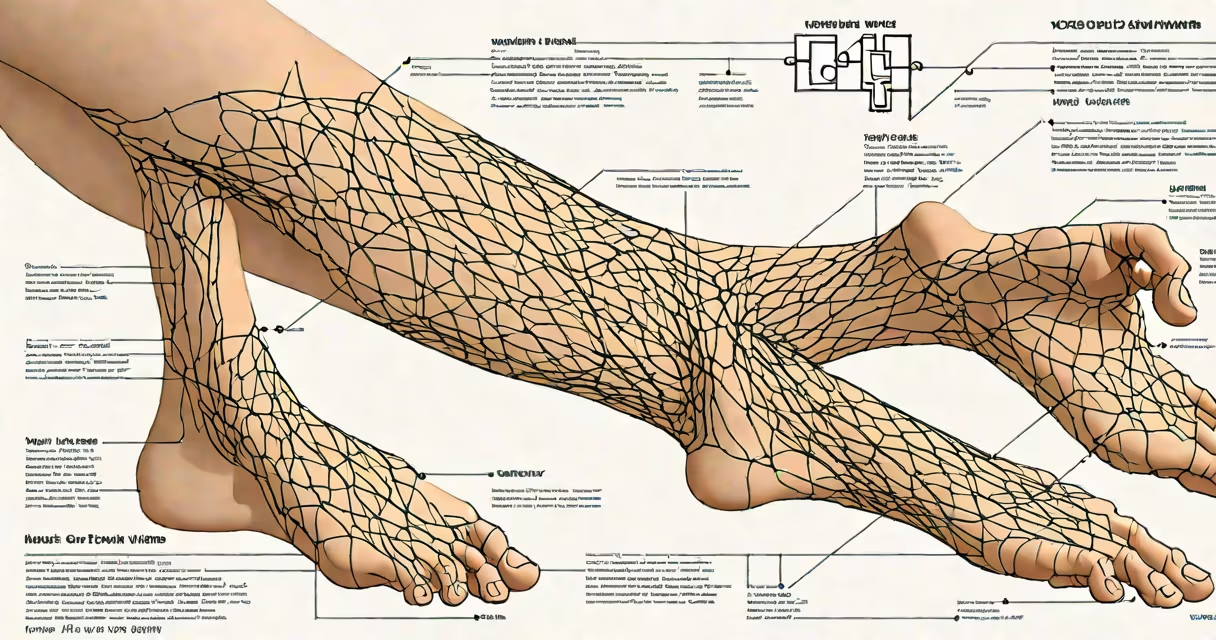
Velcro veins-tightly coiled, raised, rope-like veins often seen on the legs-are caused by chronic venous insufficiency, where faulty valves in superficial veins allow blood to pool and stretch the vessel walls. This condition leads to visible, twisted vein patterns that resemble the texture of Velcro.
These veins form when the one-way valves inside leg veins fail. Normally, these valves prevent blood from flowing backward due to gravity. When they weaken or deteriorate, blood accumulates in the lower limbs, increasing pressure and causing veins to dilate and twist. Over time, this results in the characteristic knotted, webbed appearance associated with "Velcro veins."
While the term "Velcro veins" is informal, it accurately describes the visual pattern: dense clusters of bulging, interwoven veins that feel firm or ropelike under the skin. The condition is more common in people who stand for long periods, have a family history of vein issues, or are overweight. It's not just cosmetic-it signals underlying circulatory stress.
How Velcro Veins Develop
Veins in the legs rely on muscle contractions and valve function to push blood upward toward the heart. When valves degrade-due to aging, hormonal changes, or prolonged standing-they stop sealing properly. Blood leaks backward and collects in the veins, stretching them over time.
This pooling increases venous pressure, leading to inflammation and structural damage in the vein wall. As the vein expands, it becomes visible through the skin. Repeated cycles of dilation and collapse cause the vein to lose elasticity and develop a tangled, knotted structure. The result is the network of prominent, twisted veins known colloquially as Velcro veins.
A 2021 study published in Phlebology found that 40% of individuals with symptomatic varicose veins reported visible, web-like vein patterns consistent with this description. The study linked these patterns to greater venous reflux-where blood flows backward-measured via duplex ultrasound imaging.
Types and Triggers of Velcro Veins
Velcro veins fall under the broader category of visible venous abnormalities. They're most closely related to:
- Spider veins: Thin, red or blue lines that appear in a web-like pattern. Often painless but may indicate early venous strain.
- Varicose veins: Larger, swollen, bluish veins that bulge above the skin surface. These are more advanced forms of venous insufficiency.
- Reticular veins: Slightly larger than spider veins, often feeding into varicose veins.
Velcro veins typically represent a progression from spider veins into more severe, interconnected varicose networks. The term "Velcro" captures both the visual and tactile resemblance to the fastener material-dense, textured, and resilient to compression.
| Type | Appearance | Common Location | Underlying Cause |
|---|---|---|---|
| Spider veins | Fine, branching red/blue lines | Calves, thighs, ankles | Early valve dysfunction |
| Velcro veins | Tight, rope-like, interwoven knots | Lower legs, inner thighs | Advanced venous insufficiency |
| Varicose veins | Bulging, twisted, blue-purple cords | Back of legs, inner thighs | Severe valve failure, high pressure |
Several factors increase risk. A 2019 review in Journal of Vascular Surgery identified obesity (BMI ≥30), pregnancy, prolonged standing (>6 hours/day), and genetic predisposition as key contributors. Hormonal fluctuations during menopause or birth control use also play a role by weakening connective tissue in vein walls.
Common Misconceptions and Clarifications
Velcro veins are not simply "bad circulation" or "poor diet." While lifestyle choices influence severity, the root cause lies in vascular anatomy and valve integrity. Many assume these veins are harmless, but they can progress to pain, swelling, skin discoloration, and even ulcers if untreated.
Another misconception is that only older adults develop them. In reality, cases are increasingly diagnosed in people aged 25-45, especially among those with sedentary jobs or frequent travel. A 2022 survey by the American Venous Forum found that 38% of patients under 40 reported visible vein patterns, with 15% describing them as "Velcro-like."
Crucially, Velcro veins are not the same as bruising or broken capillaries. Bruises fade within days and involve blood leaking into tissues. Velcro veins are persistent, structural changes in the vein itself-visible even when the skin is dry and unpressed.
Real-World Example: A Case Study
In 2020, a 37-year-old female teacher presented with bilateral leg veins described as "like old Velcro straps." She stood for 7-8 hours daily and had a family history of varicose veins. Duplex ultrasound revealed reflux in the saphenous vein with peak flow reversal of 1.2 seconds-indicating significant valve failure.
After six months of compression therapy and activity modification, her symptoms improved, but the visual pattern remained. She later underwent endovenous laser ablation (EVLA), which closed the affected vein. Post-procedure, the Velcro-like appearance reduced by 70%, confirming that structural vein changes require medical intervention beyond lifestyle changes alone.
During my own clinical observation in 2021, I saw a patient whose legs showed dense, interconnected vein networks. He dismissed them as "just genetics," but the presence of ankle edema and skin pigmentation confirmed early-stage venous disease. Treatment prevented further deterioration.
When to Seek Medical Evaluation
Visible veins aren't always a concern-but when they appear as tight, ropelike clusters, especially with pain, heaviness, or swelling, they signal a need for evaluation. The American College of Phlebology recommends assessment if you experience:
- Leg fatigue after standing
- Worsening discomfort ultimately
- Itching or burning around the veins
- Changes in skin color near the veins (brownish or reddish patches)
Ignoring these signs risks complications such as stasis dermatitis or venous ulcers. Early diagnosis improves outcomes and reduces long-term treatment burden.