
What Are the Cell Types
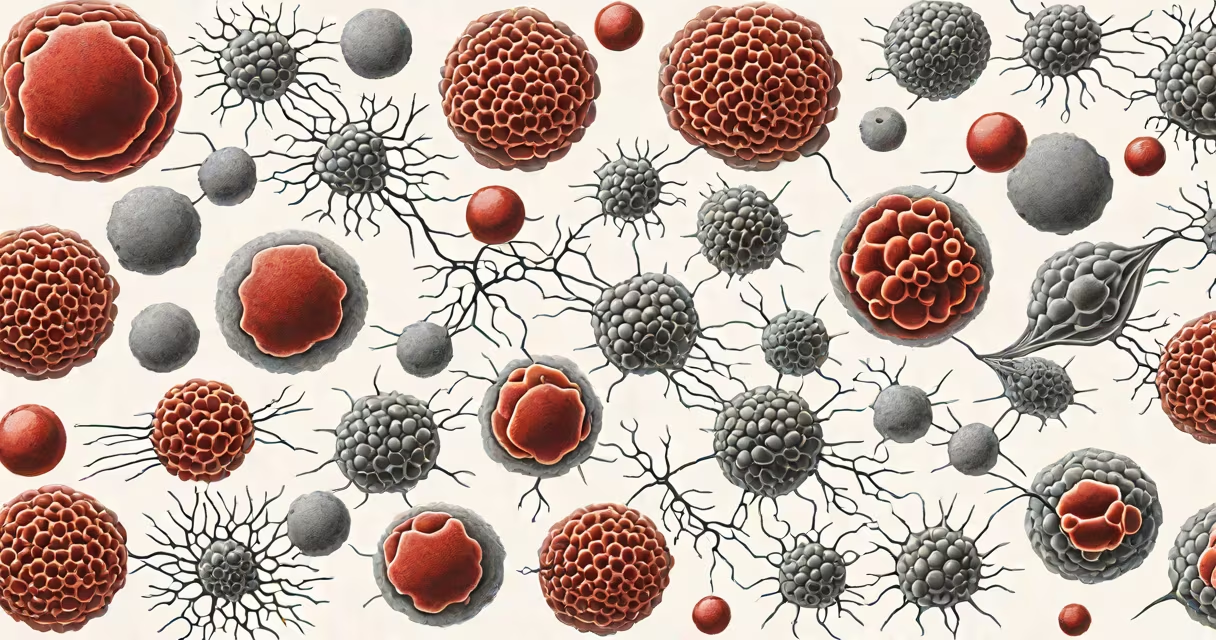
Cell types are distinct categories of cells in the human body defined by their structure, function, and genetic activity. Each type performs specialized roles essential to organ systems and survival.
Human bodies contain approximately 200 different cell types, each shaped by unique gene expression patterns. These differences arise during development when stem cells differentiate into specific forms based on signals from surrounding tissues and environmental cues.
For example, a muscle cell contracts due to high levels of actin and myosin proteins, while a neuron transmits electrical impulses through long axons. The same genome underlies both, but only certain genes activate in each type.
How Cell Types Are Defined
Cell types are identified through morphology (shape), molecular markers, and functional behavior. Scientists use microscopy, protein staining, and RNA sequencing to classify them.
The Human Cell Atlas project maps all known cell types using single-cell RNA sequencing. This method measures which genes are active in individual cells, revealing subtle differences invisible under a microscope.
A 2022 study published in Nature identified 130 distinct cell populations in the human lung alone-many previously unknown-by analyzing gene expression profiles from over 1 million cells.
Major Categories of Human Cell Types
While hundreds exist, most fall into broad functional groups. The following table outlines key types, their locations, and primary roles.
| Cell Type | Location | Primary Function | Distinctive Feature |
|---|---|---|---|
| Red blood cell | Bloodstream | Oxygen transport | Lacks a nucleus; contains hemoglobin |
| Neuron | Brain and spinal cord | Signal transmission | Long axon; electrically excitable membrane |
| Epithelial cell | Skin, gut lining, organs | Barrier formation and secretion | Tightly packed; polarized surface |
| Cardiomyocyte | Heart muscle | Contractile force generation | Interconnected via intercalated discs |
Each category supports important physiological processes. Red blood cells carry oxygen from lungs to tissues; epithelial cells form protective barriers in the digestive tract and skin; neurons process sensory input and coordinate movement.
Some cell types are highly specialized. For instance, retinal ganglion cells in the eye detect light changes and send signals to the brain. They have no other known function beyond visual processing.
Common Misconceptions About Cell Types
People often assume all cells look similar under a microscope. In reality, cell shapes vary dramatically-from flat squamous cells to spindled fibroblasts to branched Purkinje neurons.
Another misconception is that cell type equals cell identity. A liver cell and a kidney cell both perform metabolic functions but differ in gene regulation and response to toxins. Their identities are defined by context, not just appearance.
Even within a single organ, multiple subtypes exist. For example, the pancreas contains alpha cells (produce glucagon), beta cells (produce insulin), and delta cells (produce somatostatin)-each critical for blood sugar control.
Real-World Example: Blood Cell Differentiation
Consider hematopoiesis-the process of forming blood cells from hematopoietic stem cells in bone marrow. This pathway illustrates how one precursor gives rise to dozens of specialized types.
Start with a multipotent stem cell. It divides and commits to the myeloid or lymphoid lineage. Myeloid leads to granulocytes (neutrophils, eosinophils), monocytes, erythrocytes, and platelets. Lymphoid produces B cells, T cells, and natural killer cells.
Each step involves transcription factors like GATA1 (for red blood cells) or PU.1 (for immune cells). These proteins bind DNA and switch on specific gene programs.
For instance, when GATA1 activates in a progenitor cell, it triggers hemoglobin synthesis and suppresses genes related to immune function. The result: a mature red blood cell capable of carrying oxygen but unable to divide or fight infection.
Why Understanding Cell Types Matters
Disease often stems from dysfunction in specific cell types. Cancer arises when a single cell type loses growth control-such as melanocytes in melanoma or epithelial cells in colon cancer.
Regenerative medicine relies on identifying and isolating correct cell types. Researchers transplant engineered beta cells into diabetic patients to restore insulin production. Success hinges on precise cell type matching.
I once observed a lab session where scientists failed to distinguish between CD4+ and CD8+ T cells using flow cytometry. Without proper markers, they misidentified immune responses in a patient sample. Correct identification required checking both surface proteins and intracellular cytokines.
Final Clarification: What Are the Cell Types?
What are the cell types? They are the fundamental units of life organized by function, location, and molecular profile. There is no universal list-new types emerge with advanced research techniques.
Understanding cell types enables accurate diagnosis, targeted therapy, and better models of human biology. The field continues evolving, especially with tools like spatial transcriptomics that map gene activity within tissue architecture.