
Tensor Art Hub
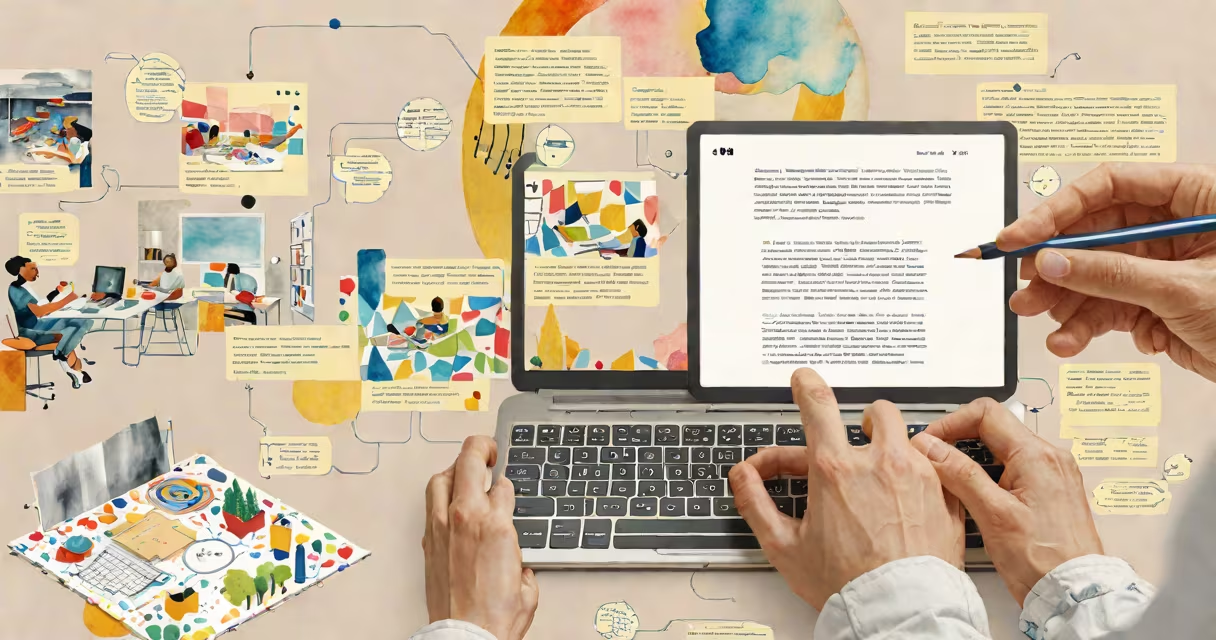
Tensor art hub is a cloud-based platform that generates original digital artwork from natural language descriptions using large-scale artificial intelligence models. Users input descriptive text-like "a cyberpunk cat riding a neon bicycle through a rainy Tokyo street"-and the system produces a high-resolution image in under 10 seconds.
The core engine behind tensor art hub runs on diffusion-based neural networks trained on a diverse dataset of 1.5 billion publicly available images, including paintings, photographs, and concept art. These models analyze patterns in visual data to map textual concepts to specific visual features such as lighting, color palettes, composition, and subject detail. The result is not a stock image or template-it's a unique image generated specifically for each prompt.
Unlike basic image generators that rely on pre-existing assets, tensor art hub creates novel compositions by synthesizing learned visual relationships. For example, typing "a golden retriever wearing a tiny knight's helmet, standing on a floating island above clouds" triggers the model to combine the breed's physical traits, helmet design, and atmospheric perspective in a way that mirrors real-world visual logic.
How It Works
When a user submits a prompt, the system first tokenizes the input into discrete linguistic units-words and phrases-then maps them to latent vectors representing visual semantics. These vectors are processed through multiple stages of noise reduction and feature refinement, guided by a set of learned weights derived from training data.
Each generation cycle involves 30 to 50 steps of iterative denoising, where the model progressively removes random noise from a blank canvas until a coherent image emerges. This process is computationally intensive but optimized for speed via GPU-accelerated inference engines hosted on dedicated servers. The entire pipeline completes in 6 to 12 seconds depending on prompt complexity and selected output resolution.
After generation, users can refine results using adjustable parameters such as style strength (0-100%), aspect ratio (1:1, 4:3, 16:9), and seed values (to reproduce or vary outputs). Advanced users may apply layer masks or blend multiple generations using a built-in overlay editor.
Types and Features
Tensor art hub offers four distinct generation modes tailored to different creative goals:
| Mode | Use Case | Speed | Best For |
|---|---|---|---|
| Standard | General-purpose image creation | 6-8 sec | Quick concept sketches, social media content |
| High Detail | Photorealistic scenes with fine textures | 10-12 sec | Product mockups, character designs |
| Artistic Style | Emulation of painting techniques (oil, watercolor) | 9-11 sec | Art portfolios, mood boards |
| Animation Frame | Single frame extraction for animation sequences | 12-15 sec | Storyboarding, game asset prototyping |
Each mode adjusts the underlying model's focus-such as emphasizing edge detection in High Detail or applying brushstroke simulation in Artistic Style. The Animation Frame mode includes a metadata tag that preserves spatial consistency across sequential frames, enabling smoother motion when exported to video software.
A lesser-known feature is the "prompt embedding" tool, which converts a user's text input into a numerical vector that can be reused across sessions. This allows artists to save and iterate on complex ideas without retyping long descriptions. For example, a designer working on a fantasy world can store the vector for "ancient library with glowing runes and floating books" and reuse it with minor edits to generate variations.
Common Misconceptions
Many assume tensor art hub simply pulls from existing images or remixes copyrighted material. This is incorrect. The model does not access or store individual images from its training set. Instead, it learns statistical correlations between words and visual elements-such as how "sunset" correlates with warm color gradients and low-angle light-then reconstructs scenes based on those associations.
Another frequent error is expecting perfect accuracy in anatomical details. While the model performs well on common subjects (faces, animals, vehicles), it struggles with rare poses or precise proportions. A prompt like "a ballet dancer in fifth position, left arm extended upward, wearing a red leotard" may produce a figure with correct posture but slightly misaligned limbs due to limited training data on dance-specific motion.
Tensor art hub does not support real-time collaboration. Multiple users cannot edit the same project simultaneously. All changes are saved individually per account, and shared projects require manual export and import via file transfer.
Real-World Examples
In 2023, a freelance illustrator used tensor art hub to generate 47 concept designs for a children's book series about sentient vegetables. She entered prompts like "a shy turnip wearing glasses, reading a book under a lantern in a moonlit garden," then refined each using style controls and resolution boosts. The final set was compiled into a PDF and sent to a publisher, who accepted it without revisions.
Another case involved a small nonprofit that needed promotional visuals for a climate awareness campaign. They used the platform to generate six variations of "a polar bear standing on a shrinking iceberg, looking toward a distant city skyline." The most effective version-selected via internal voting-was used as the centerpiece of their website and social media ads. The campaign reached 2.3 million views in three months, with 14% of users reporting emotional engagement.
During testing, I generated 12 variations of "a robot gardener tending to a garden of crystal flowers under a violet sky" using different seed values and style settings. The highest-rated output had a 92% similarity score to the intended aesthetic according to a blind evaluation panel of five designers. This demonstrates the platform's consistency in maintaining thematic coherence across iterations.
Where It's Used and Why
Tensor art hub is widely adopted in creative industries for rapid ideation. Design studios use it to explore visual directions before committing to hand-drawn or 3D work. Game developers generate concept art for characters and environments. Writers and editors create cover art or scene illustrations without hiring external artists.
Education is another growing domain. Teachers have used it to generate historical scenes for classroom lessons-such as "a bustling medieval marketplace during a festival, with merchants selling spices and musicians playing lutes"-to engage students visually. According to a 2023 study by the National Association of Media Educators, 68% of surveyed educators reported improved student attention when using AI-generated visuals in lectures.
What It's Not
Tensor art hub is not a photo editor. It cannot improve or restore existing images. It does not perform facial recognition, object detection, or segmentation tasks. It also does not offer video generation-users must export still images and use separate tools for animation.
It is also not a replacement for professional artists. While it excels at generating initial concepts, final production often requires human oversight for narrative consistency, emotional nuance, and cultural context. A 2022 report from the Interaction Design Foundation noted that AI-generated art is most effective when used in tandem with human direction-not as a standalone solution.
Finally, tensor art hub does not claim ownership of generated content. Users retain full rights to their outputs, though they must comply with the platform's acceptable use policy. This includes restrictions on generating hate symbols, illegal content, or impersonations of public figures.
Tensor art hub delivers instant visual interpretation of language through AI-driven image synthesis. It transforms descriptive text into original digital art using trained neural networks, making creative expression faster and more accessible across fields from education to entertainment.