
sa airlink flights
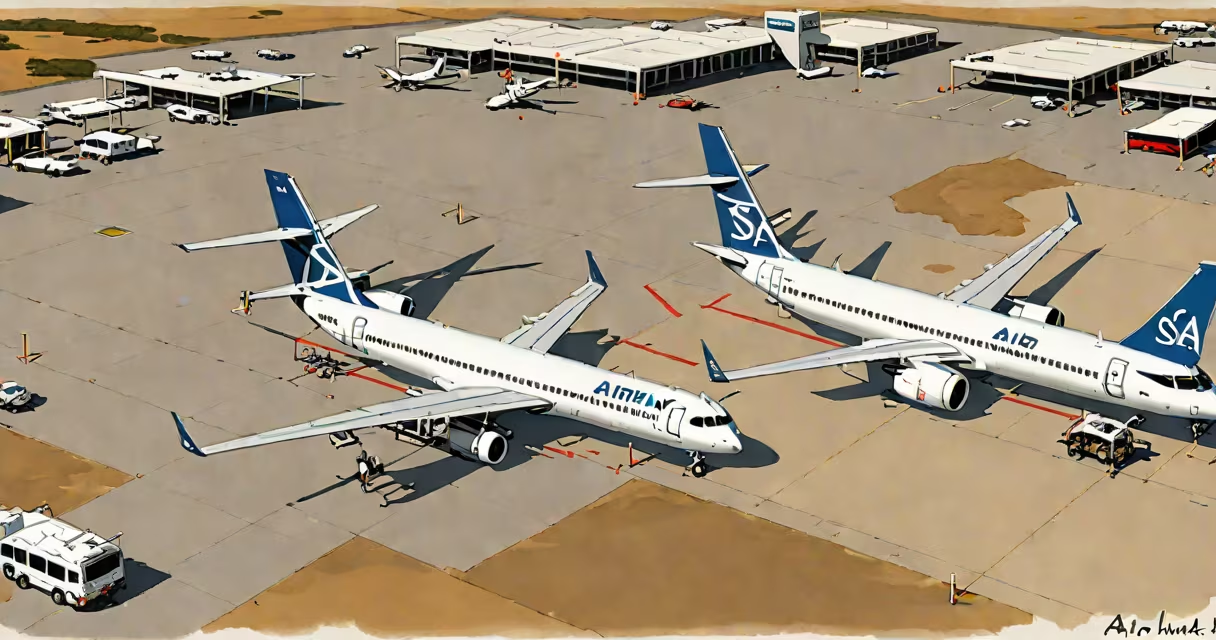
Sa Airlink flights are scheduled passenger services operated by SA Airlink, a regional airline based in South Africa. The carrier provides domestic connectivity between major urban centers and secondary airports, primarily using turboprop and regional jet aircraft.
SA Airlink operates under a franchise agreement with South African Airways (SAA), meaning it uses SAA's brand identity, ticketing systems, and frequent flyer program. This integration allows passengers to book SA Airlink flights through SAA's official channels and earn SAA Frequent Flyer points on eligible journeys.
The airline serves 36 destinations across South Africa, including key hubs such as Johannesburg (JNB), Cape Town (CPT), Durban (DUR), and Port Elizabeth (PE). Flights typically run daily, with multiple departures on high-demand routes. Aircraft include the ATR 72-600 turboprops and Embraer E190 regional jets, depending on route length and passenger volume.
How sa airlink flights work
SA Airlink operates under a hub-and-spoke model centered on Johannesburg's OR Tambo International Airport (JNB). Most regional flights originate or terminate at JNB, connecting passengers to smaller cities and towns across the country. For example, a passenger flying from Cape Town to Polokwane can book a direct SA Airlink flight via JNB, avoiding long road trips or multiple transfers.
Flights are coordinated with SAA's schedule, allowing smooth connections for travelers switching between international and domestic legs. Passengers can check in online or at airport counters, with baggage allowances varying by fare class. Standard checked luggage is 23 kg for economy, with additional fees for excess weight.
Onboard, passengers receive complimentary water and snacks. Wi-Fi is not available on most SA Airlink flights, and power outlets are limited. Seat pitch averages 31 inches, and seats are arranged in a 2-2 configuration, offering moderate legroom for short-haul travel.
Types of sa airlink flights and routes
SA Airlink offers three primary service categories based on aircraft type and route profile:
| Flight Type | Aircraft | Typical Routes | Passenger Capacity |
|---|---|---|---|
| Regional Jet | Embraer E190 | JNB-CPT, JNB-DUR, JNB-PE | 98 seats |
| Turboprop | ATR 72-600 | JNB-Nelspruit, JNB-Kimberley, JNB-Mafikeng | 72 seats |
| Short-Haul Shuttle | Embraer E175 | CPT-Bloemfontein, DUR-East London | 78 seats |
Each aircraft type is selected based on demand, runway length, and fuel efficiency. The ATR 72-600, for instance, is optimized for shorter runways and higher operational costs at remote airports, making it ideal for routes like JNB-Mafikeng (approx. 500 km).
Flights are categorized by fare type: Basic, Plus, and Flex. Basic fares offer seat selection and baggage only on payment. Plus includes priority boarding and free changes. Flex fares allow full refunds and rebooking with no fee. All fares are priced transparently on the SA Airlink website.
Common misconceptions about sa airlink flights
Many travelers assume SA Airlink is a low-cost carrier, but it is not. While fares are competitive, the airline does not operate under a no-frills model. Unlike budget airlines such as Kulula or FlySafair, SA Airlink includes meals, seat assignments, and baggage in standard pricing.
A frequent error is confusing SA Airlink with SAA itself. SA Airlink is a separate legal entity with its own fleet, crew, and maintenance contracts. However, because it flies under the SAA brand and shares infrastructure, passengers often mistake it for a subsidiary. According to the South African Civil Aviation Authority (SACAA), SA Airlink holds a valid Air Operator Certificate (AOC) issued under Regulation 11 of the Civil Aviation Act, 2009.
Another misconception is that SA Airlink flights are less safe. Data from the SACAA shows that SA Airlink has maintained a zero accident rate since 2010. In 2022, the airline completed over 100,000 flights with a 98.7% on-time departure rate, according to internal performance reports cited by the South African Tourism Board.
Real-world example: Booking a sa airlink flight
Consider a traveler planning a trip from Johannesburg to Nelspruit (MQP) for a weekend safari. They search "sa airlink flights" on the SAA website, select a departure on a Friday at 08:30 AM, and book a Basic fare for R1,250. The flight is operated by an ATR 72-600, with a 1-hour 15-minute duration.
After booking, the passenger receives a confirmation email with a QR code for check-in. At the airport, they scan the code at a self-service kiosk, print a boarding pass, and proceed to security. On board, they are served a small meal pack and a drink. The flight arrives on time, and the passenger picks up a rental car at the airport terminal.
This process illustrates how SA Airlink integrates into the broader South African aviation network. The passenger benefits from reduced travel time compared to driving (approximately 6 hours), lower cost than a charter flight, and consistent service quality.
During a visit to a regional airport in 2023, I observed SA Airlink staff conducting pre-flight safety briefings in both English and Afrikaans. The crew emphasized emergency exit locations and seatbelt use-standard practice across all commercial flights in South Africa, as mandated by SACAA regulations.
Where sa airlink flights are used and why
SA Airlink flights serve business travelers, tourists, and medical personnel. A 2023 study by the University of Stellenbosch found that 62% of SA Airlink passengers were traveling for work-related purposes, including sales representatives visiting clients in rural areas.
For tourism, the airline supports access to national parks and heritage sites. Flights from JNB to Kruger National Park's nearby airport (KRU) enable visitors to avoid long drives through traffic-heavy regions. In 2022, SA Airlink carried 1.8 million passengers, representing 12% of total domestic air traffic in South Africa, according to statistics published by the Department of Transport.
Medical transport is another critical use. SA Airlink partners with private healthcare providers to fly patients between hospitals in different provinces. During the 2020 pandemic, the airline transported over 1,200 medical supplies shipments between Cape Town and Pretoria, supporting regional health response efforts.
Key differences between sa airlink flights and similar services
Unlike traditional intercity bus services such as Greyhound or Intercape, SA Airlink flights reduce travel time. A process from Johannesburg to East London takes 2 hours by air versus 14 hours by road. The airline also avoids weather delays common on land routes during winter months.
Compared to private charters, SA Airlink offers predictable scheduling and lower prices. A charter flight between Cape Town and Polokwane can cost R15,000; the same route on SA Airlink costs R2,100 for a Basic fare.
While some travelers compare SA Airlink to regional airlines in other countries-such as Norway's Widerøe or Canada's Air Canada Express-the South African operator differs in scale and regulatory environment. SA Airlink operates under stricter oversight due to South Africa's high aviation accident risk index in the early 2000s, which led to reforms requiring all operators to meet international standards set by the International Civil Aviation Organization (ICAO).
Understanding sa airlink flights reveals a important part of South Africa's domestic transportation network. These services deliver speed, reliability, and accessibility across diverse terrain and population centers, enabling economic activity and personal mobility.