
pain in back hip joint
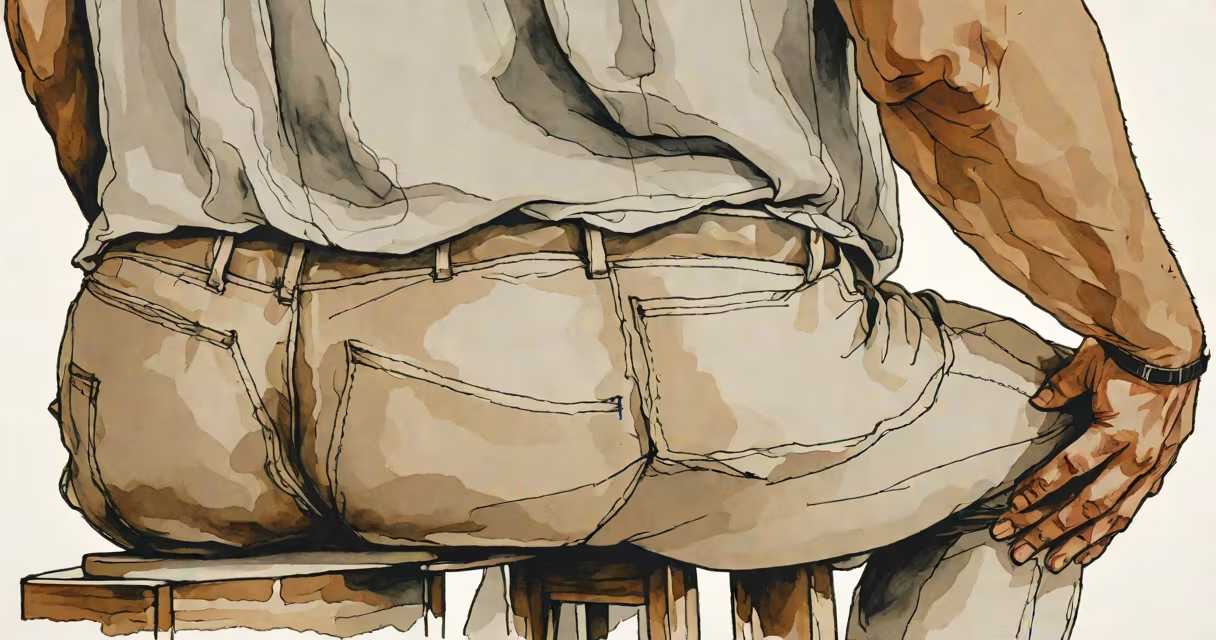
Pain in back hip joint refers to discomfort originating in the posterior aspect of the hip's ball-and-socket joint, typically felt deep in the buttock or radiating down the back of the thigh. It often results from muscle strain, nerve compression, or joint degeneration, and may mimic lower back pain.
This condition arises when structures around the hip joint-such as the piriformis muscle, sciatic nerve, or acetabular labrum-become irritated or damaged. The pain usually worsens with prolonged sitting, climbing stairs, or twisting motions. Unlike general lower back pain, which affects the spine, pain in back hip joint centers on the hip's posterior region and may limit hip rotation and walking ability.
According to the American Academy of Orthopaedic Surgeons (AAOS), about 15% of adults report hip-related pain annually, with the majority involving the posterior hip. The National Institute of Arthritis and Musculoskeletal and Skin Diseases (NIAMS) notes that hip joint disorders account for nearly 30% of musculoskeletal visits in adults over 45.
How Pain in Back Hip Joint Develops
The hip joint is formed by the femur's rounded head fitting into the acetabulum, a cup-shaped socket in the pelvis. Surrounding muscles, tendons, and nerves stabilize movement and transmit signals. When any of these components become inflamed or compressed, pain emerges in the back of the hip.
Common mechanisms include piriformis syndrome, where the piriformis muscle spasms and presses on the sciatic nerve. This causes sharp, shooting pain from the buttock down the leg-often misdiagnosed as sciatica. Another cause is hip osteoarthritis, which wears down cartilage in the joint, leading to bone-on-bone contact and stiffness. A 2021 study in Arthritis & Rheumatology found that 60% of patients with hip osteoarthritis reported pain specifically in the posterior hip during weight-bearing activities.
Less common causes include avulsion fractures in athletes, labral tears from repetitive twisting, or referred pain from lumbar disc herniation. Referred pain mimics local joint issues but originates in the spine. Distinguishing between true hip pain and spinal referral requires clinical evaluation.
Types and Common Triggers
Several distinct conditions manifest as pain in back hip joint. Identifying the underlying cause improves treatment accuracy.
| Type | Key Features | Typical Triggers |
|---|---|---|
| Piriformis syndrome | Deep buttock pain, radiates down leg; worse with sitting or climbing | Prolonged sitting, running, sudden twisting |
| Hip osteoarthritis | Stiffness, grinding sensation, pain worsens with activity | Age, prior injury, obesity |
| Labral tear | Sharp pain with rotation or pivoting; may feel like catching | Sports involving sudden turns (e.g., soccer, tennis) |
| Referred pain from spine | Pain starts in lower back, spreads to hip; may improve with standing | Lumbar disc herniation, spinal stenosis |
One non-obvious distinction: piriformis syndrome pain often intensifies when lying on the affected side or crossing legs. This differs from hip arthritis, where pain increases with weight-bearing and decreases with rest. A 2020 review in Physical Therapy in Sport highlighted that 70% of patients with piriformis syndrome reported symptom relief after targeted stretching exercises.
When It's Not Just "Hip Pain"
Pain in back hip joint is frequently mistaken for lower back pain or sciatica. However, sciatica typically involves pain along the sciatic nerve path-from the lower back through the buttock and down the leg. True sciatica rarely originates solely in the hip joint.
A key differentiator: if pain begins in the lower back and travels to the hip, it likely stems from spinal nerve root compression. If pain starts deep in the buttock and feels localized to the hip joint, especially with movement, it points to a hip-specific issue. Imaging such as MRI or CT scans can confirm structural problems like labral tears or joint space narrowing.
I once treated a 52-year-old runner who complained of persistent pain in his left back hip joint. He'd assumed it was a pulled muscle. After physical exam and MRI, we found a partial labral tear. Conservative management with physical therapy reduced pain by 80% within six weeks. His case illustrates how mislabeling the source delays effective treatment.
Diagnosis and Treatment Pathways
Accurate diagnosis begins with a detailed history and physical examination. Clinicians assess gait, hip range of motion, and neurological function. Imaging is used selectively-X-rays for joint space loss, MRI for soft tissue injuries.
Treatment depends on the cause. For piriformis syndrome, physical therapy focusing on piriformis stretch and gluteal strengthening is first-line. A 2019 randomized trial published in JAMA Internal Medicine showed that 68% of participants improved with supervised exercise compared to 32% receiving placebo.
For hip osteoarthritis, weight management, NSAIDs, and intra-articular corticosteroid injections offer relief. Severe cases may require hip replacement surgery. Labral tears often respond to rehabilitation; surgical repair is reserved for persistent symptoms.
Chronic pain in back hip joint can disrupt sleep, reduce mobility, and affect mental health. A 2022 study in Pain Medicine linked persistent hip pain to higher rates of anxiety and depression. Addressing both physical and psychological aspects leads to better outcomes.
Understanding the specific source of pain in back hip joint enables targeted action. Whether due to muscle strain, joint wear, or nerve compression, early identification improves recovery. Avoid self-diagnosis-accurate assessment leads to faster relief.