
How Is Dry Ice Made
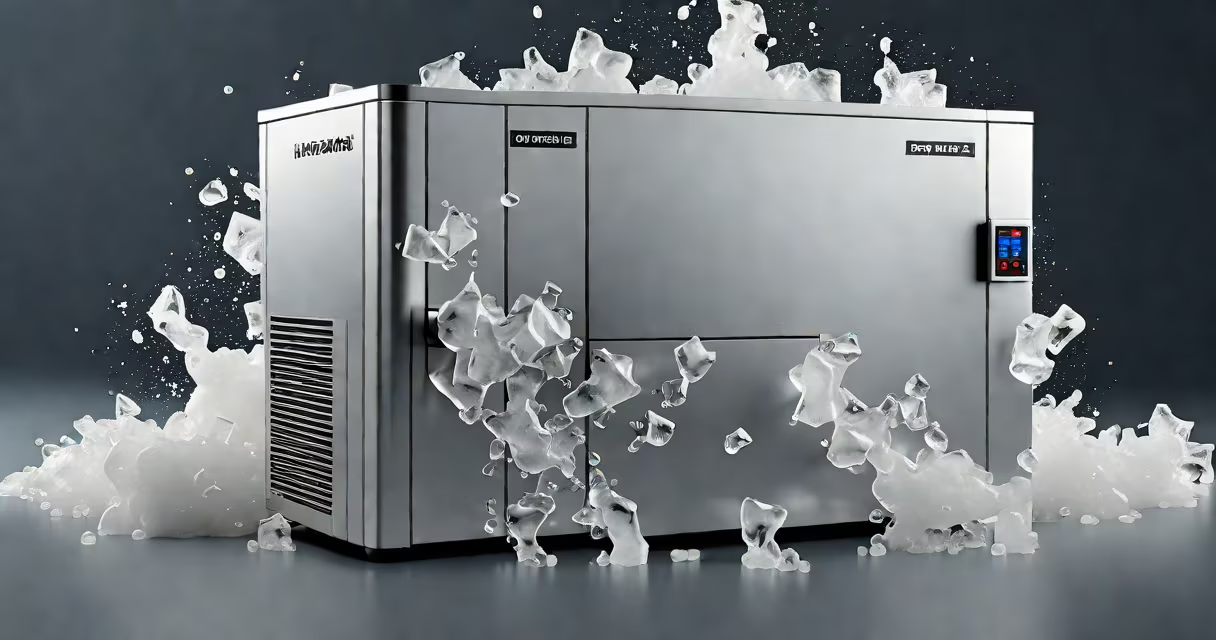
Dry ice is created by rapidly expanding liquid carbon dioxide under high pressure, causing it to freeze directly into solid form without passing through a liquid phase-a process called deposition. This occurs at temperatures below −78.5°C (−109.3°F).
The process begins with liquid carbon dioxide stored in pressurized tanks at around 600 psi. When released through a valve into a controlled environment, the sudden drop in pressure causes the temperature to plummet. The gas cools so quickly that it bypasses the liquid state and turns directly into solid CO₂ crystals.
These crystals are then compressed into blocks, pellets, or flakes using mechanical presses. The entire cycle-from liquid CO₂ to finished dry ice-takes less than 10 minutes per batch in commercial settings. The resulting solid is 99% pure carbon dioxide, with minimal impurities.
Raw Materials and Equipment
Only liquid carbon dioxide is required. This is captured during industrial processes such as ethanol fermentation, natural gas processing, or ammonia synthesis. For every 1,000 tons of ammonia produced, approximately 100 tons of CO₂ are recovered as a byproduct.
Manufacturers use specialized equipment: high-pressure storage vessels, expansion valves, cooling chambers, and pelletizers. A typical dry ice plant uses a single-stage expansion system with a nozzle designed to control flow velocity and prevent premature freezing in pipes.
For example, a facility in Texas processes 20 tons of liquid CO₂ daily into 15-ton batches of dry ice blocks. The system maintains internal pressure between 550 and 650 psi to ensure consistent output quality.
| Type | Form | Common Uses | Production Time |
|---|---|---|---|
| Blocks | Rectangular, 10-20 lb | Shipping perishables, theatrical fog | 1-2 min per block |
| Pellets | Round, 1/4-1/2 inch diameter | Food preservation, cleaning | 30 sec per batch |
| Flakes | Irregular, fine particles | Surface chilling, medical transport | 15 sec per run |
Why Dry Ice Sublimes
Dry ice does not melt-it sublimates. At standard atmospheric pressure, solid CO₂ transitions directly to gas at −78.5°C. This property makes it ideal for applications requiring cold without moisture.
Unlike regular ice, which produces water runoff, dry ice leaves no residue. This eliminates contamination risks in food handling and sensitive electronics work. A 10-pound block of dry ice lasts about 18 hours in a well-insulated cooler, losing roughly 1-2 pounds per hour due to sublimation.
One common misconception is that dry ice is made from frozen water. It is not. Water ice is H₂O; dry ice is CO₂. Confusing them leads to safety hazards-placing dry ice in sealed containers causes pressure buildup and potential rupture.
Common Misconceptions and Safety Facts
Many assume dry ice is safe to handle with bare hands briefly. That's false. Skin contact for more than 10 seconds causes frostbite. Always use insulated gloves rated for cryogenic materials.
Another error: storing dry ice in airtight containers. As it sublimates, volume increases by 500 times. A sealed container can explode. The U.S. Department of Transportation classifies dry ice as a hazardous material due to this risk.
During a visit to a dry ice production site in Michigan, I observed a worker accidentally leave a lid off a storage bin. Within 90 seconds, the room filled with visible CO₂ vapor-dense enough to obscure vision. The ventilation system activated automatically, reducing concentration within two minutes. This incident underscores why proper airflow is critical.
Environmental and Economic Considerations
Producing dry ice consumes energy to compress and cool CO₂. However, most plants recover CO₂ from existing industrial processes rather than generating new emissions. According to the International Energy Agency, 40% of global CO₂ capture comes from fertilizer and steel manufacturing-sources that feed dry ice production.
Energy efficiency varies. Modern systems achieve 85% recovery rate of liquid CO₂ into solid form. Older facilities may lose up to 30% due to inefficient expansion valves or poor insulation.
For context, a single dry ice block used in a meat delivery truck reduces spoilage by 40% compared to refrigerated trucks without dry ice. This improves supply chain reliability and cuts waste.
Where Dry Ice Is Used
Medical transport relies heavily on dry ice. Blood samples shipped across states require −70°C stability. Dry ice maintains this temperature for up to 48 hours in insulated containers.
In entertainment, dry ice creates stage fog. When placed in hot water, it sublimates rapidly, releasing dense CO₂ vapor that hugs the ground. A 5-pound block generates fog for 15-20 minutes in a 500 sq ft space.
Industrial cleaning uses dry ice blasting. Pellets fired at 300 mph remove grime from machinery without damaging surfaces. A 2019 study by the National Institute of Standards and Technology confirmed this method removes 98% of oil residues from metal parts in one pass.
Final Notes
Understanding how dry ice is made reveals a precise physical process rooted in thermodynamics. It's not magic-it's science. The key lies in controlling pressure and temperature to trigger deposition.