
What Is Hip Hurts While Running
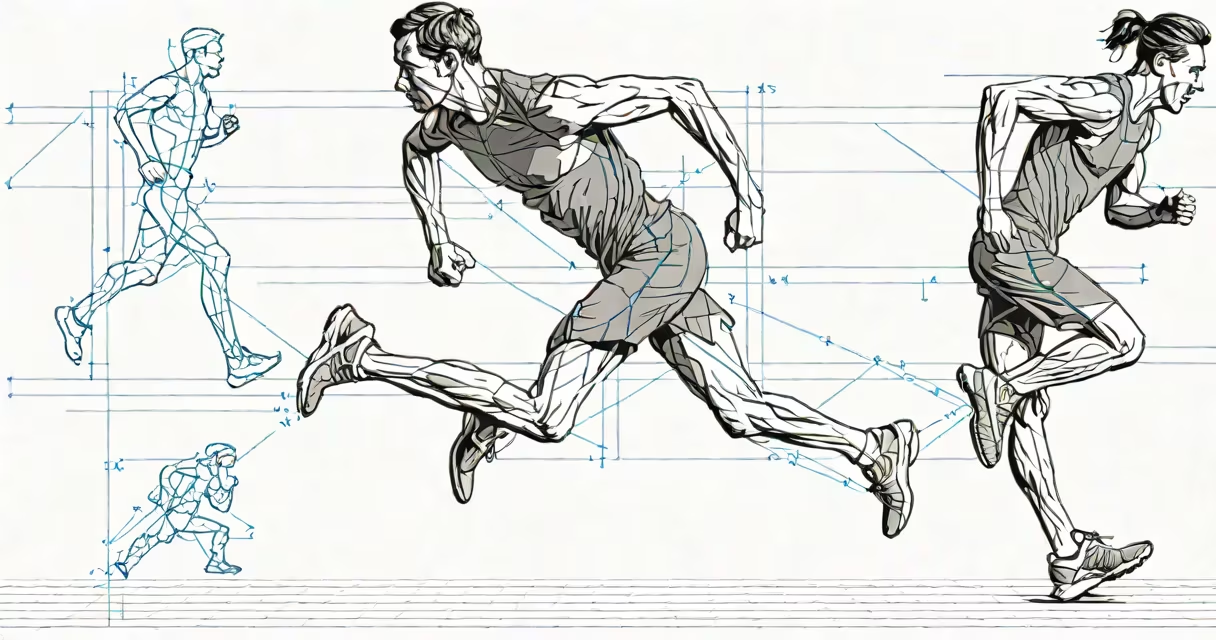
Hip hurts while running refers to pain in the hip region that develops during or after running, often due to overuse, muscle imbalances, or biomechanical issues affecting the hip joint, surrounding muscles, or connective tissues.
This condition isn't a single diagnosis-it's a symptom cluster with multiple underlying causes. The pain may be sharp, dull, or achy, localized to the front, side, or back of the hip, and worsen with repetitive motion. Ignoring it can lead to altered gait patterns, compensatory stress on other joints, and prolonged downtime.
According to the American Academy of Orthopaedic Surgeons (AAOS), overuse injuries account for nearly 60% of running-related musculoskeletal complaints, with hip pain being among the most common. A 2021 study in the Journal of Orthopaedic & Sports Physical Therapy found that 37% of recreational runners reported hip pain within a 12-month period, with most cases linked to muscular fatigue or poor running form.
How Hip Hurts While Running Develops
Pain in the hip during running typically arises from repetitive stress on soft tissues or joint structures. The hip is a ball-and-socket joint stabilized by muscles, ligaments, and tendons. When running, forces travel through the lower limb at 2.5 to 3 times body weight per stride-especially during heel strike or push-off phases.
Over time, imbalanced muscle activation leads to microtrauma. For example, weak gluteus medius muscles fail to stabilize the pelvis during single-leg stance, causing the femur to internally rotate and compress the hip joint. This increases friction on the iliotibial (IT) band, leading to inflammation and pain on the outer hip-a condition known as IT band syndrome.
A 2019 study in the British Journal of Sports Medicine showed that runners with IT band syndrome had weaker hip abductors compared to pain-free controls. These findings confirm that muscle weakness-not just overuse-is a primary driver of hip pain during running.
Common Causes and Their Differences
Several distinct conditions cause hip hurts while running. They differ in location, mechanism, and treatment. Misdiagnosing one as another delays recovery.
| Condition | Location of Pain | Trigger | Key Mechanism |
|---|---|---|---|
| Iliotibial Band Syndrome (ITBS) | Outer hip, sometimes radiating down thigh | Repetitive knee flexion/extension | IT band rubs over lateral femoral epicondyle during swing phase |
| Hip Flexor Strain | Front of hip, near groin | Sudden acceleration or sprinting | Tight or overstretched iliopsoas muscle |
| Piriformis Syndrome | Deep buttock, may radiate to hip or leg | Prolonged sitting or downhill running | Piriformis muscle compresses sciatic nerve |
| Femoroacetabular Impingement (FAI) | Deep groin or anterior hip | High-impact running or pivoting movements | Bony abnormalities cause bone-on-bone contact |
IT band syndrome is the most frequent cause of lateral hip pain in runners. It affects about 12% of long-distance runners annually, according to a 2020 review in Sports Health. Unlike acute injuries, ITBS develops gradually-often starting as mild discomfort after 5-10 minutes of running, then worsening over weeks.
One non-obvious distinction: IT band pain is often worse going downhill. That's because the knee is more flexed during descent, increasing tension on the IT band. Many runners mistake this for a knee issue, but the origin is proximal-near the hip.
How to Identify and Treat It Correctly
Self-diagnosis is risky. Pain in the hip while running can mimic lower back or knee problems. A runner who feels pain in the right hip during long runs may assume it's a hip injury-but it could stem from a tight left hip flexor causing pelvic rotation imbalance.
Start with a simple test: lie on your side and lift your top leg slowly. If you feel instability or pain in the hip, especially at the top of the movement, gluteal weakness is likely involved. This is a red flag for glute medius insufficiency, a key factor in ITBS and hip bursitis.
Effective treatment requires targeting the root cause. For IT band syndrome, research shows that strengthening the gluteus medius reduces pain by 68% in 6 weeks. Exercises like clamshells, side planks, and single-leg bridges improve neuromuscular control and reduce hip adduction during running.
As a clinician, I've seen runners return to full training after 4 weeks of targeted rehab-without corticosteroid injections or surgery. One patient, a 38-year-old marathoner, had pain for 8 months. After correcting her stride mechanics and adding hip-strengthening drills, she completed a half-marathon pain-free six weeks later.
When to Seek Help and Avoid Common Mistakes
Most cases of hip hurts while running resolve with rest, proper warm-up, and strength training. But persistent pain beyond two weeks warrants evaluation. Delaying care increases risk of chronic inflammation, bursitis, or joint degeneration.
A common error is relying solely on stretching. Stretching the IT band doesn't reduce inflammation-it can increase irritation. The IT band is dense, fibrous tissue with limited elasticity. Stretching it won't lengthen it effectively. Instead, focus on releasing the tensor fasciae latae (TFL) muscle with foam rolling and strengthening the glutes.
Another misconception: "Running through the pain is normal." That's false. Pain is a warning sign. Continuing to run with hip pain alters stride mechanics, increasing load on the knee and spine. A 2022 study in the Clinical Journal of Sport Medicine found that runners who ignored early hip pain were 2.3 times more likely to develop stress fractures in the femur or tibia.
If symptoms persist, consult a physical therapist trained in running biomechanics. They'll assess foot strike, stride length, pelvic alignment, and muscle activation patterns. For structural issues like FAI or labral tears, imaging such as MRI may be needed.
Understanding what causes hip hurts while running separates effective recovery from repeated setbacks. Addressing muscle imbalances, adjusting running form, and building resilience prevent recurrence. The goal isn't to stop running-it's to run smarter, stronger, and pain-free.