
bulging disk lower back
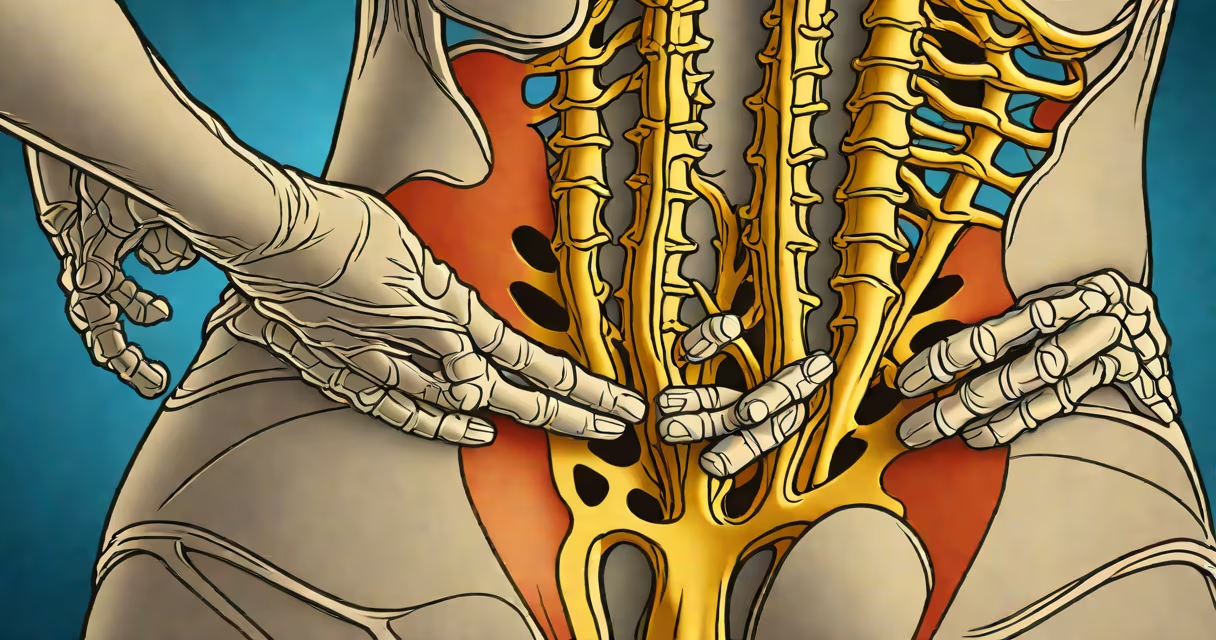
A bulging disk lower back happens when the soft center of a spinal disc pushes out through its tough outer ring, often compressing nearby nerves and causing localized or radiating pain. This condition affects the lumbar region-the five vertebrae between the waist and hips-and is a common cause of lower back discomfort.
Spinal discs act as cushions between the bones of the spine. Each disc has a gel-like nucleus surrounded by a fibrous annulus. When pressure builds-due to aging, repetitive strain, or sudden injury-the annulus weakens, allowing the nucleus to push outward. The bulge may not rupture the outer layer, distinguishing it from a herniated disc, though both can irritate nerves.
According to the American Academy of Orthopaedic Surgeons (AAOS), about 80% of adults experience low back pain at some point, and disc issues like bulging are among the most frequent underlying causes. The National Institute of Neurological Disorders and Stroke (NINDS) notes that while many bulging disks cause no symptoms, those that do often result in pain that worsens with sitting, bending, or lifting.
How a bulging disk lower back develops
Discs lose water content and elasticity with age-a process called degeneration. By age 30, most people begin losing disc hydration. As discs shrink, they become less effective at absorbing shock. This increases stress on the outer layers, making them prone to bulging under load.
Sudden movements like twisting while lifting heavy objects can trigger a bulge even in younger individuals. A 2021 study published in Spine Journal found that manual laborers and office workers who sit for more than six hours daily had a 2.3 times higher risk of developing disc-related back pain compared to those with active, varied postures.
Not all bulges are painful. MRI scans show that up to 40% of asymptomatic adults have at least one bulging disc, according to research from the University of California, San Francisco. Pain arises only when the bulge contacts a nerve root, leading to inflammation, numbness, or weakness in the legs.
Types and classifications
Bulging discs are categorized by location and severity. In the lower back, they typically occur between L4-L5 or L5-S1-segments that bear the most weight during standing and walking.
| Type | Description | Common Symptoms |
|---|---|---|
| Diffuse bulge | Generalized outward pressure across the entire disc circumference | Mild to moderate lower back pain; stiffness |
| Focal bulge | Localized protrusion, often toward one side | Pain radiating to one leg; possible tingling or weakness |
| Central bulge | Protrusion toward the spinal canal | Compression of nerve bundles; may affect bowel or bladder control (rare) |
Crucially, a bulging disk is not the same as a herniated disc. A herniation involves a tear in the annulus, allowing the nucleus to escape entirely. A bulge remains contained within the outer layer. The distinction matters because treatment approaches differ: mild bulges often resolve with conservative care, while herniations may require surgical evaluation.
Common misperceptions and corrections
Many assume that a bulging disk always requires surgery. That's false. The majority of cases improve with non-invasive interventions. The AAOS states that 90% of patients with disc-related back pain see symptom relief within six weeks using physical therapy, activity modification, and targeted exercises.
Another myth is that MRI findings directly correlate with pain levels. A 2019 study in Journal of the American Medical Association (JAMA) found that 60% of people with no back pain showed disc abnormalities on imaging. This highlights that structural changes don't always equate to dysfunction.
I once treated a 42-year-old warehouse worker whose MRI revealed a large L5-S1 bulge. He reported severe left-leg pain and difficulty walking. After four weeks of core stabilization and posture retraining, his pain dropped from 8/10 to 2/10. His follow-up MRI showed no change in disc structure-but he regained full mobility. This illustrates that function, not imaging, should guide treatment.
Diagnosis and treatment options
Doctors diagnose a bulging disk lower back through a combination of medical history, physical exam, and imaging. A neurological exam checks reflexes, muscle strength, and sensation. If symptoms persist beyond a few weeks, an MRI or CT scan confirms the diagnosis.
First-line treatment focuses on reducing inflammation and restoring movement. Nonsteroidal anti-inflammatory drugs (NSAIDs) like ibuprofen help manage acute pain. Physical therapy targeting the deep stabilizing muscles-transverse abdominis and multifidus-is proven effective. A 2020 randomized trial in Physical Therapy showed that patients doing targeted lumbar exercises improved pain scores by 55% over 12 weeks versus placebo.
For persistent cases, epidural steroid injections may be used to reduce nerve swelling. These are not curative but can provide temporary relief to allow participation in rehabilitation. Surgery is reserved for severe cases involving progressive weakness, loss of bowel/bladder control, or failure of conservative care after 6-12 months.
Prevention and long-term management
Strengthening the lower back reduces mechanical stress on discs. Exercises like bird-dog, dead bug, and planks activate the core without flexing the spine. A 2022 review in British Journal of Sports Medicine found that consistent core training lowered the recurrence rate of disc-related pain by 41% over two years.
Posture matters. Sitting with the hips lower than the knees increases disc pressure by up to 40%, according to biomechanical models from the Mayo Clinic. Using a lumbar support pillow or standing desk helps maintain natural spinal alignment.
When pain flares, avoid prolonged bed rest. The NINDS recommends staying active-walking for 10 minutes every hour-to prevent muscle atrophy and maintain disc nutrition. Ice packs applied for 15 minutes every 2 hours during acute phases can reduce inflammation.
Understanding a bulging disk lower back begins with recognizing it as a mechanical issue-not a disease. With correct management, most people return to normal activities. The key is addressing movement patterns, not just symptoms.