
salt dough recipe for kids
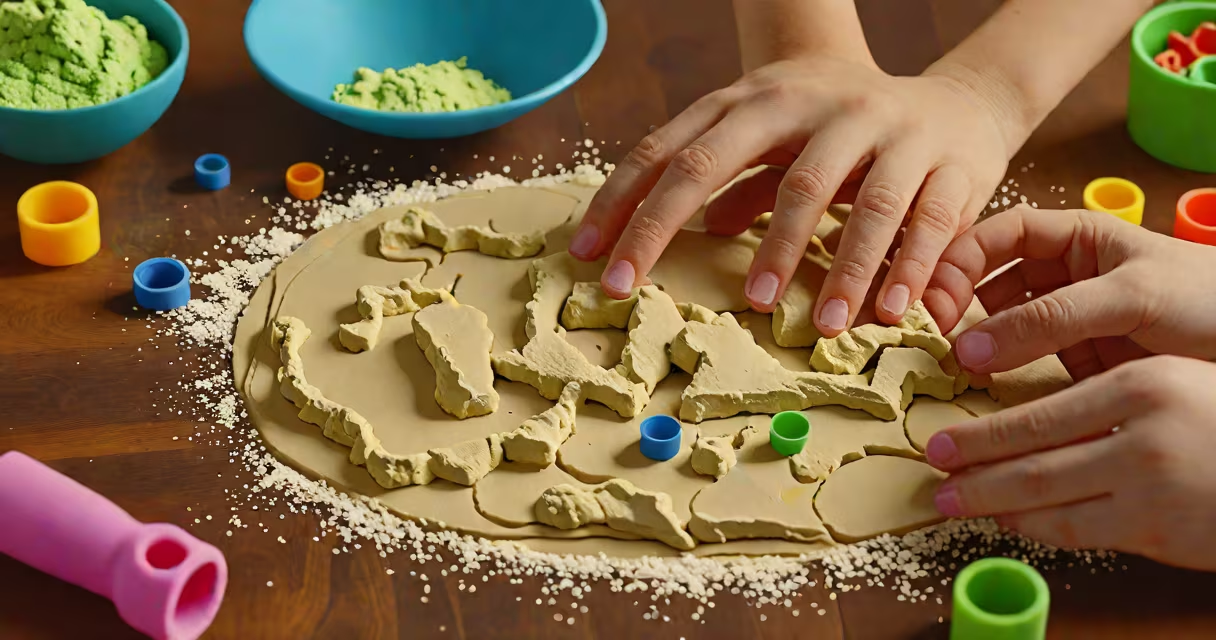
A salt dough recipe for kids combines flour, salt, and water to make a pliable, no-bake modeling material safe for children ages 3 and up. It dries hard, holds fine details, and can be painted or decorated after air-drying.
This recipe is ideal for sensory play, holiday crafts, and keepsake projects. It requires no cooking, no special tools, and minimal cleanup. Most versions use just three pantry staples: all-purpose flour, table salt, and tap water.
For best results, mix ingredients in a bowl until smooth, then knead until elastic. Roll out between palms or on a floured surface. Shape into beads, animals, or personalized name tags. Let dry for 24 to 48 hours at room temperature.
How It Works
Salt dough relies on the binding properties of starch in flour and the drying effect of salt. When mixed with water, flour forms a gluten network that gives structure. Salt acts as a desiccant, drawing moisture out during drying, which prevents mold and strengthens the final form.
Unlike polymer clays or oven-baked doughs, salt dough doesn't require heat. This makes it suitable for preschoolers and classrooms. The lack of baking reduces fire risk and eliminates the need for supervision near stoves or ovens.
Drying times vary based on thickness. A ¼-inch thick circle takes about 24 hours to harden. Thicker shapes may take longer and can crack if dried too quickly. For even drying, place pieces on a wire rack or parchment-lined tray in a well-ventilated area away from direct sunlight.
Basic Ingredients and Variations
The standard ratio is 2 parts flour to 1 part salt, with enough water to form a soft dough. For 1 cup of flour, use ½ cup of salt and ⅓ to ½ cup of water. Adjust water gradually to avoid stickiness.
Adding food coloring or natural dyes (like beet juice or turmeric) lets kids customize colors. Some parents add a few drops of essential oil (such as lavender) for scent, though this isn't recommended for very young children due to inhalation risks.
For extra durability, substitute half the flour with cornstarch. This reduces shrinkage and cracking. Avoid adding oil or butter-these interfere with drying and attract dust.
| Ingredient | Amount (for 1 batch) | Purpose |
|---|---|---|
| All-purpose flour | 1 cup (120g) | Provides structure and elasticity |
| Table salt | ½ cup (60g) | Prevents mold, aids drying |
| Water | ⅓ to ½ cup (80-120ml) | Activates starch, binds ingredients |
Where and Why It's Used
Teachers use salt dough in early childhood education settings to develop fine motor skills. Children roll, press, and cut shapes-activities that strengthen hand muscles needed for writing.
Parents often make it for school art fairs, holiday gifts, or birthday party activities. A child can create a handprint ornament, a name tag, or a miniature animal to take home.
According to the American Occupational Therapy Association, sensory materials like salt dough support cognitive development in preschoolers by engaging multiple senses simultaneously. The tactile feedback of pressing and shaping improves spatial awareness and hand-eye coordination.
Common Misconceptions and Corrections
Many assume salt dough must be baked to harden. This is false. It dries solid through evaporation. Baking can cause warping or burning if not monitored closely.
Another myth is that salt dough is edible. While ingredients are food-grade, it's not meant for consumption. Ingesting large amounts of salt can lead to dehydration. Always supervise children during crafting and remind them not to eat the dough.
Some try to speed up drying with a hairdryer. This causes uneven shrinkage and cracks. Air drying at room temperature ensures uniform hardness.
Real-World Example: A Child's Handprint Ornament
At a kindergarten class in Portland, Oregon, a teacher led 20 children through a fall-themed craft using salt dough. Each child pressed their hand into a flat disc of dough, then used a toothpick to carve a leaf pattern around the palm.
After drying for 36 hours, the teacher applied acrylic paint. The children chose autumn colors-orange, red, gold-and added glitter accents. The finished ornaments were hung on a classroom tree made from cardboard branches.
One parent reported her 4-year-old son kept his ornament "for years." He still remembers making it during "the time we did the leaves."
What It's Not
Salt dough is not the same as playdough. Playdough contains oil and glycerin, which keep it soft and reusable. Salt dough is meant to be shaped once and left to dry permanently.
It also differs from polymer clay, which requires baking or curing with a heat gun. Polymer clay stays pliable until hardened. Salt dough becomes brittle after drying and cannot be reshaped.
Finally, salt dough isn't a substitute for professional modeling materials. It lacks the durability of air-dry clay or epoxy-based sculpting compounds. But for home and classroom use, it offers unmatched simplicity and safety.
I once made a batch with my niece during a rainy afternoon. She insisted on adding "rainbow sprinkles" (colored sand from a craft store). The mixture looked messy, but after drying, the color stayed intact. She proudly gave it to her teacher as a "gift from the sky."
With proper care, a salt dough recipe for kids produces lasting memories and tangible creations. It's not just craft-it's connection.