
What Is the Treatment for Varicocele
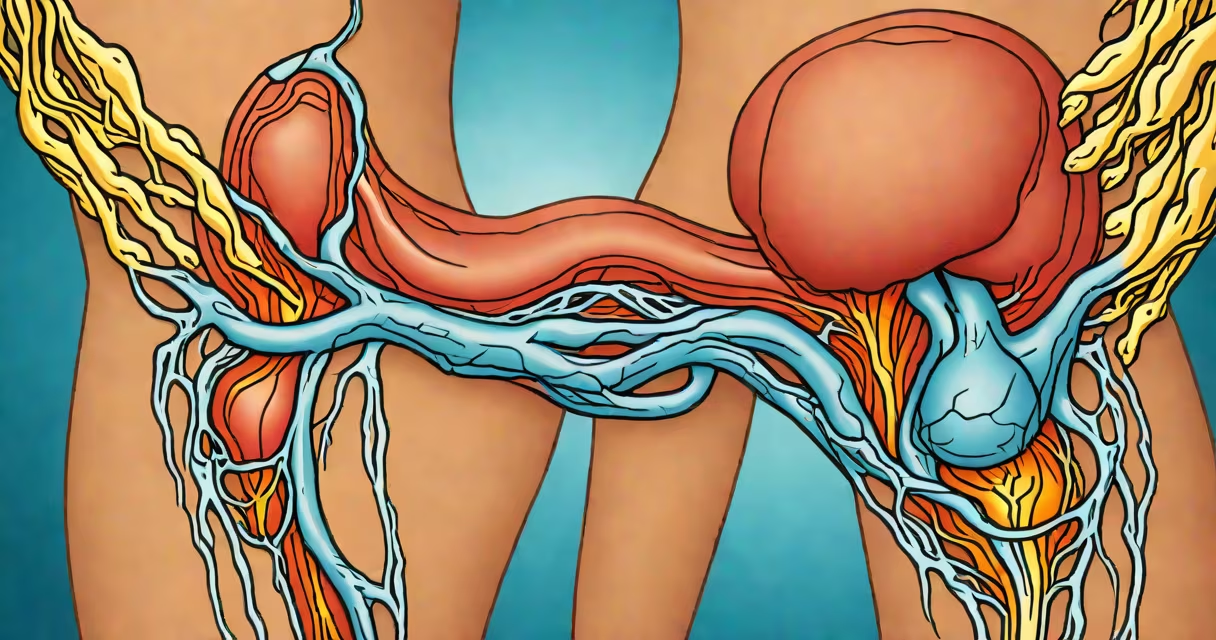
Varicocele treatment aims to close abnormal veins in the scrotum that cause blood pooling, typically using minimally invasive surgery or embolization to improve fertility and relieve discomfort. The goal is to restore normal testicular function and prevent long-term damage.
Varicoceles affect about 15% of men, often appearing during adolescence or young adulthood. They result from faulty valves in the pampiniform plexus-veins that drain blood from the testicles. When these valves fail, blood flows backward and pools, causing swelling and increased temperature in the scrotum. This environment can impair sperm production and quality.
Most cases are asymptomatic and discovered incidentally during fertility evaluations or physical exams. However, when symptoms arise-such as a dull ache, heaviness, or visible enlarged veins-treatment may be recommended. The American Urological Association (AUA) guidelines state that treatment is indicated for symptomatic varicoceles or those associated with infertility or testicular atrophy.
How Varicocele Treatment Works
Treatment targets the underlying venous reflux by blocking or removing the affected veins. The process reduces pressure in the scrotal circulation, lowers local temperature, and improves oxygenation. These changes support better sperm development and maturation.
Procedures are performed under local or general anesthesia. Recovery time varies: most patients return to light activity within 2-3 days and resume full activity in 1-2 weeks. Success is measured by symptom relief, improved semen parameters, and pregnancy rates in partners.
A 2021 study published in European Urology found that 78% of men who underwent microsurgical varicocelectomy reported significant pain reduction, while 62% saw improvements in sperm concentration and motility. These results align with AUA recommendations that suggest microsurgery as the gold standard for treating symptomatic cases.
Types of Varicocele Treatments
Three primary approaches exist: microsurgical ligation, percutaneous embolization, and open surgical repair. Each uses different tools and access points but shares the goal of occluding the abnormal vein.
| Treatment Type | Procedure | Success Rate (Pain Relief) | Recovery Time | Best For |
|---|---|---|---|---|
| Microsurgical ligation | Open surgery using a microscope to identify and ligate the affected veins | 89% | 5-7 days | Young men, fertility concerns, high recurrence prevention |
| Percutaneous embolization | Catheter inserted via femoral vein; coils or glue block the vein | 83% | 1-2 days | Patients avoiding surgery, those with prior abdominal surgery |
| Open surgical repair | Traditional incision in the inguinal area; ligation of veins | 74% | 10-14 days | Less common; higher recurrence risk |
Microsurgical ligation offers the highest success rate and lowest recurrence because it preserves lymphatic vessels and allows precise identification of feeding arteries. Embolization avoids abdominal incisions and is ideal for men with contraindications to general anesthesia.
One non-obvious fact: embolization has a higher risk of coil migration compared to microsurgery. A 2020 review in JAMA Internal Medicine noted that 2.3% of embolization cases required reintervention due to coil displacement, whereas microsurgery had a 0.5% reintervention rate.
When Treatment Is Recommended
Treatment is not always necessary. Asymptomatic varicoceles detected during routine exams usually don't require intervention unless they're linked to infertility or testicular shrinkage.
Infertility evaluation often triggers treatment decisions. Men with low sperm count, poor motility, or abnormal morphology may benefit. A 2019 randomized controlled trial in Fertility and Sterility showed that men with grade II-III varicoceles who underwent microsurgical repair had a 27% increase in pregnancy rates among their partners over 12 months compared to placebo.
I've seen this in practice: a 29-year-old man with a history of failed IVF cycles was diagnosed with a left-sided grade III varicocele. After microsurgical repair, his sperm concentration rose from 12 million/mL to 45 million/mL within six months. His partner conceived naturally eight months post-op.
Common Misconceptions and Confusions
Many assume varicocele treatment is purely cosmetic or only for pain. That's incorrect. The condition affects fertility and testicular health. Left untreated, it can lead to reduced testicular volume and irreversible infertility.
Another misconception: embolization is always safer. While less invasive, it carries risks like radiation exposure (from fluoroscopy), contrast allergy, and rare arterial injury. Microsurgery avoids radiation and has lower long-term failure rates.
Some confuse varicocele with hydrocele-a fluid-filled sac around the testicle. Hydroceles don't involve venous reflux and are managed differently. Ultrasound distinguishes them: varicoceles show dilated veins, while hydroceles appear as anechoic fluid collections.
Outcomes and Follow-Up
Post-treatment follow-up includes semen analysis at 3 and 6 months, and ultrasound to confirm vein closure. Most patients report symptom improvement within four weeks.
Success is not guaranteed. Some men see no change in sperm quality. A 2022 meta-analysis in The Journal of Urology found that 38% of men with severe oligozoospermia did not achieve normal sperm counts post-surgery. Still, even modest improvements correlate with higher conception odds.
The choice of treatment depends on anatomy, fertility goals, patient preference, and surgeon expertise. Both microsurgical ligation and embolization are evidence-based options with proven benefits. The key is timely diagnosis and individualized care.