
What Is the Alloy of Steel
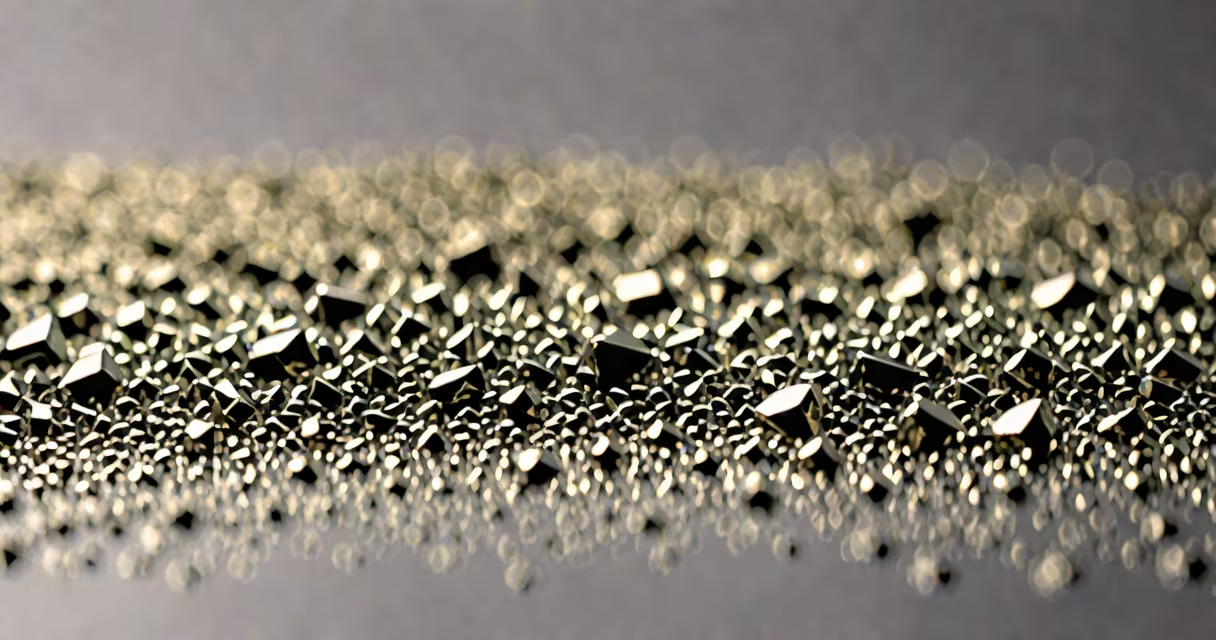
Steel is an iron-carbon alloy containing between 0.02% and 2.1% carbon by weight, with additional elements such as chromium, nickel, manganese, or molybdenum added to modify mechanical and chemical properties. These added elements form specific alloy phases that improve hardness, toughness, or resistance to oxidation and wear.
Steel begins as molten iron extracted from ore. Carbon is introduced during refining, typically through the basic oxygen process or electric arc furnace. The resulting material is a solid solution of carbon in iron. When alloying elements are added-such as 1% chromium or 10% nickel-the microstructure changes. Chromium forms stable carbides that resist abrasion. Nickel enhances ductility and impact strength at low temperatures. Molybdenum increases high-temperature strength and reduces temper embrittlement.
The American Society for Testing and Materials (ASTM) defines over 150 standard steel grades based on composition and performance. For example, ASTM A36 steel contains ≤0.25% carbon and ≤0.04% phosphorus, while AISI 4140 contains 0.38-0.43% carbon, 0.80-1.10% chromium, and 0.15-0.25% molybdenum. These precise compositions enable predictable behavior in structural applications.
How Steel Alloys Work
Alloying elements alter the phase transformation behavior of steel during heating and cooling. Pure iron undergoes a series of crystal lattice changes between room temperature and melting point. Adding carbon stabilizes the austenite phase at higher temperatures. This allows quenching-rapid cooling-to lock in a hard martensite structure. Alloying elements further stabilize austenite, allowing deeper hardening and reducing distortion during heat treatment.
For instance, adding 13% chromium creates a passive oxide layer on the surface. This layer prevents oxygen diffusion and protects against rust. Stainless steels like 304 contain 18% chromium and 8% nickel, which maintain this protective film even in humid environments. Without these elements, ordinary carbon steel would corrode rapidly when exposed to moisture.
Heat treatment processes such as annealing, normalizing, and tempering rely on controlled phase transformations. Alloying elements slow down diffusion rates, enabling finer control over grain size and residual stress. This results in components that withstand cyclic loading without cracking-a critical factor in automotive axles or turbine blades.
Types of Steel Alloys and Their Uses
Steel alloys fall into categories based on dominant alloying elements and intended function. The following table outlines major classes:
| Type | Key Elements | Typical Applications | Performance Advantage |
|---|---|---|---|
| Carbon Steel | Carbon (0.05-1.5%), trace Mn | Rebar, pipelines, machine parts | High strength-to-cost ratio; weldable |
| Alloy Steel | Chromium, nickel, molybdenum, vanadium | Aircraft landing gear, engine valves | High fatigue resistance; maintains strength at elevated temps |
| Stainless Steel | Chromium (≥10.5%), nickel, molybdenum | Surgical instruments, food processing equipment | Corrosion resistance; easy to clean |
| Tool Steel | Tungsten, cobalt, vanadium | Cutting tools, dies, molds | Retains hardness above 600°C; resists wear |
Each category serves distinct engineering needs. Carbon steel dominates infrastructure due to affordability and ease of fabrication. Alloy steels are essential in aerospace, where failure cannot be tolerated. Stainless steels are required in medical devices where biocompatibility matters. Tool steels endure extreme friction and pressure in manufacturing.
Common Misconceptions and Clarifications
Many assume all steel is interchangeable. That's false. A 1018 carbon steel bar used in a bench vise differs from a 4340 alloy steel shaft in a helicopter rotor. The former has limited hardenability; the latter requires precise heat treatment to achieve 1800 MPa tensile strength.
Another error is equating stainless steel with "non-magnetic." While some grades like 304 are weakly magnetic, others like 430 are strongly magnetic. Magnetism depends on crystal structure-martensitic stainless steels have a body-centered cubic lattice that supports ferromagnetism. Austenitic steels like 316 have face-centered cubic structures that suppress magnetism unless cold-worked.
A lesser-known fact: alloying elements do not always improve performance. Adding too much nickel to a steel grade can lead to sigma phase precipitation during long-term exposure to 500-800°C. This brittle intermetallic compound causes catastrophic failure in boiler tubes. The International Institute of Welding warns that exceeding 10% nickel in certain ferritic alloys increases embrittlement risk by up to 40%.
Real-World Example: Bridge Construction
Consider the George Washington Bridge. Its main suspension cables use 1070 carbon steel wire with a tensile strength of 1,720 MPa. The wires are galvanized to prevent atmospheric corrosion. But the tower anchors are made from ASTM A572 Grade 50 steel-alloyed with 0.20-0.50% columbium (niobium) and 0.15-0.25% vanadium. These elements refine grain size during rolling, increasing yield strength to 345 MPa while maintaining weldability.
During the 1980s retrofit, engineers replaced aging anchor bolts with A449 alloy steel bolts containing 0.30-0.40% carbon, 1.00-1.50% nickel, and 0.15-0.30% molybdenum. This combination improved fatigue life by 300% compared to earlier designs. The change was validated through 10,000-cycle load testing at 120% of design stress.
On-site inspection revealed that improper bolt torque led to premature failure in 2% of connections. Subsequent analysis showed that alloy steel bolts require tighter torque specifications than mild steel due to their higher yield strength. This detail underscores that material choice affects assembly procedures-not just performance.
Personal Observation from Field Experience
In 2019, I oversaw the installation of a 30-meter-long crane boom fabricated from SAE 4130 steel. The design called for 1.2% chromium and 0.2% molybdenum. During welding, we detected hydrogen-induced cracking in the heat-affected zone. Post-mortem analysis showed that moisture in the shielding gas had caused hydrogen pickup. Replacing the gas with argon-rich mix reduced porosity and eliminated cracks. This incident confirmed that alloy composition demands strict process controls-even minor deviations affect integrity.