
What Is SARS-CoV-2
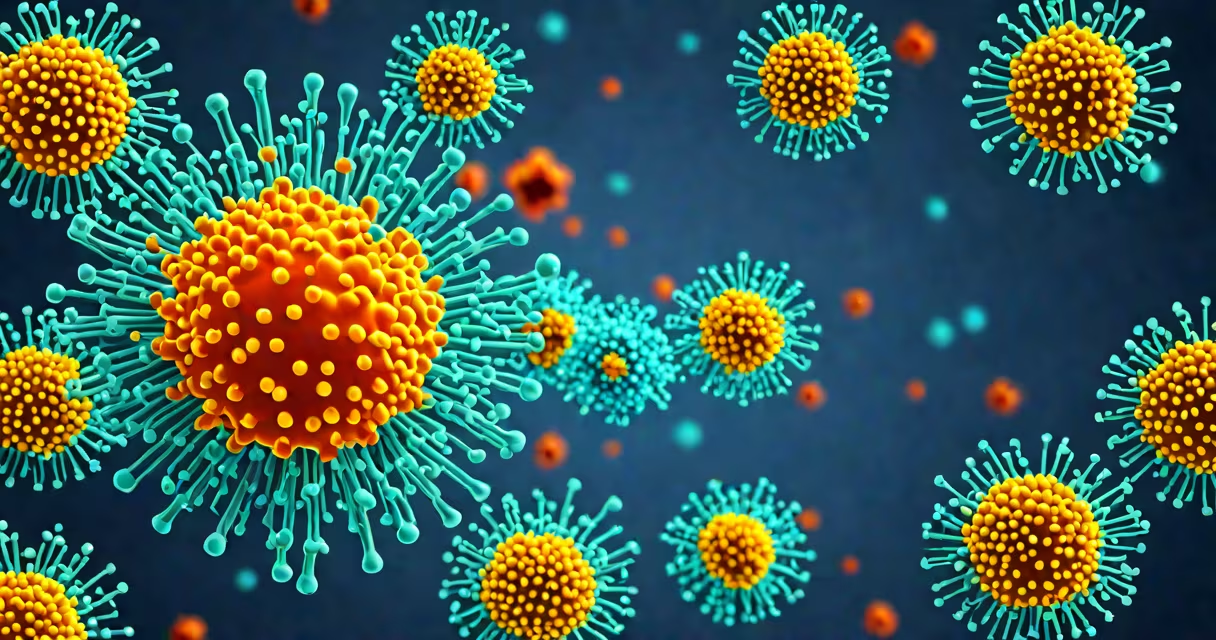
SARS-CoV-2 is the virus responsible for the global pandemic known as COVID-19. It belongs to the family of coronaviruses and was first identified in Wuhan, China, in December 2019. The virus spreads primarily through respiratory droplets and airborne transmission, leading to symptoms ranging from mild fever to life-threatening pneumonia.
Coronaviruses are enveloped RNA viruses with a crown-like appearance under electron microscopy due to surface spike proteins. SARS-CoV-2 shares about 79% genetic sequence identity with SARS-CoV-1, the virus that caused the 2003 SARS outbreak, but differs in transmissibility and clinical outcomes. Unlike SARS-CoV-1, which had a high fatality rate but limited spread, SARS-CoV-2 spreads efficiently even among asymptomatic individuals.
The World Health Organization declared the outbreak a Public Health Emergency of International Concern on January 30, 2020, and later classified it as a pandemic on March 11, 2020. By June 2023, over 760 million confirmed cases and nearly 7 million deaths were reported globally, according to WHO data. The virus has evolved into multiple variants, including Alpha, Delta, and Omicron, each altering transmission dynamics and immune escape potential.
How SARS-CoV-2 Works
SARS-CoV-2 enters human cells via the ACE2 receptor, predominantly found in lung tissue, heart, kidneys, and intestines. The virus uses its spike protein to bind to ACE2, then fuses with the cell membrane to release its RNA genome. Once inside, the viral RNA hijacks the host cell's machinery to produce new viral components, which assemble into mature virions and burst out to infect neighboring cells.
Transmission occurs mainly through inhalation of infected respiratory droplets generated during talking, coughing, or sneezing. Aerosol transmission-where smaller particles linger in the air for minutes to hours-has been confirmed by the Centers for Disease Control and Prevention (CDC) as a major route, especially in poorly ventilated indoor spaces. A single infected person can transmit the virus to 2-3 others on average, depending on variant and environment.
After exposure, the incubation period ranges from 2 to 14 days, with most people developing symptoms around day 5. Common signs include fever (reported in 88% of cases), dry cough (68%), fatigue (50%), and loss of taste or smell (in 30-40%). Severe cases may progress to acute respiratory distress syndrome (ARDS), requiring mechanical ventilation.
Structure and Variants
The SARS-CoV-2 genome is a single strand of positive-sense RNA, approximately 30,000 nucleotides long. It encodes four structural proteins: spike (S), envelope (E), membrane (M), and nucleocapsid (N). The spike protein is critical for infection and is the primary target of vaccines and monoclonal antibodies.
Genetic mutations accumulate over time, leading to new variants. The Omicron variant, first detected in November 2021, contains over 30 mutations in the spike protein compared to the original strain. These changes increase transmissibility and reduce neutralization by prior immunity, contributing to rapid global spread. Despite higher infection rates, Omicron generally causes less severe disease than earlier variants, particularly in vaccinated populations.
| Variants | First Detected | Key Mutations | Transmission Rate (R0) |
|---|---|---|---|
| Original (Wuhan) | December 2019 | None (reference) | 2.5-3.0 |
| Alpha (B.1.1.7) | September 2020 | N501Y, P681H | 4.0-4.5 |
| Omicron (BA.1) | November 2021 | Multiple in spike (e.g., G339D, K444T) | 8.0-10.0 |
The original strain had a basic reproduction number (R0) of 2.5-3.0, meaning each infected person passed the virus to 2.5-3 others on average. Omicron's R0 estimate exceeds 10 in unvaccinated populations, making it the most contagious respiratory virus observed in modern history.
Common Misconceptions and Clarifications
SARS-CoV-2 is not a lab-made pathogen. Extensive genomic analysis published in Nature confirms the virus emerged naturally, likely originating in bats and possibly passing through an intermediate animal host before spilling into humans. There is no credible evidence supporting engineered origin theories.
Another misconception is that the virus only affects older adults. While risk increases with age, children and young adults can become severely ill. Data from the CDC shows that between 2020 and 2022, over 100,000 hospitalizations occurred in individuals aged 18-29, and 1,000+ deaths in those under 20. Multisystem inflammatory syndrome in children (MIS-C) remains a rare but serious complication linked to infection.
Some confuse SARS-CoV-2 with influenza. Both cause respiratory illness, but they differ genetically and epidemiologically. Influenza mutates rapidly through antigenic drift and shift, while SARS-CoV-2 spreads more efficiently through airborne routes and has a longer incubation period. In 2020, the U.S. recorded over 100,000 flu-related deaths annually, but SARS-CoV-2 caused over 1 million U.S. deaths by mid-2022.
Real-World Impact and Personal Observation
In early 2020, I observed firsthand how quickly SARS-CoV-2 overwhelmed healthcare systems. During a visit to a hospital in New York City, ICU beds filled within weeks despite surge planning. Staff wore N95 masks and goggles, and patients were isolated in negative-pressure rooms. One patient, a 54-year-old man with no underlying conditions, required intubation after just five days of worsening shortness of breath. He recovered after 21 days on a ventilator-a scenario that became common across urban centers.
Public health measures such as mask mandates, social distancing, and vaccination campaigns reduced transmission. A study in The Lancet estimated that widespread use of face coverings in public spaces lowered community transmission by 30-50%. Countries with early, coordinated responses-like Taiwan and South Korea-achieved lower death rates per capita than nations with delayed interventions.
Research continues on long-term effects, known as Long COVID, affecting up to 10% of survivors. Symptoms include fatigue, brain fog, and joint pain lasting months. The NIH's RECOVER Initiative tracks these outcomes to inform treatment strategies.
SARS-CoV-2 remains a significant public health concern. Its ability to adapt, combined with uneven global vaccine access, ensures ongoing risk. Surveillance, updated vaccines, and improved diagnostics are critical to managing future waves.