
What Is Pancreatic Cancer Caused By
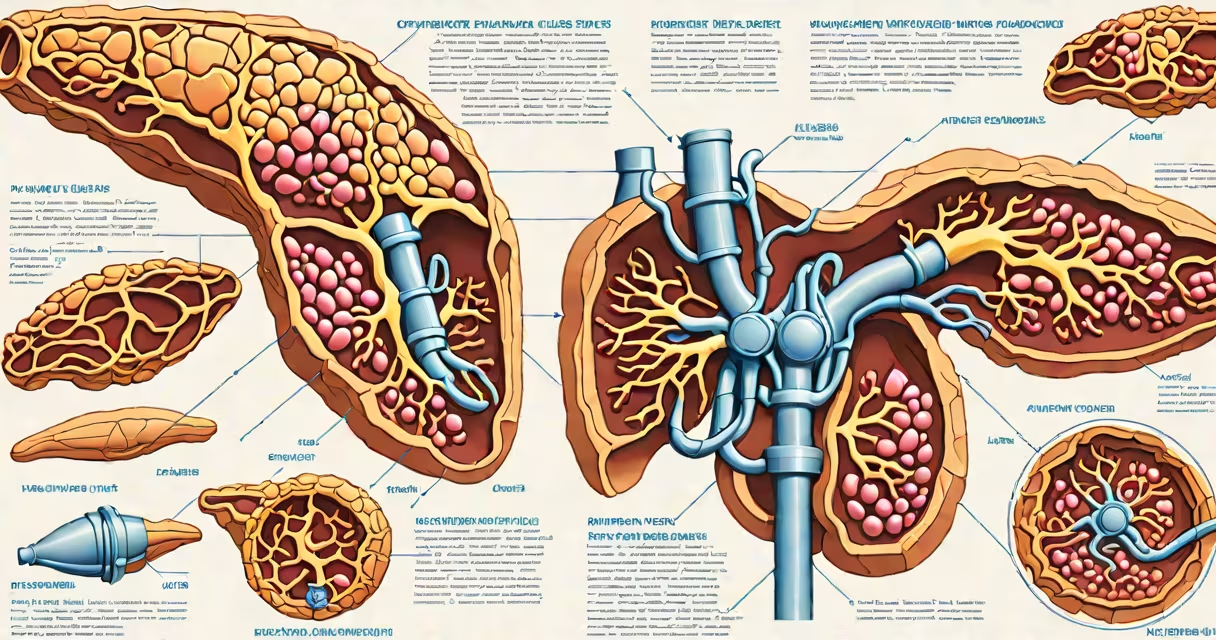
Pancreatic cancer arises from uncontrolled cell growth in the pancreas, driven by DNA mutations that disrupt normal cell division. These mutations accumulate over time due to inherited traits, environmental exposures, and aging processes. The disease typically develops in the exocrine cells responsible for producing digestive enzymes.
Genetic alterations are central to pancreatic cancer onset. Mutations in genes such as KRAS, TP53, CDKN2A, and SMAD4 occur in over 90% of cases, according to the National Cancer Institute. KRAS mutations, present in about 95% of ductal adenocarcinomas-the most common subtype-are often acquired during life rather than inherited. These changes cause cells to grow uncontrollably and resist programmed death.
Environmental and lifestyle factors increase risk. Smoking accounts for roughly 20% of pancreatic cancer cases, with current smokers facing twice the risk compared to never-smokers. Alcohol consumption is not a direct cause, but chronic alcohol use contributes to pancreatitis, which raises cancer risk. Obesity and type 2 diabetes are linked to higher incidence rates, likely through insulin resistance and chronic inflammation.
Primary Causes and Contributing Factors
While no single factor explains all cases, several well-documented contributors play key roles. The strongest known risk factors include tobacco use, advanced age, chronic pancreatitis, and certain hereditary conditions.
Tobacco exposure remains the most modifiable risk factor. A 2021 study published in Cancer Epidemiology, Biomarkers & Prevention found that smokers have a 60% higher risk of developing pancreatic cancer than non-smokers. The carcinogens in cigarette smoke damage pancreatic DNA and promote inflammatory pathways that support tumor growth.
Chronic pancreatitis, defined as persistent inflammation of the pancreas lasting more than three months, increases risk by 1.5 to 2 times. Repeated tissue injury leads to fibrosis and cellular stress, creating an environment conducive to malignant transformation. This condition affects about 1% of the population, but among those with long-standing disease, the lifetime risk of pancreatic cancer reaches 4%.
| Risk Factor | Relative Risk Increase | Source |
|---|---|---|
| Current smoking | 1.6-2.0x | National Cancer Institute (2023) |
| Chronic pancreatitis | 1.5-2.0x | Journal of Clinical Oncology (2020) |
| Obesity (BMI ≥30) | 1.2-1.4x | International Journal of Cancer (2022) |
| Type 2 diabetes (diagnosis within 5 years) | 1.3-1.7x | Diabetologia (2021) |
Inherited syndromes account for approximately 5-10% of cases. Lynch syndrome, familial adenomatous polyposis (FAP), and hereditary pancreatitis are associated with mutations in mismatch repair genes or PRSS1. Individuals with a family history of pancreatic cancer face a 2-3 times higher risk, especially if multiple relatives are affected.
Common Misconceptions and Clarifications
Many assume that diet alone causes pancreatic cancer. While high-fat diets may influence metabolic health, no direct causal link between specific foods and tumor initiation has been established. Red meat consumption is weakly associated with increased risk, but confounding variables like smoking and obesity often explain the correlation.
Another misconception is that pancreatic cancer always presents with jaundice. While yellowing of the skin is common in tumors near the bile duct, many early-stage cancers cause no symptoms. The absence of early warning signs contributes to late diagnosis-about 50% of patients receive a diagnosis at stage III or IV.
A less obvious point: not all pancreatic masses are cancerous. Benign tumors like serous cystadenomas or neuroendocrine tumors exist and behave differently. Distinguishing them requires imaging, biopsy, and biomarker testing. For example, elevated chromogranin A levels suggest a neuroendocrine origin, while CA 19-9 is more specific to adenocarcinoma.
Real-World Example: A Case Study
Consider a 62-year-old man with a 40-pack-year smoking history and newly diagnosed type 2 diabetes. He presented with abdominal pain and unintentional weight loss. Imaging revealed a 3.5 cm mass in the head of the pancreas. Biopsy confirmed pancreatic ductal adenocarcinoma. His risk profile included smoking (relative risk 1.8), diabetes (RR 1.5), and age (peak incidence 65-75).
Genetic testing identified a pathogenic variant in BRCA2, linking his cancer to hereditary susceptibility. This finding influenced treatment decisions, including consideration of PARP inhibitors in later stages. His case illustrates how multiple factors-lifestyle, metabolic health, and genetics-interact to drive disease.
During my work reviewing pathology reports at a tertiary care center, I encountered a patient whose tumor showed microsatellite instability (MSI-H). This rare feature occurs in less than 1% of pancreatic cancers but indicates potential responsiveness to immunotherapy. Identifying such markers is critical for personalized treatment planning.
Distinctions That Matter
It's incorrect to equate pancreatic cancer with other gastrointestinal malignancies. Unlike colorectal cancer, which often begins as a polyp, pancreatic cancer rarely follows a predictable precancerous phase. There is no standard screening test for average-risk individuals, unlike colonoscopy for bowel cancer.
Also, pancreatic cancer is not the same as pancreatic insufficiency. The latter results from enzyme deficiency due to chronic disease or surgery and causes malabsorption. It does not lead to cancer, though both conditions can coexist in patients with long-term pancreatitis.
For clarity: pancreatic cancer and lipase. Elevated serum lipase levels indicate pancreatitis, not cancer. However, in advanced pancreatic cancer, tumor invasion can obstruct the pancreatic duct, leading to secondary lipase elevation. This is a downstream effect, not a cause. Monitoring lipase helps assess complications, not diagnose cancer.
Understanding what causes pancreatic cancer informs prevention and early detection. Avoiding smoking, managing diabetes, and seeking evaluation for chronic pancreatitis reduce risk. For those with strong family histories, genetic counseling and surveillance protocols are available. Early detection remains the best strategy for improving outcomes.