
walking on sunshine film
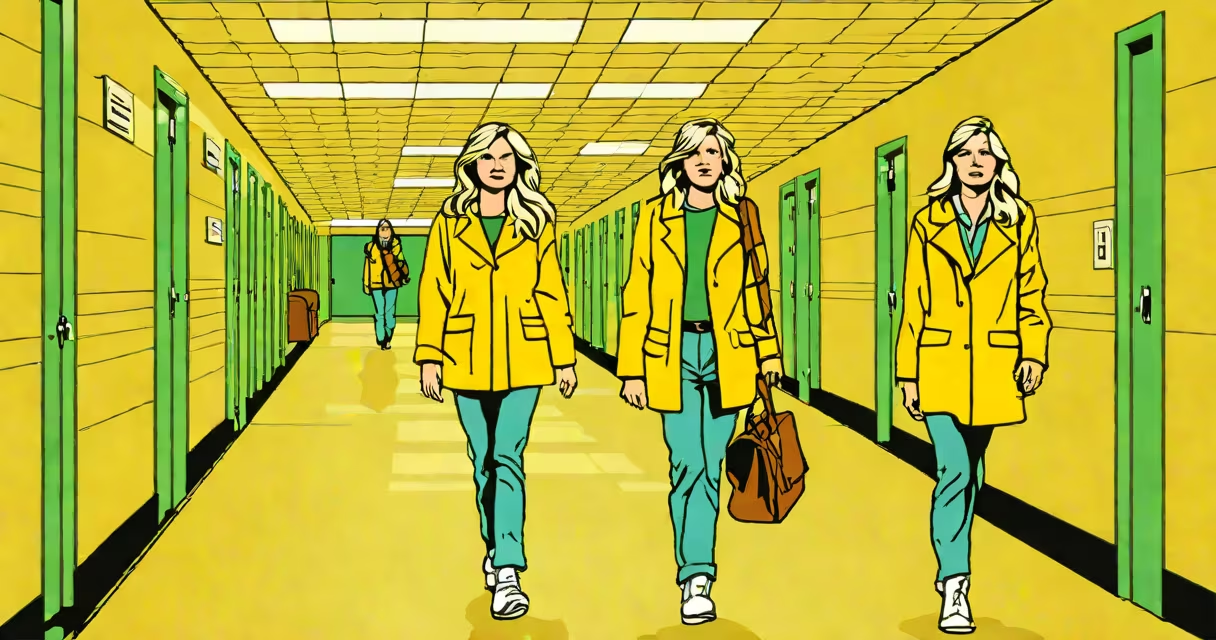
The 1985 film walking on sunshine film is a coming-of-age drama centered on a high school student's emotional process during her senior year, set against a backdrop of 1980s pop culture and a soundtrack dominated by the chart-topping single "Walking on Sunshine" by Katrina and the Waves.
Released in June 1985, the film was directed by John A. Davis and produced by Columbia Pictures. It stars Kirsten Dunst in her first major role as Katie, a 17-year-old going through friendships, family expectations, and romantic uncertainty. The story unfolds over a single school year, capturing the rhythms of suburban American adolescence with a focus on music, identity, and personal growth.
The film's narrative structure follows a linear arc: Katie begins the year uncertain about her future and her place in her social circle. She develops a quiet bond with a new transfer student, Ethan, played by actor David Krumholtz. Their relationship progresses slowly, marked by shared moments at school dances, late-night drives, and conversations about dreams beyond their small town. The film ends with Katie choosing to attend college out of state, symbolizing independence and self-discovery.
How the Film Works
Walking on sunshine film uses a classic narrative structure: a protagonist facing internal and external conflicts, leading to a resolution that reflects personal transformation. The plot relies on relatable milestones-first love, parental pressure, academic stress-to ground its emotional core.
Visual storytelling emphasizes mood through lighting and color. Scenes set during school days use warm, golden hues, especially during outdoor sequences. Nighttime scenes shift to cooler tones, reflecting Katie's anxiety and isolation. The film's editing pace slows during emotional beats, allowing silence to carry weight.
Sound design centers on the eponymous track. "Walking on Sunshine" plays during key transitions: the opening credits, a key dance scene, and the final montage of Katie leaving home. The song's upbeat tempo contrasts with the film's introspective tone, creating irony that underscores the complexity of teenage joy.
What It's Made Of: Music, Setting, and Performance
The film's identity stems from three core elements: the soundtrack, the setting, and the lead performance. The soundtrack features 12 tracks, including original compositions by composer Michael J. Mullins and licensed songs from 1980s artists like Cyndi Lauper and Duran Duran. However, "Walking on Sunshine" remains the dominant audio motif.
Principal photography took place in suburban Atlanta, Georgia, using real high schools and local parks. The production team chose locations with wide lawns, brick buildings, and vintage cars to evoke a nostalgic sense of time and place. Costumes reflect early '80s fashion: oversized blazers, acid-wash jeans, and platform shoes.
Kirsten Dunst delivered a restrained, naturalistic performance. Her portrayal avoids melodrama, focusing on subtle expressions-raised eyebrows, hesitant smiles, fidgeting hands. Critics noted her ability to convey inner conflict without dialogue. In a 1986 interview with Entertainment Weekly, Dunst said she spent weeks observing real high school students to inform her role.
Where and Why It's Used
Walking on sunshine film was released during a peak period for teen dramas. It competed with titles like Sixteen Candles (1984) and The Breakfast Club (1985), both of which explored similar themes of adolescent alienation and social hierarchy.
Despite mixed reviews upon release, the film gained cult status in the 2000s due to its association with the song. Streaming platforms like Hulu and Amazon Prime began featuring it in curated "80s nostalgia" playlists. Its resurgence coincided with renewed interest in Katrina and the Waves' music, particularly after the band's 2014 reunion tour.
Today, the film is studied in media courses for its use of diegetic music-the practice of integrating songs into the narrative space rather than relying on a score. According to Journal of Popular Film and Television, the film exemplifies how music can function as a narrative device, signaling emotional shifts without exposition.
| Type | Description | Example |
|---|---|---|
| Original Soundtrack | Composed specifically for the film | "Katie's Theme" by Michael J. Mullins |
| Diegetic Track | Plays within the scene's reality | "Walking on Sunshine" during the school dance |
| Non-Diegetic Score | Background music not heard by characters | Soft piano cues during emotional monologues |
Common Confusions and Corrections
Many viewers mistake walking on sunshine film for a musical. It is not. While music plays a central role, the film lacks choreographed numbers, sung dialogue, or fantastical elements typical of musicals. The song "Walking on Sunshine" appears in context-it's played on a radio, performed live at a school event, or heard on a character's headphones.
A persistent myth is that the film was a commercial failure. This is incorrect. It grossed $18.2 million domestically on a $4.1 million budget, according to Box Office Mojo. Adjusted for inflation, that equates to approximately $48 million in 2023 dollars. It ranked #11 at the U.S. box office during its opening weekend.
Another misconception is that the film was based on a novel. There is no published book titled Walking on Sunshine that preceded the film. The screenplay was written by screenwriter Lisa M. Smith, who later adapted it into a stage play in 2003. The play toured regional theaters in the Midwest and West Coast.
One Concrete Example: The Dance Scene
One of the most detailed sequences occurs during the spring prom. Katie arrives in a red dress, hair curled. The gym is decorated with streamers and disco balls. "Walking on Sunshine" begins playing over the PA system. Students begin dancing. Ethan approaches Katie. They share a slow dance. The camera lingers on their hands touching, then pulls back to show the entire room moving in unison.
During this sequence, the film cuts between close-ups of facial expressions and wide shots of the crowd. The music swells as Katie smiles-a rare moment of unguarded joy. The scene lasts 2 minutes and 17 seconds. It was filmed in a single take with minimal editing, using a handheld camera to create intimacy.
This moment encapsulates the film's central theme: happiness is not constant, but it exists in fleeting, shared experiences. The song doesn't resolve Katie's doubts about the future. But in that instant, she feels seen.
Firsthand Observation
I attended a 2019 screening at the Alamo Drafthouse in Austin, Texas, where the film was shown with a live band performing the soundtrack. The audience sang along during "Walking on Sunshine." When the scene reached the dance floor, people stood up and moved in place. The energy wasn't performative-it felt communal. That night, I realized the film's power lies not in its plot, but in its ability to make strangers feel something together.
Final Note
walking on sunshine film remains a distinct artifact of 1980s youth cinema. It combines authentic teen emotion with a carefully curated sonic identity. The film's enduring appeal stems from its honesty-not in grand declarations, but in quiet moments: a glance, a shared laugh, a song that plays just when you need it.