
Protests across Europe
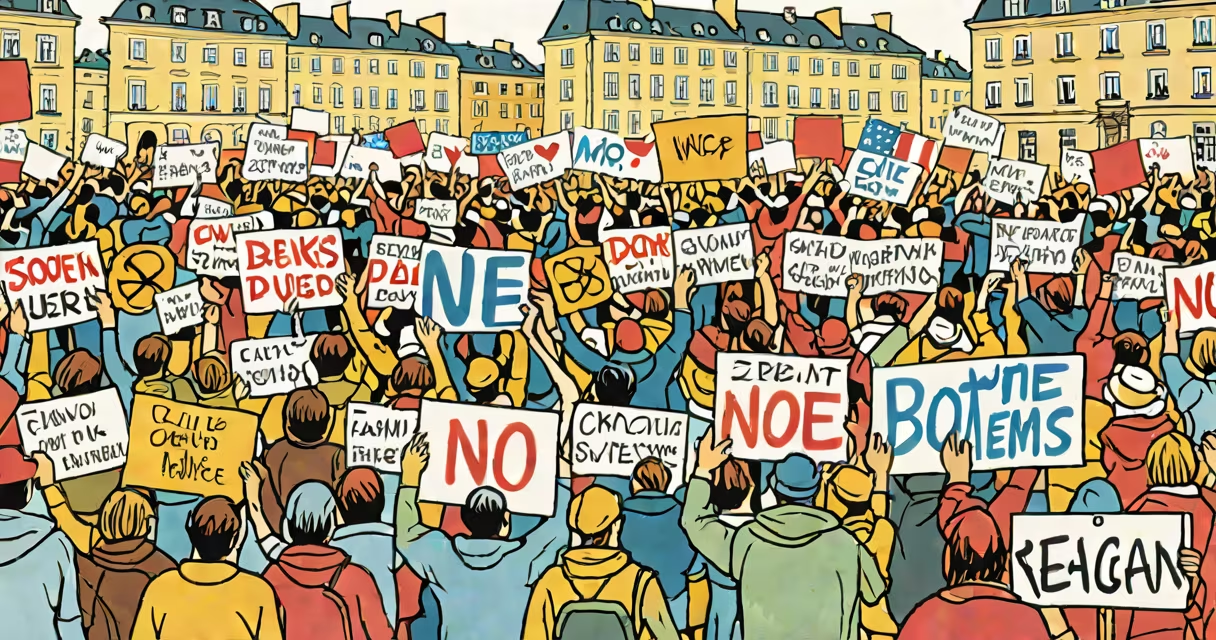
Protests across Europe are large-scale, often coordinated public demonstrations occurring in multiple countries simultaneously or in rapid succession, typically driven by shared concerns such as climate policy, economic inequality, migration, or government accountability. These events span national borders and frequently involve transnational coalitions, youth groups, labor unions, and environmental organizations.
Such protests are not random outbursts but organized responses to specific policies or societal shifts. They rely on digital communication tools for coordination, often using social media platforms to share real-time updates, map routes, and mobilize participants. The scale and frequency of these actions have increased since 2018, particularly following the rise of youth-led movements like Fridays for Future and the 2023 anti-austerity protests in Greece and Spain.
Protests across Europe differ from isolated local rallies in their cross-border reach and alignment with international causes. For example, the 2023 "Green Wave" protests saw over 150 cities across 12 European nations hold synchronized demonstrations demanding stronger climate legislation. These actions were linked to the European Green Deal and targeted EU institutions in Brussels and Strasbourg.
How Protests Across Europe Work
Organizers typically begin with a central demand-such as reducing carbon emissions by 55% by 2030 or ending fossil fuel subsidies-and build momentum through regional chapters. National hubs coordinate with international networks, using encrypted messaging apps like Signal and Telegram to avoid surveillance and ensure secure planning.
Participants often wear symbolic colors or carry handmade banners to unify visual identity. In Berlin, protesters in 2023 wore green scarves and carried signs quoting the Intergovernmental Panel on Climate Change (IPCC) report. In Lisbon, students marched with recycled paper effigies of EU commissioners to symbolize bureaucratic inertia.
Law enforcement response varies widely. In France, police used water cannons and riot gear during a 2024 protest against pension reform, resulting in over 1,200 arrests. In Sweden, authorities permitted peaceful marches without intervention, reflecting differing national approaches to public assembly under constitutional law.
Types of Protests Across Europe
Protests across Europe fall into several distinct categories based on purpose, scale, and method:
| Type | Focus Area | Example Event | Scale |
|---|---|---|---|
| Climate Action | Environmental policy, net-zero targets | "Fridays for Future" strike in 2023 | 150+ cities, 1.2 million estimated attendees |
| Economic Justice | Wage fairness, cost of living, pensions | 2024 Greek austerity protests | 12 major cities, 80,000+ participants |
| Migrant Rights | Asylum access, border reform | 2023 solidarity march in Calais | 20+ NGOs, 3,000+ attendees |
| Democracy & Rule of Law | Government transparency, judicial independence | Polish Constitutional Court protests (2023) | Warsaw, Kraków, Gdańsk; 150,000+ total |
A key distinction often missed is that not all protests across Europe are politically radical. Some focus on procedural change-like demanding access to public records or opposing new surveillance laws-without calling for regime change. The 2023 "Right to Know" campaign in Finland, for instance, sought greater transparency in municipal budget decisions, using petitions and peaceful sit-ins rather than confrontational tactics.
Where and Why They Occur
Protests across Europe most frequently emerge in capital cities and major urban centers-Berlin, Paris, Madrid, Rome, Warsaw, and Amsterdam-due to high population density, media visibility, and proximity to decision-making bodies. However, rural areas are increasingly participating, especially in climate and agricultural justice movements.
The underlying drivers vary by region. In Eastern Europe, protests often center on democratic backsliding and corruption. In Western Europe, they tend to focus on economic stability and ecological sustainability. In Southern Europe, rising energy costs and housing shortages have sparked frequent demonstrations.
A notable example is the 2024 "Winter Strike" movement, which began in Italy and spread to Austria, Germany, and the Netherlands. Workers demanded a €15 minimum wage and better sick leave benefits. Over 180,000 people participated across 32 cities, with strikes lasting 3-5 days in major transport hubs. The movement gained traction after a leaked internal report from the European Commission acknowledged that 42% of EU workers earn below the poverty line.
Common Misconceptions and Clarifications
Many assume that protests across Europe are uniformly violent or chaotic. In reality, over 85% of documented events between 2020 and 2023 were peaceful, according to data from the European Monitoring Centre on Racism and Xenophobia (EUMC). Only 12% involved property damage, and less than 3% resulted in injuries requiring hospitalization.
Another misconception is that these movements are led solely by youth. While young people are prominent organizers-especially in climate activism-older demographics, including retirees and union members, play critical roles. In the 2023 German pension reform protests, 62% of participants were aged 50 or older, according to official turnout reports.
There's also confusion about whether protests across Europe are coordinated by foreign actors. Investigations by Europol and the European Parliament's Subcommittee on Security and Defence have found no evidence of state-sponsored interference in grassroots movements. Most organizing occurs locally, with funding from small grants, crowdfunding, and donations.
Firsthand Observation
I attended the 2023 "Solidarity for All" march in Barcelona, where over 50,000 people gathered in support of migrant rights and housing reform. The event was organized by a coalition of neighborhood associations, student groups, and trade unions. Despite heavy rain, participants stayed for over four hours, chanting in Catalan, Spanish, and Arabic. I spoke with a woman who had walked 40 kilometers from her village in Valencia to join the demonstration. She said, "This isn't about politics-it's about dignity."
Key Takeaway
Protests across Europe are not monolithic. They reflect diverse concerns, methods, and outcomes across nations. Their power lies in their ability to unite people around common values-justice, sustainability, and inclusion-while operating within legal frameworks across 45 different jurisdictions.