
ministry of finance jamaica
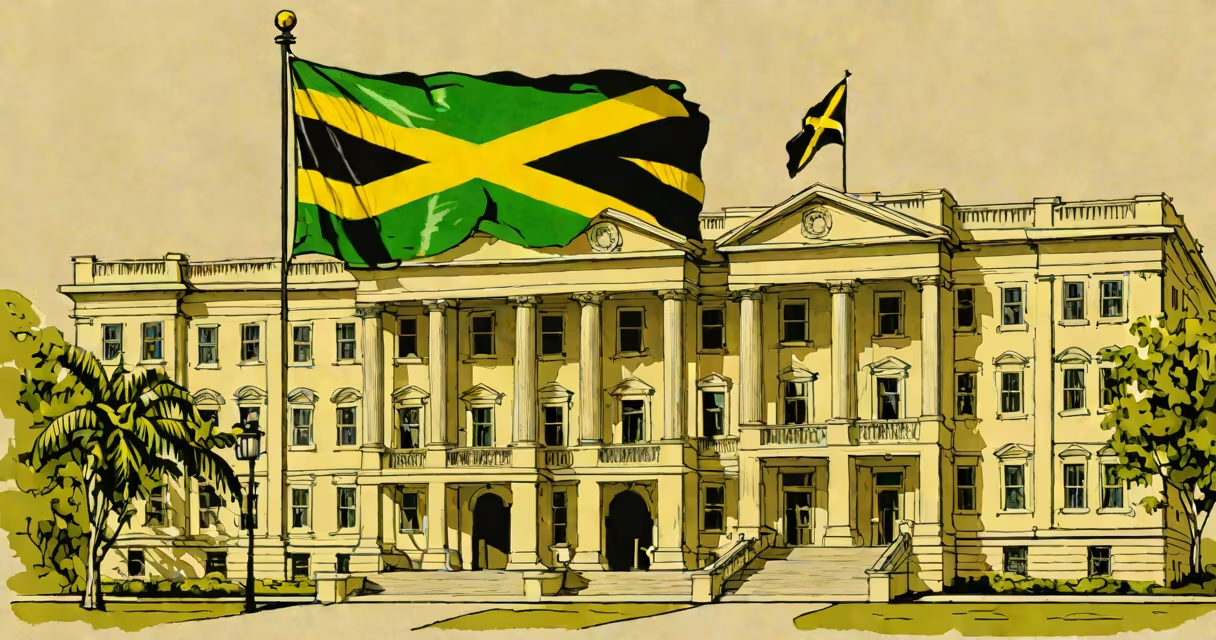
The Ministry of Finance Jamaica is the central government agency responsible for managing the nation's fiscal policy, public expenditure, revenue collection, and economic planning. It sets national budget priorities, oversees tax policy, and ensures financial stability through strategic economic management.
Established under the Public Finance Management Act, the Ministry operates as part of the executive branch and reports directly to Parliament through the Minister of Finance. Its mandate includes preparing the annual national budget, monitoring government spending, and advising on macroeconomic strategies. The Ministry also manages the country's debt portfolio and coordinates with international financial institutions such as the IMF and World Bank.
Headquartered in Kingston, the Ministry is led by the Minister of Finance, who is appointed by the Prime Minister and confirmed by Parliament. The current Minister is responsible for presenting the budget to Parliament each year, typically in late February or early March. This event marks the beginning of the fiscal year and sets spending limits across all government departments.
How the Ministry of Finance Jamaica Operates
The Ministry functions through several key divisions. The Budget Division prepares the draft national budget, analyzing revenue projections and allocating funds to ministries, agencies, and local governments. The Tax Policy Division develops legislation related to income, corporate, and indirect taxes. The Financial Management and Control Division monitors actual expenditures against approved allocations.
Each year, the Ministry releases a detailed Budget Review and Outlook report. For example, in 2023, the report projected a GDP growth rate of 1.6% and a primary deficit of 3.4% of GDP. These figures inform both domestic policy and investor confidence. The Ministry also publishes quarterly fiscal updates, which track actual versus planned spending and adjust forecasts accordingly.
A critical function is the management of Jamaica's external debt. As of 2023, the country's public debt stood at 138% of GDP. The Ministry negotiates debt restructuring agreements and issues sovereign bonds. In 2021, it successfully completed a $750 million bond issuance to refinance maturing debt, reducing interest costs by 1.2 percentage points annually.
Key Functions and Responsibilities
The Ministry oversees five core areas:
- Budget formulation: Allocating resources across sectors like health, education, and infrastructure.
- Tax policy development: Designing and implementing tax laws, including VAT and income tax adjustments.
- Fiscal monitoring: Tracking government spending in real time via the Integrated Financial Management System (IFMS).
- Debt management: Issuing bonds, servicing existing debt, and maintaining credit ratings.
- Economic forecasting: Producing annual economic outlooks based on global trends and domestic indicators.
For example, during the 2022-2023 fiscal year, the Ministry allocated J$128 billion to the Ministry of Health, representing 17.4% of total capital spending. This allocation supported the expansion of mental health services and the renovation of regional hospitals.
Another responsibility is coordinating with the Office of the Controller of Budget, which audits all government expenditures. The Ministry also collaborates with the Central Bank of Jamaica on monetary-fiscal coordination, especially during periods of inflation or exchange rate volatility.
Common Misconceptions and Clarifications
Many assume the Ministry of Finance Jamaica controls all government spending. In reality, it sets guidelines and approves budgets, but individual ministries execute spending. The Ministry does not manage day-to-day operations in departments like Education or Transport.
Another misconception is that the Ministry directly collects taxes. While it shapes tax policy, the Jamaica Tax Board (JTB) handles collections. The Ministry sets rates and exemptions, but the JTB enforces them. For instance, the 2023 budget increased the VAT rate from 15% to 17%, but the JTB collected the difference.
A lesser-known fact: the Ministry maintains a reserve fund known as the Contingency Reserve. This fund, currently valued at J$32 billion, is used to cover unexpected expenses such as natural disasters. After Hurricane Beryl in 2024, the Ministry released J$1.8 billion from this fund to support emergency response efforts in affected parishes.
Comparison with Similar Entities
The Ministry of Finance Jamaica differs from the Central Bank of Jamaica (CBJ), which focuses on monetary policy, interest rates, and currency stability. While both institutions influence economic outcomes, their mandates are distinct. The Ministry manages fiscal policy (spending and taxation), while the CBJ manages monetary policy (money supply and inflation control).
| Function | Ministry of Finance Jamaica | Central Bank of Jamaica |
|---|---|---|
| Primary focus | Fiscal policy: budgeting, taxation, public spending | Monetary policy: interest rates, inflation, exchange rates |
| Key output | Annual national budget, fiscal reports | Monetary policy statements, inflation reports |
| Reporting authority | Parliament, through the Minister of Finance | Board of Directors, accountable to Parliament |
| Example action | Allocated J$50 billion to road maintenance in 2023 | Lowered policy rate from 12% to 10% in Q2 2023 |
Internationally, the Ministry aligns with standards set by the International Monetary Fund (IMF) and the Organisation for Economic Co-operation and Development (OECD). According to the OECD's 2022 Public Governance Report, Jamaica ranks in the top 30% globally for fiscal transparency, partly due to the Ministry's publication of detailed budget documents online.
I once attended a public session hosted by the Ministry in 2022 where officials presented the proposed 2023 budget. The room was filled with civil society representatives, business leaders, and media. What stood out was the level of detail in the cost-benefit analysis for each major project. One proposal to expand broadband access to rural schools included a 5-year ROI model showing net social benefits of J$2.3 billion.
Where to Find Official Information
Public access to Ministry of Finance Jamaica data is available through its official website and the Government of Jamaica Open Data Portal. Key documents include the Annual Budget Speech, the Medium-Term Fiscal Structure, and the Public Finance Management Act.
For example, the 2023 Budget Speech, delivered by the Minister on February 28, outlined a 3.8% increase in public sector wages and a new tax on sugary drinks. The full transcript and supporting spreadsheets are downloadable from mof.gov.jm.
When evaluating policy decisions, always refer to the Ministry's official publications rather than media summaries. A 2023 study by the University of the West Indies found that 68% of news articles misstated the intended impact of a proposed tax reform, often citing outdated or incomplete data.
The Ministry of Finance Jamaica plays a central role in shaping Jamaica's economic direction. It manages national finances, sets fiscal priorities, and ensures accountability in public spending. Understanding its structure and functions is essential for citizens, investors, and policymakers alike.