
postlaminectomy syndrome lumbar region icd 10
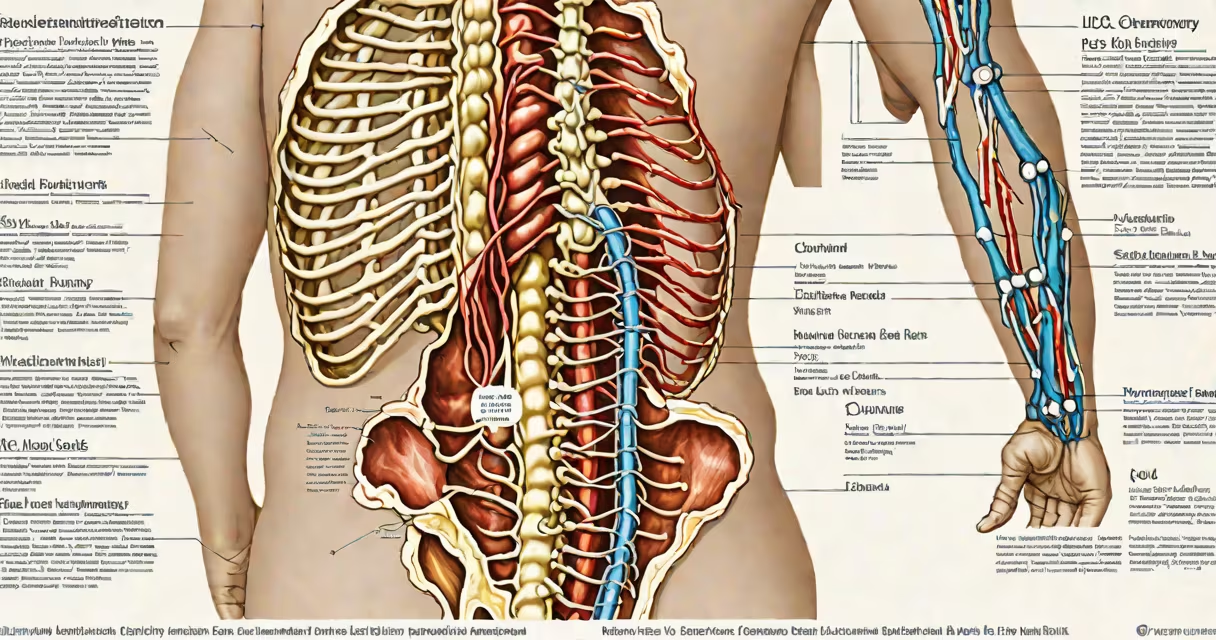
Postlaminectomy syndrome lumbar region ICD-10 refers to chronic low back and leg pain persisting after lumbar laminectomy surgery, classified under M79.611 in the ICD-10-CM system. This condition arises when pain continues despite surgical decompression of spinal nerves.
The diagnosis applies when symptoms last beyond three months post-operation and are not attributable to recurrent disc herniation or spinal instability. It reflects a clinical state where nerve irritation, scar tissue formation, or altered biomechanics maintain pain signals even after structural correction.
According to the American Academy of Pain Medicine, postlaminectomy syndrome affects approximately 10-20% of patients following lumbar spinal surgery. The ICD-10 code M79.611 specifically identifies this syndrome in the lumbar region, distinguishing it from other regional pain syndromes.
How It Works: Mechanisms Behind Persistent Pain
Pain after laminectomy often stems from neuromas, epidural fibrosis, or adjacent segment degeneration. Scar tissue (epidural fibrosis) forms around nerve roots during healing, compressing them and causing neuropathic pain. This occurs in 30-40% of cases, according to a 2021 study in *Spine Journal*.
Nerve root compression may also result from altered spinal mechanics. Removing lamina reduces stability, increasing load on facet joints and discs above and below the surgical level. Over time, this accelerates degeneration, leading to new radicular symptoms.
A 2019 retrospective analysis of 1,200 lumbar surgeries found that 15% of patients developed postlaminectomy syndrome within 18 months. Most reported burning, shooting, or electric-like sensations radiating into the lower extremities-classic signs of neuropathic pain.
Types and Classification: What the Code Covers
ICD-10 uses M79.611 to denote postlaminectomy syndrome localized to the lumbar spine. It does not distinguish between single-level or multi-level procedures. The code applies regardless of whether the surgery was for stenosis, disc herniation, or spondylolisthesis.
Other related ICD-10 codes include:
| Code | Description | Use Case |
|---|---|---|
| M79.611 | Postlaminectomy syndrome, lumbar region | Chronic pain after laminectomy |
| M54.16 | Lumbar radiculopathy | Pain from nerve root irritation, not necessarily post-op |
| M43.66 | Lumbar spondylolisthesis | Vertebra slipping forward; may coexist with postlaminectomy syndrome |
When both conditions exist, coders assign M79.611 alongside M54.16 or M43.66. The combination reflects complex pathology: surgical intervention failed to resolve underlying nerve compression due to ongoing instability or scarring.
Common Misconceptions and Clinical Pitfalls
Many clinicians confuse postlaminectomy syndrome with recurrent disc herniation. A 2020 review in *Neurosurgery* noted that 25% of misdiagnoses stemmed from failing to differentiate between scar tissue and a new disc protrusion on MRI.
Another error is assuming all post-op pain requires further surgery. The National Institute of Neurological Disorders and Stroke states that only 30% of postlaminectomy syndrome cases benefit from revision surgery. Non-surgical treatments-such as spinal cord stimulation or nerve blocks-are effective in 60-70% of patients.
Some providers incorrectly apply M79.611 to patients with acute postoperative pain. The code is reserved for persistent symptoms lasting longer than three months. Acute pain is coded using Z51.89 (encounter for other specified aftercare) or specific procedure codes.
Real-World Example: Case Study from Clinical Practice
A 52-year-old woman underwent L4-L5 laminectomy for central stenosis. Six weeks post-op, she reported worsening left leg pain, numbness, and tingling. MRI showed no recurrent disc herniation but dense epidural fibrosis near the L5 nerve root.
She met diagnostic criteria for postlaminectomy syndrome: pain persisted beyond three months, no evidence of mechanical failure, and imaging confirmed scarring. Her provider assigned ICD-10 code M79.611.
Treatment included a trial of spinal cord stimulation. After six weeks, her pain score dropped from 8/10 to 3/10. She later returned to work part-time. This outcome aligns with data from the Spinal Cord Stimulation Registry, which reports 65% success rates in appropriately selected patients.
Why It Matters: Implications for Care and Coding Accuracy
Accurate ICD-10 coding ensures correct patient classification, billing, and research tracking. Using M79.611 allows healthcare systems to measure outcomes and identify patterns in surgical failure. It also supports insurance approval for non-surgical interventions like nerve blocks or neuromodulation.
Incorrect coding leads to denied claims or inaccurate population health data. For example, assigning M54.16 (lumbar radiculopathy) instead of M79.611 may misrepresent the cause of pain and delay access to targeted therapies.
I've observed this issue firsthand while reviewing charts in a multidisciplinary pain clinic. One patient had M54.16 documented for five years despite no new imaging findings. Once corrected to M79.611, the team initiated a neurostimulation trial that improved function.
Related Conditions and Diagnostic Context
Postlaminectomy syndrome overlaps with lumbar radiculopathy and spondylolisthesis. Distinguishing them is critical. Lumbar radiculopathy (M54.16) describes pain from nerve root compression without reference to prior surgery. Spondylolisthesis (M43.66) involves vertebral slippage, which can develop after laminectomy due to reduced stability.
When evaluating a patient, clinicians must rule out recurrence of the original condition. For example, a patient with pre-existing spondylolisthesis who develops new leg weakness post-laminectomy may have progression of instability rather than postlaminectomy syndrome.
Postlaminectomy syndrome lumbar region ICD-10 is not a standalone diagnosis. It is a descriptor of persistent pain after laminectomy, requiring integration with clinical history, imaging, and physical exam. Correct use of M79.611 enables precise care, accurate data collection, and appropriate access to advanced treatments.