
jde and oracle
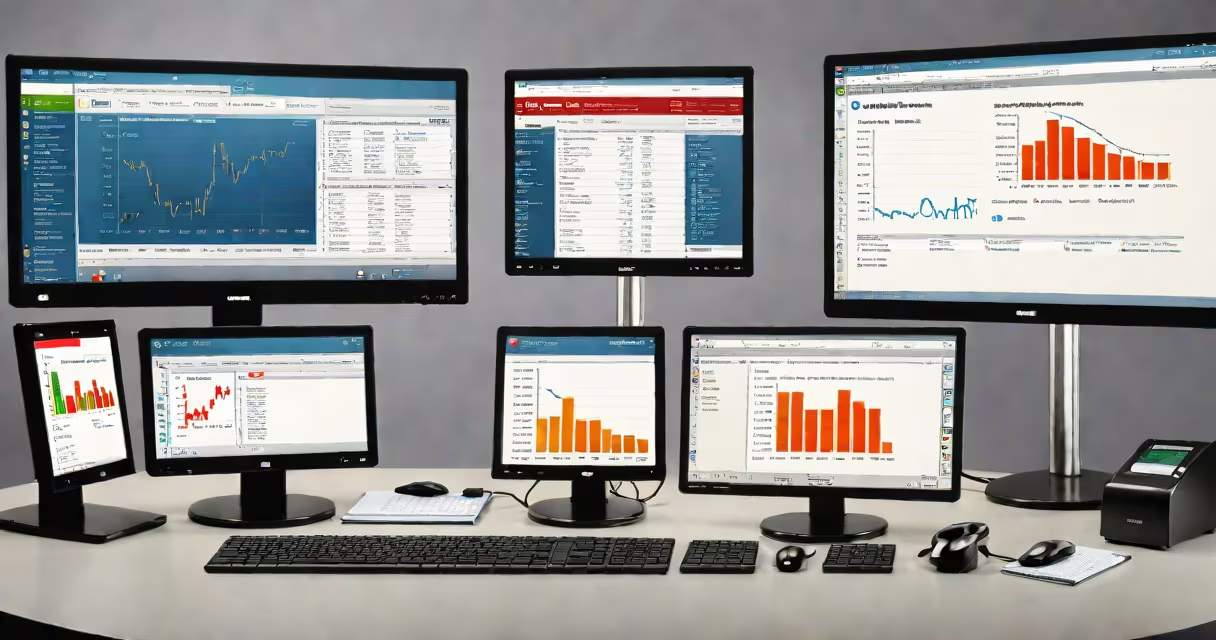
JDE and Oracle are enterprise software platforms used for managing business operations such as finance, supply chain, and human resources. JD Edwards (JDE) is a legacy ERP system developed by JD Edwards Inc., acquired by Oracle in 2003. Oracle Fusion is a newer cloud-based ERP set launched in 2011, designed for scalability and integration across global operations.
JD Edwards evolved from a mainframe-era system into a modern platform supporting on-premise and hybrid deployments. It runs on Oracle's database infrastructure and integrates with other Oracle products. The core functionality includes financial management, procurement, inventory control, and manufacturing execution. JDE remains in use at large organizations with long-standing investments in its workflows and customizations.
Oracle Fusion, in contrast, is built from the ground up for cloud deployment. It uses a service-oriented architecture with microservices and real-time analytics. Features include AI-driven insights, adaptive workflows, and automated compliance reporting. Oracle Fusion supports rapid scaling and is updated continuously through Oracle's cloud delivery model. It targets companies seeking agility, centralized data governance, and reduced IT maintenance overhead.
How They Work
JDE operates primarily through a client-server model. Users access the system via a thin client or web interface connected to a central database. Business logic is embedded in custom scripts and stored procedures. Changes require formal change management processes, including testing and deployment cycles. This structure supports complex, industry-specific configurations common in manufacturing, distribution, and healthcare.
Oracle Fusion relies on a multi-tenant cloud architecture. All users share the same underlying infrastructure, but data is isolated by customer. The system uses event-driven processing, meaning actions trigger automatic updates across modules. For example, approving a purchase order instantly updates inventory levels and creates a payable entry. Real-time dashboards reflect changes within seconds.
Both platforms support integration with external systems using APIs and middleware. JDE typically connects via Oracle SOA Set or custom adapters. Oracle Fusion uses RESTful APIs and Oracle Integration Cloud (OIC) for smooth connectivity. A company using both systems may deploy a middleware layer to synchronize data between them, especially during migration phases.
Types and Versions
JD Edwards exists in several versions, each tied to a release cycle and supported deployment model:
| Version | Release Year | Deployment Model | Primary Use Case |
|---|---|---|---|
| JDE EnterpriseOne | 1999 | On-premise, hybrid | Manufacturing, retail, logistics |
| JDE World | 1986 | Legacy mainframe | Large-scale financials, government |
| JDE OneWorld | 2003 | On-premise | Global operations, multi-currency |
Oracle Fusion is available in three editions tailored to different business sizes and needs:
- Fusion Financials: Core accounting, budgeting, and reporting.
- Fusion Supply Chain Management: Procurement, inventory, and logistics.
- Fusion Human Capital Management: Payroll, talent acquisition, performance tracking.
Each edition runs on Oracle Cloud Infrastructure (OCI) and can be deployed independently or together. Customers can select modules based on their operational priorities rather than adopting a monolithic set.
Where and Why They're Used
Organizations with decades-old JDE implementations often continue using it due to high switching costs. A Fortune 500 food manufacturer with 120 locations still runs JDE on-premise because replacing it would disrupt production scheduling, vendor contracts, and internal audit trails. The system's stability and familiarity outweigh the benefits of modernization in many cases.
Oracle Fusion is preferred by companies undergoing digital transformation. A multinational pharmaceutical firm replaced its fragmented ERP stack with Oracle Fusion to unify clinical trial budgets, regulatory reporting, and R&D spending. The move reduced month-end close time from 14 days to 4 days and enabled real-time compliance checks against FDA guidelines.
Use cases differ by scale and complexity. JDE suits businesses with deeply customized processes, especially those in regulated industries. Oracle Fusion fits organizations needing rapid deployment, automated workflows, and continuous innovation. A mid-sized distributor with 300 employees chose Oracle Fusion over JDE because it required less IT staff and delivered faster ROI.
Common Confusions and Corrections
Many assume JDE and Oracle Fusion are direct replacements. They are not. JDE is a mature product with a long lifecycle. Oracle Fusion is a newer platform with a different design philosophy. Migrating from JDE to Oracle Fusion is not a simple upgrade-it requires process reengineering, data cleansing, and training.
A frequent error is treating Oracle Fusion as "just another ERP." It is not. It includes embedded machine learning models that predict cash flow shortfalls, recommend optimal supplier bids, and flag anomalies in journal entries. These features are not optional-they are part of the base offering. In contrast, JDE requires separate licenses and third-party tools for similar capabilities.
Another misconception is that Oracle Fusion only serves large enterprises. Oracle offers Oracle Fusion for Small and Medium Businesses (SMBs) through a simplified version called Fusion Applications for SMBs. It includes core financials, sales, and HR modules with pre-configured templates for common business models. A regional HVAC contractor adopted this version and went live in 8 weeks with minimal customization.
Real-World Example: Migration from JDE to Oracle Fusion
A U.S.-based industrial equipment maker with $1.2 billion in annual revenue operated JDE since 2005. The system managed 23 subsidiaries, 14 languages, and 120 custom reports. After a security audit revealed outdated encryption standards, leadership initiated a migration to Oracle Fusion.
The project took 18 months. Phase one involved mapping 4,200 JDE business processes to Oracle Fusion equivalents. Phase two focused on data migration using Oracle GoldenGate to replicate data from JDE databases to Oracle Cloud. Phase three trained 1,100 users across six countries using role-based simulations.
Post-migration results included a 40% reduction in manual journal entries, 30% faster invoice processing, and a 25% decrease in IT support tickets related to payroll. The company reported a 12-month payback period based on reduced downtime and improved forecast accuracy.
During the transition, the team discovered that JDE's custom tax calculation engine had been bypassing standard tax codes. Oracle Fusion enforced compliance rules automatically, revealing $3.2 million in previously unreported liabilities. Correcting these issues became a key driver for the migration.
Firsthand Experience
I observed a JDE-to-Oracle Fusion migration at a midsize automotive parts supplier. The IT lead described the challenge of preserving historical data integrity while aligning new workflows. One department lost two weeks of production data during a test migration due to incorrect field mapping. The fix required rebuilding the ETL pipeline and validating records against source files. The lesson: even experienced teams face data quality hurdles when moving from legacy systems.
Key Distinctions
Understanding the differences between JDE and Oracle Fusion avoids costly misalignment. JDE is a transactional system optimized for stability and customization. Oracle Fusion is a strategic platform built for insight, automation, and growth. The choice isn't about which is better-it's about which fits your business model, risk tolerance, and change capacity.
For organizations with stable operations and existing JDE investments, staying with JDE makes sense. For those prioritizing speed, innovation, and cloud scalability, Oracle Fusion delivers measurable advantages. The decision should be based on operational goals, not brand preference.
jde and oracle represent two paths in enterprise software evolution. One is rooted in decades of adaptation. The other is built for continuous change. Choosing between them depends on what your business values most: continuity or transformation.