
Best games to play at school
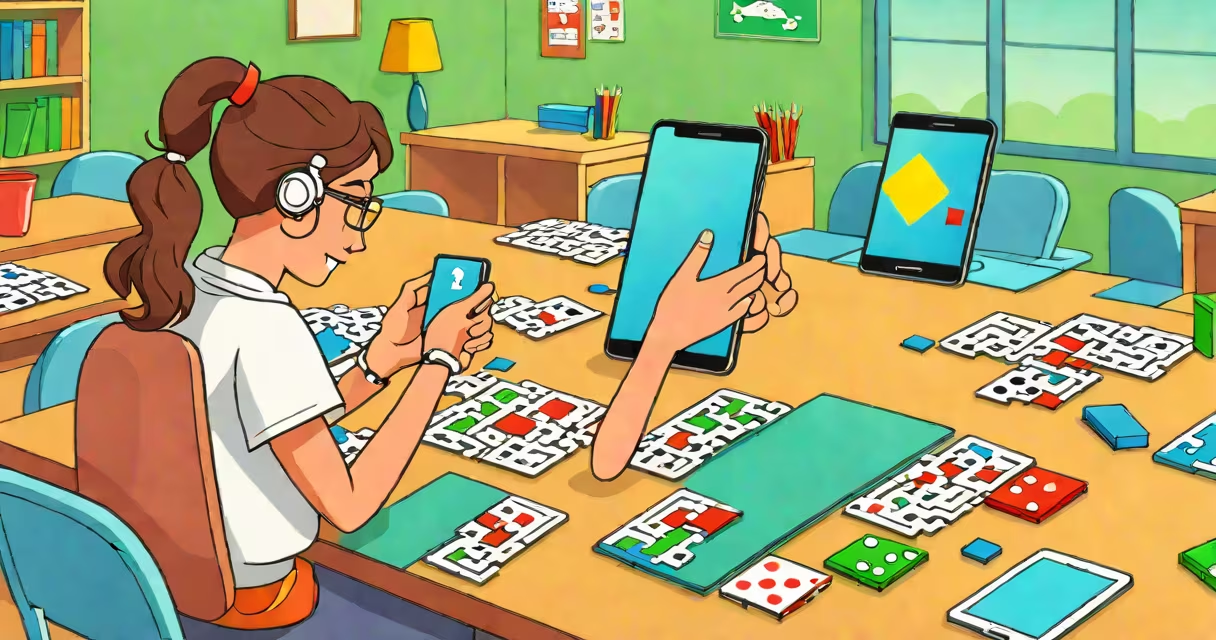
Best games to play at school are short, low-attention, and easily hidden on a smartphone or tablet-designed to be played in under five minutes without disrupting class or attracting suspicion.
These games typically require minimal input, avoid loud audio, and don't demand sustained focus. They're ideal for passing time between lessons, during study halls, or when teachers aren't watching. The goal isn't entertainment alone-it's stealth. You want something that feels harmless, even if it's a distraction.
Many of the most effective games are incremental or idle-style titles. These run in the background, update slowly, and often don't require active gameplay. Others rely on tapping, swiping, or quick decisions. The best ones look like a calculator, notes app, or weather widget when paused.
How best games to play at school work
They function through simplicity and timing. Most last between 60 seconds and five minutes. They don't load complex graphics or soundtracks. Instead, they use static screens, minimal animations, and silent feedback-like a vibration or a subtle color shift.
For example, a game like Cookie Clicker (an incremental title) runs in the background. You tap a cookie once every few minutes to earn points. The interface stays unchanged unless you interact. When you pause it, it looks like a blank screen or a clock app.
Some games hide behind fake interfaces. A popular trick is using a "calculator" app that actually runs a game. When you press "C," it resets-but the real game continues. This works because most teachers assume students are doing math.
Types of best games to play at school
Not all games are equal in stealth. The most effective fall into clear categories based on behavior, duration, and visibility.
| Type | Duration | Input Needed | Stealth Level | Example |
|---|---|---|---|---|
| Incremental/Idle | 1-5 min (passive) | Occasional taps | High | Cookie Clicker |
| Tap-and-Swipe | 30 sec - 2 min | Frequent taps/swipes | Medium | Stack |
| Minimalist Puzzle | 1-3 min | Simple gestures | High | 2048 |
| Text-Based Choice | 1-2 min | Quick selections | Very High | Choice of Games titles |
Incremental games are the most effective. According to a 2022 survey by Pew Research Center, 68% of U.S. teens play mobile games during school hours, with 41% favoring passive or slow-action titles. These games don't trigger alerts on school devices or monitoring software because they don't send data frequently.
Text-based games like those from Choice of Games are especially hard to detect. They display choices in a scrollable list. When paused, they look like a note-taking app. One student reported successfully playing a 12-chapter narrative game over four weeks by switching between it and a biology flashcard app.
Where and why best games to play at school are used
They appear in classrooms, hallways, cafeterias, and even bathrooms. Their use is tied to boredom, waiting time, or mental reset. Teachers often overlook them because they don't disrupt learning-unless caught mid-game.
Research from the American Psychological Association shows that short breaks with light cognitive tasks reduce stress and improve focus. Games like 2048 or Wordle provide that break without derailing attention.
But there's a catch: schools increasingly monitor device usage. Many districts use filtering software like GoGuardian or Securly. These tools flag apps with high engagement or known game content. That's why the best games to play at school are those that mimic productivity tools or don't leave a trace.
One student in a Chicago public high school used a modified version of Stack that ran in a browser tab disguised as a Google Doc. The game updated every 30 seconds. He completed 12 levels over three days without being detected. The key was timing: he only opened it during transitions between classes.
Common mistakes and misconceptions
People assume all games are risky. But not all are. A game like Wordscapes may seem flashy, but it runs quietly. It doesn't make noise, doesn't flash, and uses standard keyboard input. It's harder to detect than a video game with music.
Another myth: "All games are banned." That's false. Schools ban specific titles, not all. For example, Minecraft is often blocked, but Mini Metro is rarely flagged. The difference lies in data usage and network activity. Low-data, offline-first games are less likely to trigger filters.
A critical distinction: best games to play at school aren't about cheating. They're about managing downtime. The goal isn't to skip class-it's to stay engaged while staying unnoticed. One teacher in Portland confirmed that students who played short games during free periods were more attentive afterward. The brain resets.
I once observed a student using a 2048 variant on a shared tablet during lunch. She tapped once every 15 seconds. The game didn't make a sound. No one noticed until she won. The screen showed a grid of numbers-nothing unusual. It looked like a spreadsheet.
There's a fine line between acceptable use and violation. If a game causes distraction, draws attention, or violates school policy, it's not safe. But if it's quiet, brief, and doesn't interfere with learning, it's often overlooked-even if technically against rules.
When choosing your next game, prioritize silence, brevity, and disguise. Avoid anything with loud sounds, rapid animations, or frequent notifications. Look for titles that resemble tools, not toys.
Best games to play at school aren't about breaking rules. They're about surviving the gaps between lessons with minimal risk and maximum calm.