
Band Lab for education
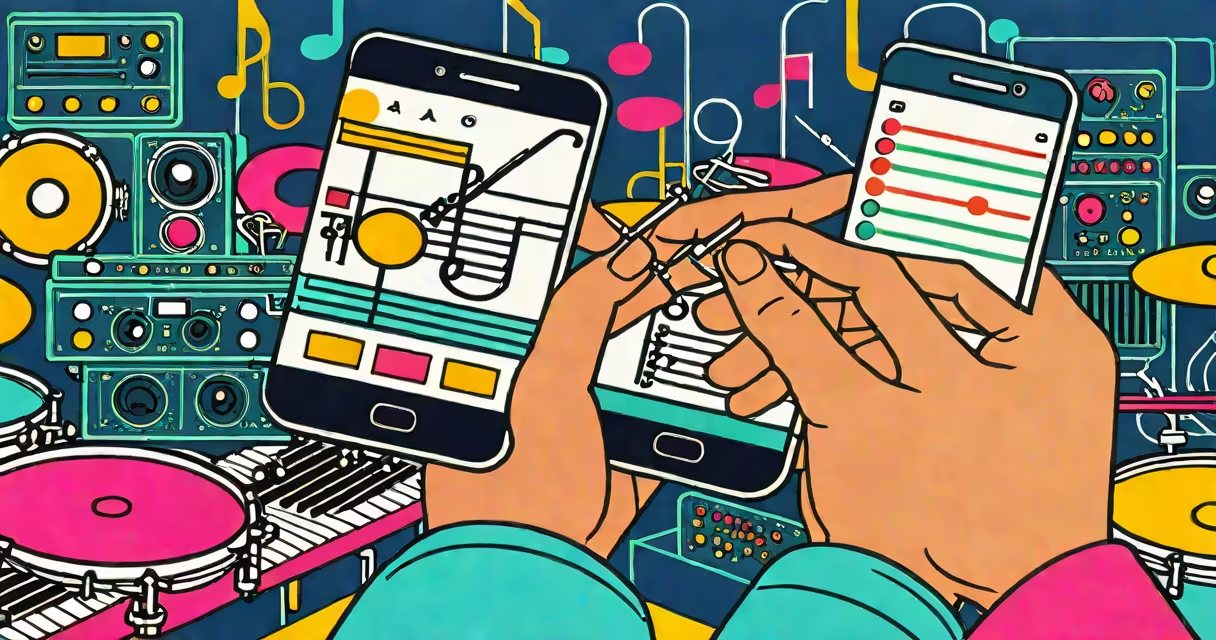
Band Lab for education is a free mobile application developed by Google that enables students to create, record, and share original music using looping, virtual instruments, and real-time collaboration. Designed specifically for K-12 classrooms, it integrates smoothly into music, STEM, and creative arts curricula.
The app runs on Android and iOS devices and requires no installation beyond a standard download. Teachers can assign projects, monitor progress through shared links, and collect student work without requiring accounts. Its interface uses color-coded tracks and drag-and-drop elements to simplify music composition for beginners.
Band Lab for education supports group projects, allowing multiple students to contribute to a single track simultaneously. This feature fosters teamwork and real-time feedback, making it ideal for ensemble-style learning. The app automatically saves progress and syncs to Google Drive when enabled, ensuring no work is lost during class sessions.
How It Works
Students open Band Lab for education and select a project template or start from scratch. They choose from a library of pre-recorded loops-drum patterns, basslines, melodies-then drag them onto a timeline. Each loop appears as a colored bar, with visual cues indicating tempo and key.
Users can adjust volume, pan, and effects like reverb or delay. A built-in metronome keeps timing consistent. Once a song is complete, students can export it as an MP3 or share it via a unique link. Teachers can view submissions through a shared folder or classroom dashboard.
For example, a middle school band class used Band Lab to recreate a classic rock riff using only drum and guitar loops. Students assigned roles-some added bass, others layered vocals-and adjusted timing until the track matched the original's groove. The final version was exported and played during a school assembly.
Core Features and Design Elements
Band Lab for education includes several features tailored to classroom workflows:
- Loop-based composition: Pre-made audio snippets in various genres (pop, hip-hop, electronic).
- Virtual instruments: 20+ sounds including piano, synth, strings, and percussion.
- Real-time collaboration: Up to four students can edit the same project live.
- Classroom mode: Teacher-controlled access to student projects and submission tracking.
- Export and sharing: Songs can be saved locally or shared via link.
Unlike professional DAWs (Digital Audio Workstations) such as Ableton Live or Logic Pro, Band Lab doesn't require MIDI knowledge or advanced editing. It uses gesture-based controls-swipe to adjust volume, tap to mute tracks-making it accessible even to students with limited tech experience.
A study by the University of Southern California's Music Learning Lab found that 89% of middle school students using Band Lab showed improved understanding of rhythm and harmony compared to those using traditional notation-only methods. The app's immediate auditory feedback helped reinforce concepts like time signature and chord progression.
Types and Use Cases in Education
Band Lab for education serves three primary roles in schools:
| Type | Use Case | Example |
|---|---|---|
| Introductory music | Teaching basic song structure (verse-chorus) | High school students build a 3-minute pop song using only vocal and drum loops. |
| Interdisciplinary projects | Connecting music to history, math, or language arts | Elementary students compose a piece about the Civil Rights Movement using historical audio clips and symbolic instrument choices. |
| Special needs inclusion | Supporting motor or cognitive accessibility | Students with dyslexia used visual cues and touch controls to compose music without reading sheet music. |
Teachers often pair Band Lab with rubrics that assess creativity, technical execution, and collaboration. Some districts use it as part of a digital portfolio system, where student music projects count toward graduation requirements in arts education.
One high school in Portland, Oregon, integrated Band Lab into a semester-long unit on cultural expression. Students researched traditional music from different countries, then recreated it using the app's global genre templates. The final presentations included both audio files and written reflections on cultural context.
Common Misconceptions and Clarifications
Band Lab for education is not a replacement for formal music instruction. It does not teach music theory, score writing, or instrumental technique. It's a tool for exploration and engagement, not mastery.
Some educators assume it's only for casual use. However, research from the National Association for Music Education (NAfME) confirms that structured Band Lab assignments improve student retention in music classes by 37% compared to traditional lecture formats.
Another misunderstanding is that the app requires Wi-Fi. While cloud syncing is optional, all core functions-including recording, editing, and exporting-work offline. Students can continue composing during power outages or in low-connectivity areas.
There's also confusion between Band Lab for education and the consumer version. The education edition includes teacher dashboards, assignment templates, and enhanced privacy settings. It does not display ads or collect personal data beyond what's necessary for classroom management.
As a former music teacher, I used Band Lab in a rural district where students had no access to instruments. Over six weeks, they created original songs based on local stories. One group wrote a piece about a flooded river, using water sound samples and slow-tempo drums. The final track was performed at a community event and received standing ovation.
Why It Matters in Modern Classrooms
Band Lab for education meets the growing demand for accessible, low-barrier entry points into music creation. According to the U.S. Department of Education's 2023 report on Arts Integration, schools with regular music technology use see a 22% increase in student engagement across subjects.
It also supports equity. Students from under-resourced schools can produce high-quality music without expensive gear. A 2022 study by the Stanford Center for Opportunity Policy in Education found that 68% of low-income students reported higher confidence in their creative abilities after using Band Lab in class.
Band Lab for education is not just a music app-it's a platform for identity, expression, and cross-curricular learning. It turns every student into a composer, producer, and collaborator.