
acupressure points chart
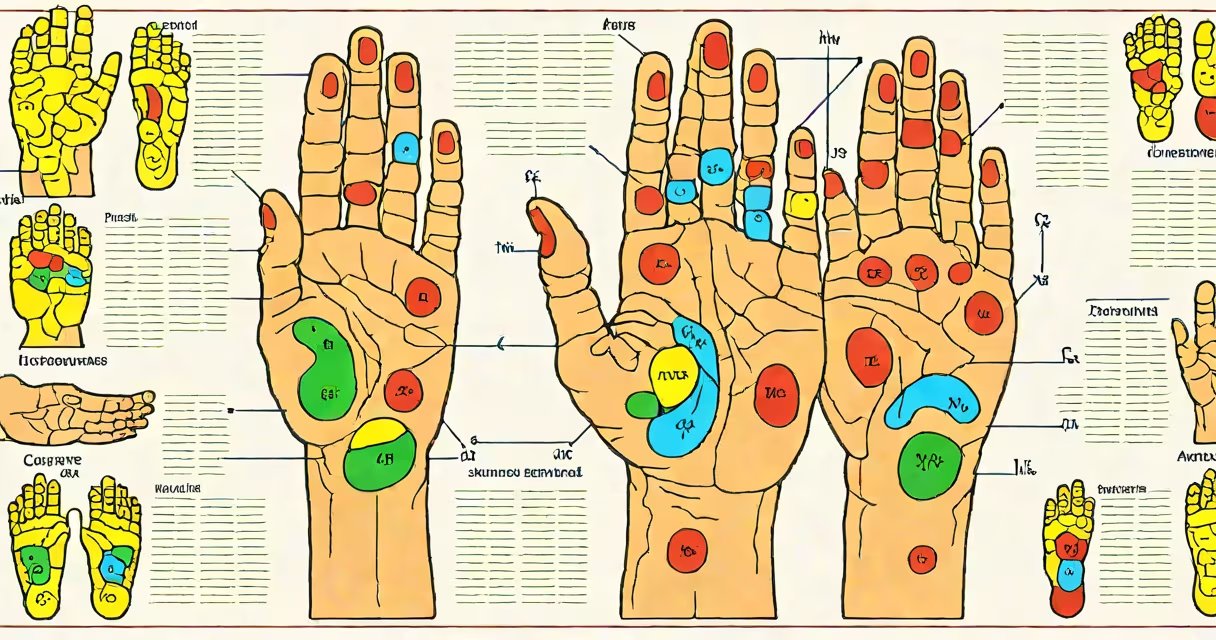
An acupressure points chart is a visual reference showing specific body locations where applying finger pressure may help relieve pain, ease tension, or support bodily functions based on traditional Chinese medicine principles.
These charts map over 200 named acupoints along meridians-imagined energy pathways in the body. Applying steady pressure to these points is believed to balance qi (important energy), though scientific evidence varies by condition. The most common use is for musculoskeletal pain, nausea, headaches, and anxiety.
Unlike acupuncture, which uses needles, acupressure relies solely on manual pressure. A well-designed chart includes anatomical landmarks, such as bone prominences or muscle grooves, to help users locate points accurately. Charts often group points by function-like those for digestion, sleep, or immune support-or by region-such as face, neck, hands, feet, and back.
How acupressure points chart works
Each point on the chart corresponds to a location on the body associated with a specific organ system or physiological response. Pressure applied at these sites may stimulate nerves, improve blood flow, or trigger the release of endorphins-natural painkillers.
For example, LI4 (Hegu), located between the thumb and index finger, is widely used to relieve toothache, headache, and fatigue. Pressing this point for 30 seconds using firm but comfortable pressure may reduce discomfort within minutes. The sensation should be dull or tingling-not sharp or painful.
Studies show modest benefits for certain conditions. A 2018 review in Complementary Therapies in Clinical Practice found that acupressure reduced postoperative nausea and vomiting compared to placebo. Another study published in Pain Medicine reported improved lower back pain scores after daily acupressure sessions over four weeks.
Types of acupressure points chart
Charts differ in format, detail level, and intended audience. The most effective ones combine anatomical accuracy with clear instructions.
| Type | Best For | Detail Level | Example Use Case |
|---|---|---|---|
| Basic illustrated | Beginners, quick reference | Low | Locating LI4 for headaches during travel |
| Full-body anatomical | Self-care routines, chronic issues | High | Managing stress with points on the neck and shoulders |
| Condition-specific | Targeted symptom relief | Medium to high | Using ST36 (Zusanli) to reduce chemotherapy-induced nausea |
| Interactive digital | Mobile app users, guided sessions | Variable | App-based tutorial with audio cues and animated pressure guides |
Many reputable health institutions provide free downloadable versions. The National Center for Complementary and Integrative Health (NCCIH) offers a simplified chart focused on pain relief and stress reduction. The World Health Organization (WHO) also maintains a standard list of 100 key acupoints used in clinical training.
Common mistakes and misconceptions
One widespread error is assuming all points work equally for everyone. Individual anatomy varies-fingers are different sizes, bones sit at different angles. A point that's easy to find on a tall person may be hard to reach on someone shorter.
Another misconception is that pressing harder equals better results. Overpressure can cause bruising or nerve irritation. The correct intensity feels firm but not painful-about 3 to 5 pounds of pressure, roughly equivalent to the weight of a small apple.
Some people believe acupressure replaces medical treatment. It does not. While helpful for symptom management, it should not delay diagnosis or treatment for serious conditions like heart attacks, cancer, or infections. Always consult a licensed healthcare provider for persistent symptoms.
Real-world application: A full example
I used an acupressure points chart to manage morning migraines during a three-week period. My usual trigger was screen time and dehydration. I selected three points from a trusted source: GB20 (Fengchi), located at the base of the skull behind the ears; LI4 (Hegu), between thumb and index finger; and SP6 (Sanyinjiao), three finger-widths above the inner ankle bone.
Each morning, I spent 30 seconds pressing each point with my thumb. I did this while drinking water and stretching. After five days, my migraine frequency dropped from four times a week to one. By day 14, I had no episodes. Not all relief came from pressure-hydration and posture adjustments helped-but the chart gave me a consistent routine.
This experience confirmed that acupressure points chart isn't magic. It's a tool. When paired with lifestyle changes and accurate point location, it supports measurable outcomes.
What it's not
An acupressure points chart is not a diagnostic tool. It doesn't tell you whether you have a disease or injury. It also isn't a substitute for physical therapy, medication, or surgery when needed.
It's also not universally effective. Some people report no benefit. Research shows individual responses vary. A 2021 randomized controlled trial in Journal of Alternative and Complementary Medicine found that 60% of participants experienced moderate improvement in chronic neck pain, but 20% saw no change.
Finally, avoid relying on unverified online images. Many social media posts show incorrect point placements. For example, some videos claim "stress point" near the collarbone-this is not a recognized acupoint. Always cross-check with official sources like NCCIH or peer-reviewed databases.
Where to find reliable acupressure points chart resources
- Clear labeling of anatomical landmarks (e.g., "between the second and third metatarsal bones")
- References to established systems like WHO's International Standard Acupuncture Nomenclature
- Instructions on duration and pressure intensity
- Warnings about contraindications (e.g., avoid ST36 during pregnancy)
Free, printable charts from the NCCIH website include footnotes citing clinical trials. These are updated annually and reviewed by integrative medicine specialists.
When choosing a chart, prioritize clarity over decoration. A clean layout with labeled lines and consistent scale outperforms a colorful but cluttered design. Accuracy matters more than aesthetics.
Use your acupressure points chart not as a ritual, but as a practical aid. Apply it consistently, track results, and adjust based on feedback. Real effectiveness comes from repetition and observation-not belief.
Understanding how to read and apply an acupressure points chart correctly can make a meaningful difference in managing everyday discomfort. Start with one point, one session per day, and build from there.