
What is science and biology
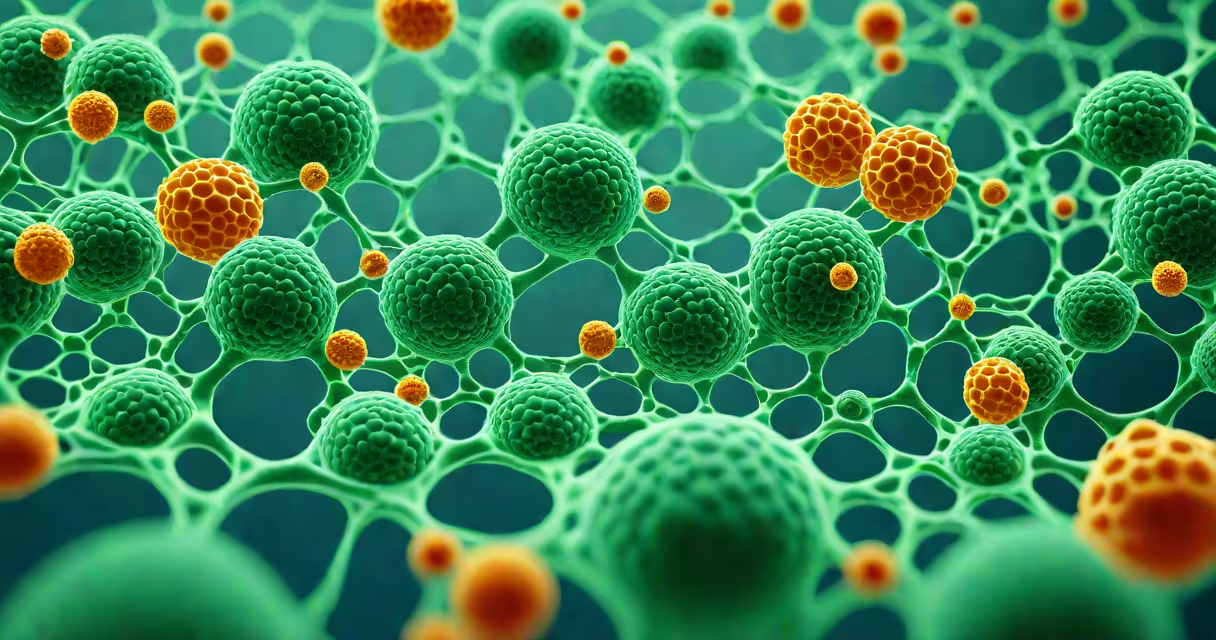
Science and biology are systematic approaches to understanding the natural world through observation, testing, and evidence. Science uses the scientific method to build knowledge about physical and biological phenomena. Biology specifically studies living organisms, their structures, functions, evolution, and interactions.
Science begins with curiosity about how things work. A scientist observes a pattern-like plants growing toward light-and formulates a testable question: "Do plants grow toward light?" They then design experiments to collect data. Results either support or challenge the original idea. This process repeats until conclusions are consistently backed by evidence. The scientific method is not a single step but a cycle of inquiry, measurement, and revision.
Biology is a branch of science focused on life. It covers everything from DNA sequences in bacteria to ecosystems in rainforests. Biologists study how cells divide, how animals adapt to environments, and how diseases spread. Unlike other sciences, biology often deals with complex, variable systems-organisms change over time, respond to stimuli, and reproduce. This makes biology both precise and deeply contextual.
How science and biology work together
Science provides the structure. Biology applies it. For example, when researchers discovered that a protein called p53 regulates cell division, they didn't just observe it-they tested how mutations in the gene affect cancer development. They used controlled lab conditions, measured outcomes across thousands of samples, and published results for peer review. Only after multiple confirmations did the medical community accept the link between p53 and tumor suppression.
Biological research relies on tools developed through broader science. Microscopes, PCR machines, and genome sequencers all emerged from physics, chemistry, and engineering. Without advances in materials science, we wouldn't have electron microscopes capable of imaging viruses at 100,000x magnification. These instruments allow biologists to see structures invisible to the naked eye.
Consider the Human Genome Project. Completed in 2003, it mapped all 3 billion base pairs in human DNA. This was not a single experiment but decades of coordinated effort across 20 institutions in six countries. Data were shared publicly, enabling scientists worldwide to identify genes linked to diseases like cystic fibrosis and Huntington's. The project proved that large-scale collaboration, guided by scientific principles, can decode the blueprint of life.
Types of biology and their applications
Biology divides into specialized fields based on scale, subject, and method. Each field uses the scientific method but focuses on different aspects of life.
| Type | Focus Area | Real-World Example |
|---|---|---|
| Cell biology | Structure and function of cells | Studying how insulin signals glucose uptake in muscle cells, leading to better diabetes treatments |
| Ecology | Interactions between organisms and environments | Tracking coral bleaching in the Great Barrier Reef using satellite data and underwater surveys |
| Genetics | Inheritance and variation in DNA | Identifying BRCA1 mutations in families with high breast cancer rates to guide early screening |
| Evolutionary biology | How species change over generations | Monitoring antibiotic resistance in *Staphylococcus aureus* to predict treatment failures |
Each type builds on core principles: hypothesis testing, reproducibility, and peer validation. A geneticist studying inherited traits doesn't assume patterns exist-they collect family histories, analyze DNA sequences, and compare results across populations. If findings hold across diverse groups, confidence increases.
Common misconceptions and key distinctions
People often confuse biology with anecdotal belief. For example, some think "natural" means "safe." But many plants produce toxins-cyanide in cassava, ricin in castor beans. Biology shows that safety depends on dose, metabolism, and context-not origin. The U.S. Food and Drug Administration (FDA) evaluates substances based on clinical data, not whether they come from a tree or a lab.
Another misunderstanding: science is not about absolute certainty. Scientific conclusions are provisional. When the World Health Organization (WHO) declared that SARS-CoV-2 spreads via aerosols in 2021, it was based on mounting evidence from 200+ studies. That statement changed public health policy globally-yet it wasn't a final verdict. As new data emerged, guidelines evolved. This flexibility is strength, not weakness.
Science and biology also differ from pseudoscience. Pseudoscience presents claims as facts without peer review or falsifiability. Homeopathy, for instance, claims water retains memory of dissolved substances. No known physical mechanism supports this. Independent tests show homeopathic remedies perform no better than placebos in double-blind trials.
Firsthand insight: observing biology in action
I once helped monitor sea turtle hatchlings on a beach in Florida. Volunteers counted eggs laid in nests, then tracked survival rates after release. We found that 68% of hatchlings reached the ocean-but only 2% survived to adulthood. This gap highlighted how biology informs conservation: nesting sites must be protected from predators and artificial lights that disorient young turtles. Data from this project informed local ordinances restricting nighttime lighting near beaches.
That experience showed me that biology isn't just theory-it's applied knowledge. Understanding reproduction cycles, predator-prey dynamics, and environmental stressors allows us to act. Without biology, we'd lack the tools to protect endangered species or develop vaccines.
Where science and biology intersect in daily life
Every medical decision rests on science and biology. When your doctor prescribes antibiotics, they're relying on microbiology-the study of bacteria and how drugs disrupt their growth. Penicillin, discovered in 1928, kills bacteria by interfering with cell wall synthesis. Its effectiveness comes from years of testing in labs and clinics.
Even food choices involve biology. Fermented foods like yogurt contain live cultures of *Lactobacillus*. These bacteria help digest lactose and support gut immunity. Research from the National Institutes of Health (NIH) confirms that regular consumption of probiotic-rich foods correlates with reduced incidence of gastrointestinal infections.
Understanding what is science and biology helps people make informed choices. It's not about memorizing terms-it's about recognizing how evidence shapes decisions. Whether choosing a treatment, evaluating climate reports, or understanding nutrition labels, science and biology provide the foundation.
What is science and biology? It is a disciplined way of learning about life through evidence. It explains why trees lose leaves in autumn, how vaccines train immune cells, and why some people inherit rare disorders. This structure empowers individuals and societies to improve health, protect nature, and understand our place in the living world.