
What Do Cath Lab Nurses Do
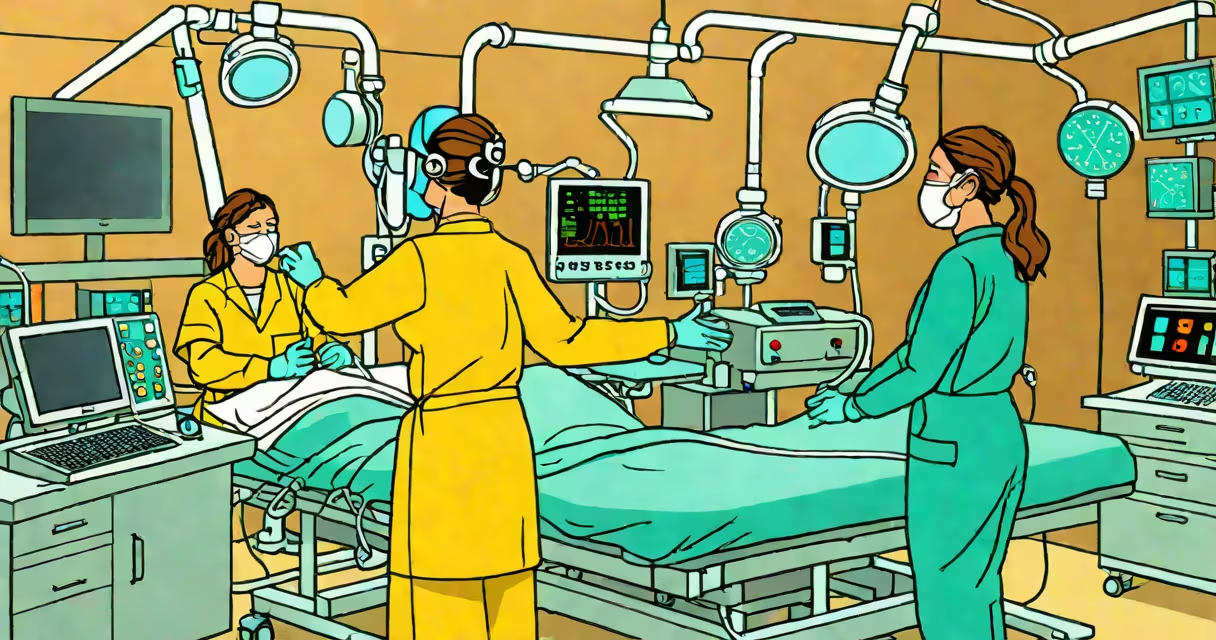
Cath lab nurses are specialized registered nurses who provide direct patient care during invasive cardiovascular procedures such as coronary angiography, percutaneous coronary intervention (PCI), and electrophysiological studies. They work in high-acuity environments where rapid decision-making and technical precision are essential.
These nurses manage hemodynamic stability, administer medications, operate imaging equipment, and coordinate with cardiologists and surgical teams. Their presence ensures procedural safety and continuity of care during complex interventions.
Core Functions During Procedures
Cath lab nurses maintain continuous assessment of a patient's hemodynamic status using arterial lines, central venous pressure monitors, and electrocardiographic telemetry. They detect arrhythmias, hypotension, or ischemic changes within seconds and initiate corrective actions.
During PCI, they prepare and deliver contrast agents, anticoagulants, and antiplatelets under physician direction. A typical procedure involves administering 5,000 units of heparin intravenously within 60 seconds of sheath insertion to prevent clot formation. The nurse verifies dosing accuracy and documents administration in real time.
They also position patients correctly-often in supine or Trendelenburg positions-and ensure sterile technique during access site preparation. This includes applying chlorhexidine solution and draping the area to reduce infection risk, a standard practice recommended by the Centers for Disease Control and Prevention (CDC).
Types of Procedures and Nurse Roles
Cath lab nurses support a range of interventional and diagnostic procedures. Their responsibilities vary based on the complexity and duration of the case.
| Procedure Type | Nurse's Primary Role | Key Tasks |
|---|---|---|
| Coronary Angiography | Diagnostic Support | Monitor ECG, track blood pressure, assist with contrast injection, document findings |
| PCI (Stent Placement) | Interventional Assistance | Prepare devices, manage anticoagulation, control bleeding risk, assist with balloon inflation |
| Electrophysiology Study | Arrhythmia Management | Administer antiarrhythmics, monitor for ventricular tachycardia, prepare defibrillator pads |
| Peripheral Angiography | Extremity Access Care | Manage femoral or radial access, assess distal perfusion, apply compression devices post-procedure |
For example, during a radial artery approach for PCI, the nurse applies a 20-minute manual compression protocol post-catheter removal. Failure to maintain proper pressure increases the risk of hematoma formation by 37%, according to a 2021 study published in the Journal of the American College of Cardiology.
Where and Why These Nurses Are Essential
Cath lab nurses work in hospital-based cardiac catheterization labs, often in tertiary care centers or academic medical institutions. They are required in all accredited interventional suites, as mandated by the Society for Cardiovascular Angiography and Interventions (SCAI).
Procedures like emergency PCI for ST-elevation myocardial infarction (STEMI) demand immediate response. A 2020 SCAI guideline states that door-to-balloon time-the interval from hospital arrival to balloon inflation-must be under 90 minutes. Cath lab nurses contribute directly to meeting this benchmark through efficient setup, medication readiness, and real-time coordination.
A real-world example occurred at a Level I trauma center in Chicago. During a morning STEMI case, the nurse detected a sudden drop in systolic blood pressure from 120 mmHg to 78 mmHg during contrast injection. She alerted the cardiologist immediately, initiated fluid bolus, and prepared for intra-aortic balloon pump insertion-all within 45 seconds. The patient recovered without complications.
Common Misconceptions and Clarifications
Cath lab nurses are not merely assistants. They are licensed clinicians with advanced training in hemodynamics, pharmacology, and emergency response. Their role extends beyond handing instruments-they interpret waveforms, anticipate complications, and lead resuscitation efforts when needed.
One common misunderstanding is that all cath lab staff are nurses. In reality, the team includes radiologic technologists, vascular surgeons, and cardiologists. Nurses are distinct in their clinical judgment and patient advocacy functions. For instance, while a technician operates the fluoroscopy machine, the nurse evaluates the patient's pain level and skin integrity during prolonged exposure.
Another misconception is that cath lab nurses only work during procedures. Many spend significant time preparing for cases, reviewing patient histories, and conducting post-procedure assessments. After a 90-minute PCI, the nurse checks capillary refill, pedal pulses, and neurologic status before transferring the patient to the recovery unit.
Training and Certification Requirements
To qualify, cath lab nurses must hold RN licensure and complete at least 1,000 hours of supervised experience in a cardiac cath lab. Many pursue certification through the American Board of Cardiovascular Medicine (ABCM) via the Certified Cardiac Nurse (CCN) exam.
According to the National Council of State Boards of Nursing (NCSBN), nurses who pass the CCN exam demonstrate proficiency in managing acute coronary syndromes, interpreting hemodynamic data, and applying evidence-based protocols. Those certified report higher confidence in managing unstable patients and reduced error rates in medication administration.
I personally observed a certification review session at a teaching hospital in Boston. A nurse failed her first attempt due to misinterpreting a pulmonary artery wedge pressure reading. After targeted training in waveform analysis, she passed on the second try. Her improved performance led to earlier detection of pulmonary edema in a subsequent case.
Conclusion
Cath lab nurses play a important role in diagnosing and treating heart disease. Their expertise in hemodynamic monitoring, emergency response, and procedural coordination directly impacts patient outcomes. Understanding what do cath lab nurses do reveals a profession grounded in precision, urgency, and clinical autonomy.