
What Causes Renal Carcinoma
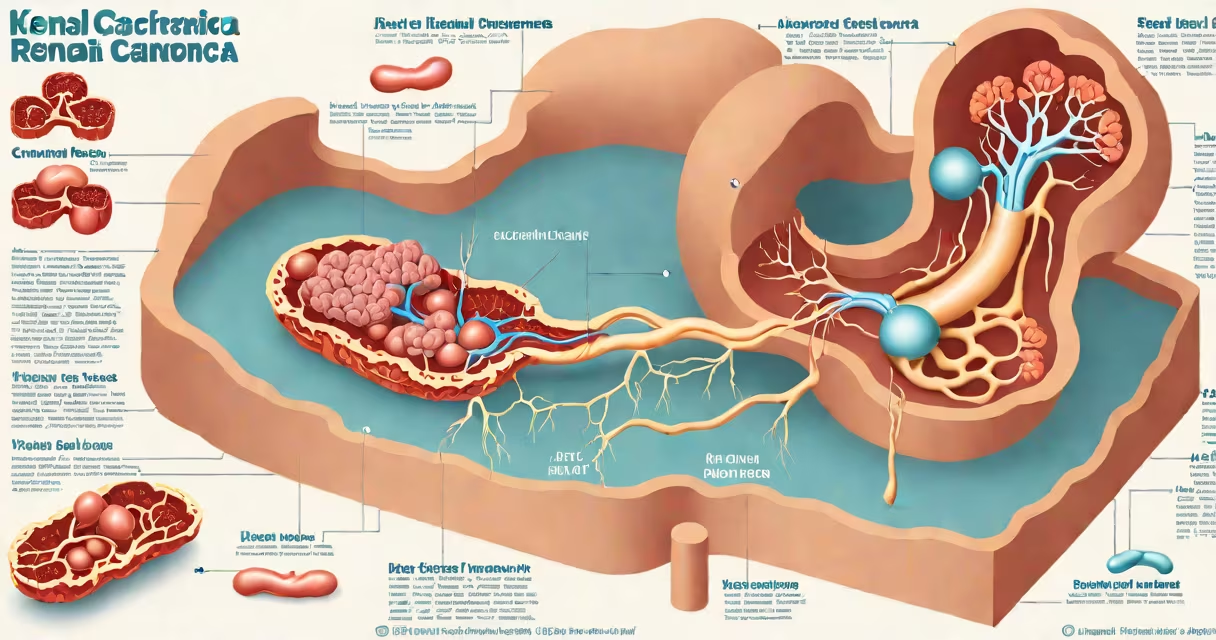
Renal carcinoma, the most common form of kidney cancer, arises from uncontrolled cell growth in the renal tubules of the nephrons. It develops due to accumulated genetic mutations, environmental exposures, and inherited predispositions, primarily affecting adults over 50.
Renal carcinoma originates in the epithelial cells lining the renal tubules, which filter blood and regulate fluid balance. When DNA damage accumulates in these cells-due to inherited gene faults, chemical exposure, or random replication errors-the cells begin dividing uncontrollably. These abnormal cells form a mass that may invade nearby tissues or spread to distant organs like lungs or bones.
Most cases stem from somatic mutations acquired during life rather than inherited ones. The most common subtype, clear cell renal cell carcinoma (ccRCC), involves loss of function in the VHL gene, which normally suppresses tumor growth under low oxygen. When VHL fails, hypoxia-inducible factors (HIFs) accumulate, triggering angiogenesis and unregulated cell proliferation.
How Renal Carcinoma Develops
Cellular transformation begins with DNA damage that disrupts normal regulation of cell division, apoptosis, and repair. In ccRCC, the VHL gene mutation leads to constitutive activation of HIF-1α and HIF-2α, even in normal oxygen levels. This results in overexpression of vascular endothelial growth factor (VEGF), promoting blood vessel formation that feeds the tumor.
Other subtypes include papillary (Type 1 and Type 2), chromophobe, and collecting duct carcinomas, each driven by distinct molecular pathways. Papillary RCC often involves MET proto-oncogene mutations, while chromophobe RCC shows mitochondrial dysfunction and loss of multiple chromosomes.
A 2022 study published in *Nature Genetics* identified over 60 recurrent driver mutations across renal carcinoma subtypes, confirming that each subtype follows a unique mutational trajectory. For example, Type 1 papillary RCC frequently harbors mutations in the MET receptor tyrosine kinase, leading to sustained proliferative signaling.
Types and Underlying Triggers
Different renal carcinoma subtypes have distinct etiologies:
| Subtype | Primary Genetic Alteration | Common Risk Factors |
|---|---|---|
| Clear cell (ccRCC) | VHL gene inactivation (70-80% of cases) | Smoking, obesity, hypertension, dialysis history |
| Papillary Type 1 | MET oncogene mutations | Hereditary papillary renal cell carcinoma (HPRCC) |
| Papillary Type 2 | CDKN2A/B deletions, TFE3/TFEB fusions | Chromosomal translocations, possibly occupational toxins |
| Chromophobe | Loss of chromosomes 1, 2, 6, 10, 13, 16, 17, 21 | Unknown; associated with Birt-Hogg-Dubé syndrome |
Clear cell carcinoma accounts for about 75% of all renal carcinomas. Its development is strongly linked to metabolic dysregulation, particularly in individuals with long-term hypertension or chronic kidney disease. A 2021 analysis from the National Cancer Institute found that patients on long-term hemodialysis had a 3.4-fold higher incidence of ccRCC compared to the general population.
Not all tumors arise from known hereditary syndromes. While conditions like von Hippel-Lindau disease (VHL), Birt-Hogg-Dubé syndrome, and hereditary leiomyomatosis and renal cell cancer (HLRCC) increase risk, they explain less than 5% of total cases. Most renal carcinomas occur sporadically.
Environmental and Lifestyle Contributors
Smoking contributes to approximately 20% of renal carcinoma cases. Tobacco contains polycyclic aromatic hydrocarbons and cadmium, both of which induce oxidative stress and DNA damage in renal tubular cells. A 2019 cohort study in *The Lancet Oncology* showed smokers had a 40% higher risk of developing ccRCC compared to non-smokers, even after adjusting for age and BMI.
Obesity is another major modifiable risk factor. Adipose tissue produces inflammatory cytokines and increases insulin-like growth factor-1 (IGF-1), both of which stimulate cell proliferation. Data from the Surveillance, Epidemiology, and End Results (SEER) program indicate that individuals with a BMI above 30 have a 35% increased risk of renal carcinoma.
Occupational exposure to certain chemicals-such as asbestos, benzene, and solvents used in dry cleaning-has been linked to elevated risk. The International Agency for Research on Cancer (IARC) classifies asbestos as Group 1 carcinogen, though direct evidence for renal effects remains limited. However, a 2020 meta-analysis in *Environmental Health Perspectives* found a 1.7-fold increased risk among workers exposed to chlorinated solvents.
Common Misconceptions and Clarifications
Renal carcinoma is not caused by kidney stones or urinary tract infections. While these conditions cause pain and inflammation, they do not lead to malignant transformation. A 2023 review in *American Journal of Kidney Diseases* confirmed that stone disease does not correlate with increased renal cancer incidence.
Contrary to popular belief, drinking coffee does not increase risk. In fact, observational data suggest a protective effect. A 2021 study of over 500,000 participants in the UK Biobank found that those consuming 3-4 cups daily had a 12% lower risk of renal cell carcinoma, likely due to antioxidant compounds like chlorogenic acid.
Another misconception is that all kidney masses are cancerous. Only 20-30% of incidentally detected renal masses larger than 3 cm are malignant. Many are benign oncocytomas or angiomyolipomas. Imaging and biopsy remain essential for accurate diagnosis.
Real-World Example: A Case Study
A 62-year-old male with a 35-pack-year smoking history and stage 2 hypertension presented with flank pain and microscopic hematuria. CT scan revealed a 5.2 cm mass in the right renal cortex. Biopsy confirmed clear cell RCC with VHL gene deletion and high HIF-2α expression. He underwent partial nephrectomy and remained disease-free at 24 months post-op.
This case illustrates how cumulative risk factors-long-term tobacco use, hypertension, and aging-interact with genetic vulnerability. The absence of family history or known hereditary syndrome highlights that most cases are sporadic, not inherited.
When to Seek Medical Evaluation
Early-stage renal carcinoma is often asymptomatic. Symptoms such as flank pain, hematuria, or a palpable abdominal mass typically appear only when the tumor exceeds 4 cm. Screening is not routine due to low prevalence and poor sensitivity of imaging in early detection.
High-risk individuals-those with a family history of renal carcinoma, genetic syndromes, or long-term dialysis-should undergo periodic ultrasound or CT screening. The American Urological Association recommends annual screening for patients with VHL disease starting at age 8.
For others, evaluation begins with imaging after persistent symptoms. A 2022 guideline from the National Complete Cancer Network (NCCN) states that incidental findings on abdominal CT should prompt urologic referral, regardless of size, to rule out malignancy.
Understanding what causes renal carcinoma helps identify preventable risks and informs early detection strategies. Modifying lifestyle factors like quitting smoking and managing weight reduces individual risk. Recognizing the role of genetics and environmental exposures enables targeted monitoring for high-risk groups.