
Rotator cuff injuries
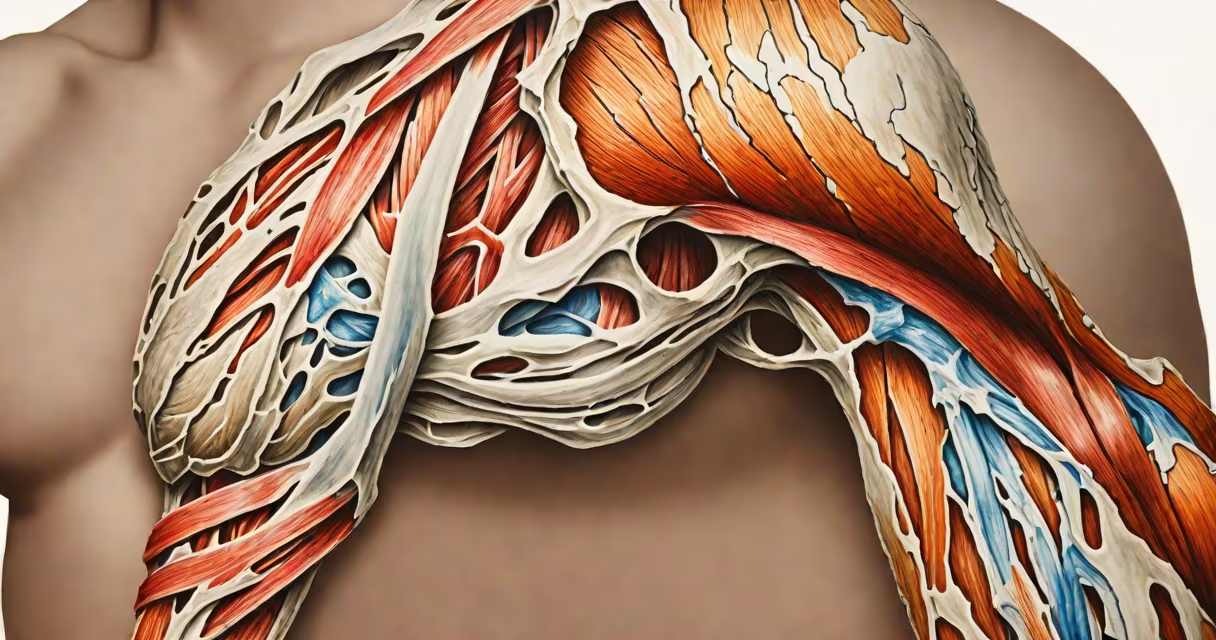
Rotator cuff injuries refer to damage to the group of four muscles and their tendons that stabilize the shoulder joint and enable arm rotation. These injuries typically result from repetitive stress, acute trauma, or degenerative changes over time, leading to pain, weakness, and reduced range of motion.
The rotator cuff consists of the supraspinatus, infraspinatus, teres minor, and subscapularis muscles. Their tendons attach to the humeral head and form a cuff-like structure around the shoulder socket. When any of these tendons tear, fray, or become inflamed, movement becomes painful and function declines.
According to the American Academy of Orthopaedic Surgeons (AAOS), rotator cuff tears are among the most common causes of shoulder pain in adults over 40. The condition affects approximately 20% of people in this age group, with higher rates in those who perform frequent overhead motions, such as painters, swimmers, and construction workers.
How rotator cuff injuries develop
Injury occurs when the tendons repeatedly rub against the acromion bone above the shoulder joint-a process called impingement. Over time, this friction wears down the tendon tissue, leading to partial or full-thickness tears. Acute injuries can happen during sudden forceful movements, such as lifting heavy objects or falling onto an outstretched hand.
Repetitive microtrauma is the most common cause. A study published in the Journal of Shoulder and Elbow Surgery found that individuals performing overhead tasks for more than 2 hours daily had a 3.6 times higher risk of developing rotator cuff pathology compared to those with minimal overhead activity.
Age-related degeneration plays a major role. As people age, blood supply to the tendons decreases, reducing their ability to heal. This makes older adults more vulnerable even without significant trauma.
Types and severity levels
Rotator cuff injuries are categorized by extent and mechanism:
| Type | Description | Common Causes | Typical Symptoms |
|---|---|---|---|
| Tendinitis | Inflammation of the tendon without tearing | Overuse, repetitive motion | Pain with reaching overhead, nighttime discomfort |
| Partial tear | Part of the tendon is frayed or weakened | Chronic impingement, aging | Gradual onset of pain, weakness during lifting |
| Full-thickness tear | Complete separation of tendon from bone | Acute trauma, severe degeneration | Sudden pain, inability to lift arm, noticeable weakness |
Not all tears require surgery. A 2021 review in the British Journal of Sports Medicine showed that 60% of patients with small partial tears improved with conservative treatment, including physical therapy and activity modification.
Common misperceptions and diagnostic pitfalls
Many assume rotator cuff injuries only affect athletes or weightlifters. In reality, they are more prevalent in middle-aged and older adults due to cumulative wear. A 2020 MRI study found that 54% of asymptomatic adults aged 50-60 had detectable rotator cuff abnormalities-meaning imaging findings don't always correlate with symptoms.
Another misconception is that pain in the shoulder always stems from the rotator cuff. Conditions like adhesive capsulitis (frozen shoulder), labral tears, or cervical radiculopathy can mimic rotator cuff injury. Misdiagnosis leads to ineffective treatment. The AAOS recommends using MRI or ultrasound to confirm the diagnosis, especially when symptoms persist beyond six weeks despite rest and anti-inflammatory medication.
I once evaluated a patient with chronic shoulder pain who had been treated for "tendonitis" for nine months. Imaging revealed a full-thickness tear, not inflammation. After surgical repair and structured rehab, he regained full function within five months. This case underscores why symptom-based assumptions often delay proper care.
When and how rotator cuff injuries are treated
Initial management focuses on reducing pain and preventing further damage. Rest, ice, NSAIDs, and activity modification are standard first steps. Physical therapy targeting scapular stabilization and rotator cuff strengthening is effective in 70-80% of non-surgical cases.
For larger tears or persistent weakness, arthroscopic surgery may be necessary. A 2022 study in the Journal of Orthopaedic Research reported that 85% of patients undergoing arthroscopic repair achieved good-to-excellent outcomes at two-year follow-up, with significant improvement in strength and function.
Rehabilitation is critical. Rushing back to activity increases re-tear risk. A typical protocol includes four phases: pain control (weeks 1-2), passive range of motion (weeks 3-6), active-assisted exercises (weeks 7-12), and progressive resistance training (months 4-6).
Early intervention improves outcomes. Delaying treatment beyond six months correlates with poorer recovery, particularly in patients over 60. The American College of Sports Medicine advises seeking evaluation if shoulder pain lasts longer than two weeks or interferes with daily tasks.
Prevention and long-term outlook
Preventive strategies include proper warm-up routines, avoiding excessive overhead work, and maintaining balanced shoulder musculature. Strength training focusing on the lower trapezius and serratus anterior reduces impingement risk by improving scapular control.
Long-term prognosis varies. Small tears may remain stable with conservative care. Larger tears that go untreated can lead to muscle atrophy and joint degeneration. Early diagnosis and adherence to rehab protocols improve functional recovery.