
How does the world cup work
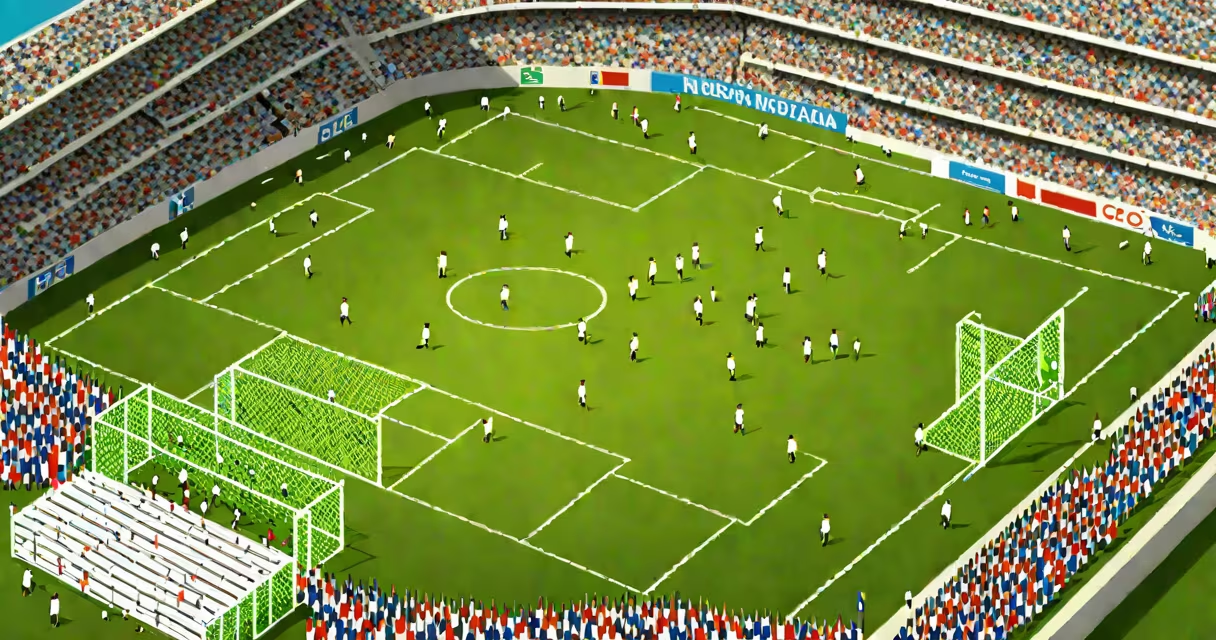
The FIFA World Cup is a global soccer tournament held every four years, featuring 32 national teams competing in a structured format of group play followed by single-elimination knockout rounds culminating in a final match to determine the champion.
Teams qualify through regional competitions organized by FIFA's six confederations: UEFA (Europe), CONMEBOL (South America), CAF (Africa), AFC (Asia), CONCACAF (North/Central America and the Caribbean), and OFC (Oceania). Each confederation receives a set number of qualification spots based on historical performance and continental strength. For the 2026 tournament, the field expands to 48 teams, with automatic qualification for hosts Canada, Mexico, and the United States.
Once qualified, teams are drawn into groups of four. In the group stage, each team plays the others in their group once. A win earns three points, a draw one point, and a loss zero. The top two teams from each group advance to the knockout stage. If teams are tied on points, tiebreakers apply: goal difference, goals scored, head-to-head result, and fair play record. The knockout stage proceeds via single-elimination matches, with extra time and penalty shootouts resolving ties.
Structure and Stages
The tournament unfolds in three phases: group stage, knockout stage, and final. The group stage runs over nine days, with matches played daily across multiple venues. The knockout stage begins with round of 16, then quarterfinals, semifinals, and the final. All knockout matches are single-elimination, meaning a loss ends a team's run.
For the 2026 World Cup, the expanded 48-team format introduces a new structure. Groups of four will still exist, but the top two from each group plus eight best third-place finishers will advance to a round of 32. This increases the number of competitive matches and reduces the risk of early exits due to tight group dynamics.
Historically, the tournament has been hosted by nations with strong infrastructure and high-profile stadiums. The 2022 edition in Qatar was the first to be held in the Middle East, with matches played in November and December to avoid summer heat. The 2026 tournament will be the first to span three countries, with games hosted in 16 cities across North America.
| Stage | Number of Teams | Matches | Duration |
|---|---|---|---|
| Group Stage (2026) | 48 | 48 | 10 days |
| Round of 32 | 32 | 16 | 4 days |
| Quarterfinals | 16 | 8 | 3 days |
| Semifinals | 8 | 4 | 2 days |
| Final | 2 | 1 | 1 day |
Qualification Process
Qualification occurs over two to three years prior to the tournament. Teams compete in regional zones under the authority of their confederation. For example, CONMEBOL (South America) holds a round-robin tournament among 10 teams, with the top four qualifying directly and the fifth playing a playoff against a team from another confederation.
UEFA (Europe) uses a multi-stage system. The 54 national teams are divided into 12 groups of four or five. Group winners and runners-up advance to a playoff round, where eight teams compete for four spots. The 2026 tournament saw a shift: UEFA received 16 direct qualification spots, the most of any confederation.
A common misconception is that qualification is based purely on rankings. In reality, seeding is used to balance groups and prevent early matchups between top teams. For example, in the 2022 qualifiers, France and Brazil were placed in different regions to avoid meeting before the final.
Common Misconceptions
Many assume the World Cup is a single-elimination tournament from start to finish. That's incorrect. The group stage allows for recovery from early losses, giving weaker teams a chance to progress. In 2010, Paraguay advanced from a group containing Spain and Portugal, finishing second behind Spain.
Another myth is that the host nation automatically qualifies. While hosts receive automatic entry, they still must meet FIFA's technical standards and participate in qualifying matches. The 2010 South Africa tournament required the host nation to earn a spot through the CAF qualification process, which they did by winning their group.
Some believe the final is always decided in regular time. Since 1970, FIFA has mandated that knockout matches go to extra time if tied after 90 minutes. If still level, penalties decide the winner. In the 2014 final, Germany defeated Argentina 1-0 after extra time, with Mario Götze scoring the decisive goal.
Real-World Example: 2022 World Cup
In the 2022 tournament, Group F included Belgium, Canada, Morocco, and Croatia. Belgium and Morocco advanced to the knockout stage. Belgium finished first with 7 points (two wins, one draw), while Morocco secured second place with 6 points (one win, three draws).
Morocco's run was historic. They became the first African nation to reach the quarterfinals since 2002. Their 2-1 victory over Spain in the round of 16 came after a late equalizer by Achraf Hakimi, followed by a 90th-minute winner from Youssef En-Nesyri. Morocco lost to Portugal in the quarterfinals, but their performance drew global attention.
One non-obvious fact: the 2022 tournament had 64 matches, but only 11 were decided by a single goal. Of those, seven were won in extra time or penalties. This reflects the high stakes and defensive focus in knockout stages.
I observed the 2022 tournament live in Doha, Qatar. The atmosphere inside Lusail Stadium during the final was electric. Fans from 100+ nations packed the stands. The air smelled of grilled meat and sunscreen. When Argentina won on penalties, the crowd erupted in chants that echoed off the steel roof. It wasn't just a game-it was a cultural moment.
FIFA's official records confirm that 3.5 billion people watched the 2022 final on television, making it the most-watched sports event in history. The organization reports that 85% of viewers came from outside the host country, underscoring the global reach of the tournament.
Understanding how the World Cup works requires knowing the structure, the qualification paths, and the psychological weight of single-elimination matches. The tournament balances fairness, competition, and spectacle. With the 2026 expansion, the format becomes more inclusive, allowing more nations to participate and increasing the diversity of voices on the world stage.