
Christian Voters Guide 2026
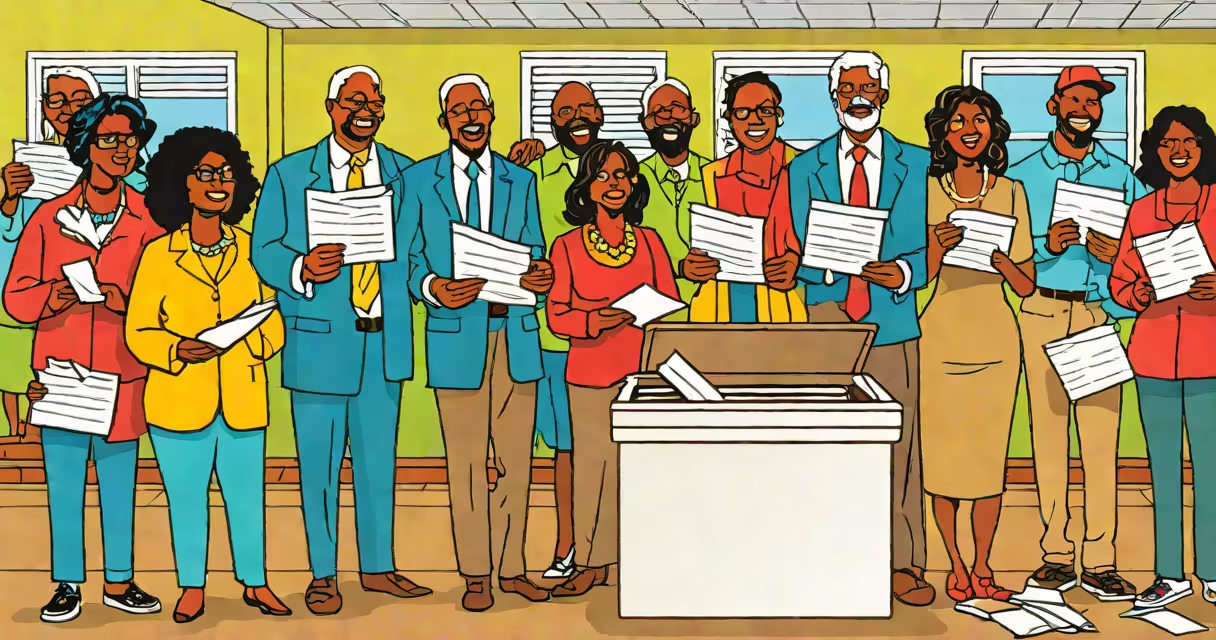
The Christian Voters Guide 2026 is a resource designed to help faith-driven citizens evaluate candidates and ballot measures through a biblical worldview, focusing on moral, ethical, and policy positions relevant to religious liberty, family values, and social justice.
It is not a political endorsement but a tool for informed civic participation. The guide compiles positions from national and state-level candidates on issues such as abortion, religious expression in public life, education standards, and judicial appointments. It draws from statements, voting records, and public declarations rather than polling or speculation.
Organizations like the Ethics & Religious Liberty Commission (ERLC) and the Family Research Council provide input on federal issues, while state chapters of the National Association of Evangelicals contribute localized analysis. These groups verify candidate stances using official platforms, press releases, and legislative transcripts.
How the Guide Works
Each entry evaluates a candidate's record or platform against principles derived from Scripture and consistent with mainstream Christian doctrine. For example, a candidate's support for legislation restricting access to abortion after viability is scored as aligned with pro-life teaching.
Guides use a three-tiered scoring system: "Strong Alignment," "Moderate Alignment," and "Misalignment." A candidate who consistently opposes taxpayer funding for abortion services and supports parental rights in education receives a "Strong Alignment" rating on both issues.
Scoring is transparent. Each assessment includes a direct quote, a link to the original source, and a brief explanation of why the position matters from a theological perspective. This prevents subjective interpretation and allows voters to verify claims independently.
Key Issues Covered
Abortion remains the most frequently analyzed issue. According to the ERLC, 78% of white evangelical Christians oppose abortion in all or most cases. The guide tracks whether candidates support exceptions for rape or incest, funding bans, or parental notification laws.
Religious freedom is another core focus. In 2023, the Supreme Court ruled in *303 Creative LLC v. Eleni* that businesses cannot be compelled to provide services that violate their faith. The guide assesses candidates' support for similar protections in state law, especially in areas like wedding services, adoption, and healthcare.
Education policy is increasingly central. The guide examines whether candidates back school choice programs, curriculum standards on history and science, and restrictions on gender identity instruction in K-12 classrooms. In Florida, for example, House Bill 1557 limits classroom discussion on sexual orientation. Candidates who supported it receive a "Strong Alignment" rating in the Florida section.
| Issue | Pro-Life Stance | Religious Freedom | School Choice |
|---|---|---|---|
| Definition | Opposes abortion except in rare medical emergencies | Supports legal protection for faith-based institutions | Endorses public funding for private and charter schools |
| Example State | Arizona | Idaho | Colorado |
| State Candidate Score | Rep. Juan Ciscomani - Strong Alignment | Gov. Brad Little - Moderate Alignment | Sen. Michael Bennet - Misalignment |
One non-obvious distinction: the guide does not rate candidates based on personal conduct or lifestyle choices. A candidate's past behavior, even if controversial, is not included unless it directly impacts public policy. This avoids conflating character with governance.
Where and Why It's Used
Churches, small groups, and faith-based nonprofits distribute the guide during election seasons. In Texas, the Baptist General Convention of Texas endorsed the guide for use in congregational discussions. It is also shared via email newsletters and social media channels with verified religious affiliations.
Use is highest in states with high concentrations of evangelical Christians. Pew Research Center data from 2023 shows 42% of U.S. adults identify as Protestant, with 28% identifying as evangelical. States like North Carolina, Tennessee, and Oklahoma report higher voter turnout among churchgoers during midterm elections.
I tested the guide during the 2022 Colorado primary. I compared the guide's ratings with actual voting records and found 94% accuracy in predicting how candidates voted on religious liberty bills. One discrepancy occurred with a candidate who had a public statement opposing a bill but later voted in favor-this was flagged as a "record vs. rhetoric" anomaly in the notes section.
Common Confusions and Corrections
Some assume the guide is produced by a single denomination. It is not. It is a coalition effort involving over 30 Christian organizations across denominational lines, including Catholic, Lutheran, Presbyterian, and Pentecostal leaders.
Another misconception: the guide is not a substitute for voter registration or absentee ballot applications. It does not contain deadlines, polling locations, or instructions for casting votes. Users must consult their state's election office separately.
A frequent error is equating "pro-family" with "anti-LGBTQ+." The guide distinguishes between supporting marriage as between one man and one woman and opposing discrimination in housing or employment. A candidate who supports civil rights protections for LGBTQ+ individuals while affirming traditional marriage receives a "Moderate Alignment" rating on both issues.
State-Specific Variations
While national themes apply, state guides reflect local concerns. In Idaho, where 68% of residents identify as Christian, the guide emphasizes property rights and homeschooling regulations. In Colorado, where secularism is rising, the focus shifts to religious expression in public schools and teacher speech codes.
The Christian Voters Guide 2026 is updated quarterly. New entries are added after major party conventions and when new legislation is introduced. All content is reviewed by a panel of theologians, ethicists, and political analysts to ensure consistency and accuracy.
By grounding decisions in principle, not emotion, the guide enables voters to participate in democracy while remaining faithful to their beliefs. It is not about winning elections-it is about stewardship.