
Speech therapy what is it
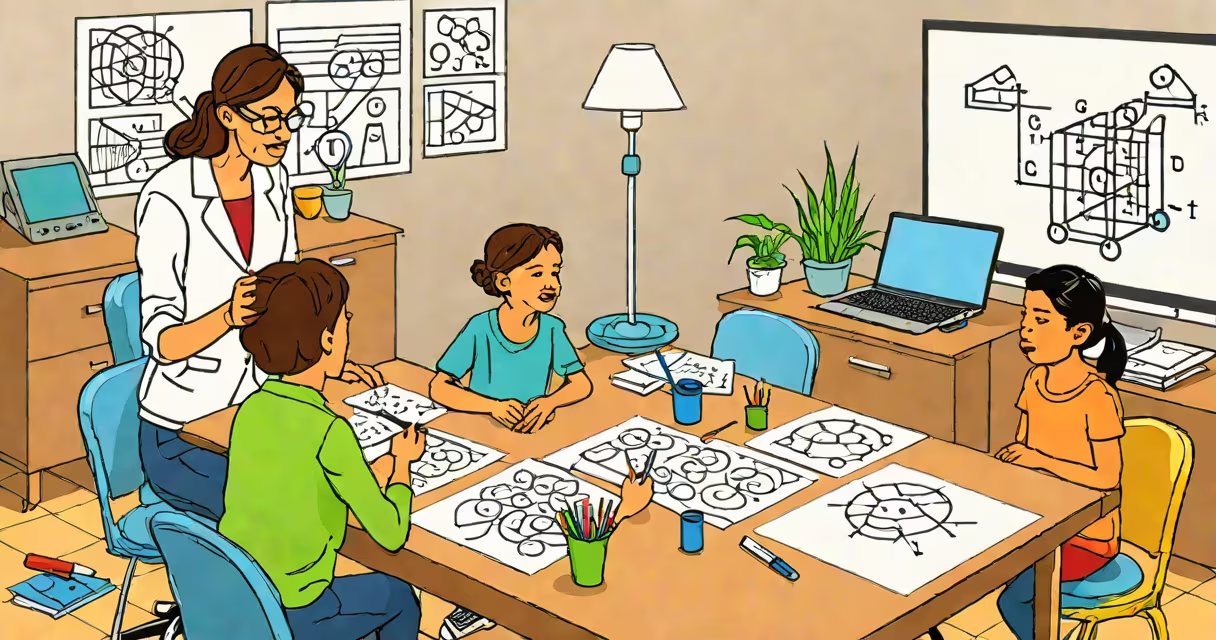
Speech therapy what is it? It's a clinical intervention conducted by licensed speech-language pathologists to diagnose and treat communication disorders, including difficulties with speaking, understanding language, stuttering, and swallowing. These professionals work with people of all ages-from infants with feeding issues to adults recovering from stroke.
Speech therapy addresses both expressive and receptive language challenges. Expressive issues involve difficulty forming words or sentences. Receptive problems show up when someone struggles to understand spoken or written language. Therapy uses structured activities tailored to individual needs, such as sound drills for articulation, sentence-building games for grammar, or breathing techniques for fluency.
Therapists use standardized assessments like the Goldman-Fristoe Test of Articulation or the Clinical Evaluation of Language Fundamentals (CELF) to identify specific deficits. Treatment plans are based on these results and updated regularly. Progress is tracked through weekly goals and periodic re-evaluations.
How speech therapy works
Each session begins with a functional assessment of current abilities. For a child who says "wabbit" instead of "rabbit," the therapist identifies whether the error stems from motor planning, hearing acuity, or phonological awareness. Once the root cause is isolated, targeted strategies are applied.
For example, a 5-year-old with delayed expressive language may struggle to form complete sentences. The therapist introduces visual cue cards showing actions (run, jump, eat) paired with sentence frames ("I am ___"). Over time, the child progresses from single-word responses to full verbal descriptions during play-based tasks.
Adults recovering from aphasia after a stroke often undergo intensive sessions focusing on word retrieval and comprehension. A study published in Neurorehabilitation and Neural Repair found that patients receiving 30 hours of individualized speech therapy regained 60% of lost vocabulary within six weeks-compared to 20% in control groups receiving no treatment.
Types of speech therapy and their applications
Speech therapy isn't one-size-fits-all. Different conditions require distinct approaches. The following table outlines common types, their focus areas, and typical clients:
| Type | Primary Focus | Common Clients | Duration |
|---|---|---|---|
| Articulation Therapy | Correcting mispronounced sounds (e.g., "s" vs. "th") | Children aged 3-8, some adults with brain injury | 8-16 weeks |
| Fluency Therapy | Reducing stuttering frequency and tension | Children and teens with persistent stuttering | 12-24 months |
| Language Intervention | Improving vocabulary, syntax, and narrative skills | Children with developmental delays, autism spectrum disorder | 6-12 months |
| Swallowing Therapy (Dysphagia) | Strengthening oral muscles and coordinating swallow reflex | Stroke survivors, elderly with neurological decline | 4-8 weeks, sometimes ongoing |
One non-obvious distinction: articulation therapy focuses on *how* sounds are produced, while phonological therapy targets *rules* the brain applies to sound patterns. A child who consistently replaces "k" with "t" in words like "cat" may have a phonological delay-not a motor issue. Correcting the underlying rule prevents relapse.
Where and why speech therapy is used
Speech therapy occurs in schools, hospitals, private clinics, and homes. In educational settings, it's part of special education services under the Individuals with Disabilities Education Act (IDEA). Schools provide free evaluations and interventions for students with documented communication delays.
In healthcare, speech therapists collaborate with neurologists, physical therapists, and occupational therapists. After a traumatic brain injury, a patient may lose the ability to name objects despite intact memory. This condition-anomia-is treated through naming drills, picture association, and context cues. A 2021 review in Frontiers in Neurology confirmed that multidisciplinary rehabilitation teams improved outcomes by 44% compared to isolated therapy.
I once observed a session with a 7-year-old boy diagnosed with childhood apraxia of speech (CAS). He could say "mama" but couldn't produce "daddy" even after repeated attempts. The therapist used tactile cues-placing his hand on his jaw-and slow-motion modeling. Within four months, he formed multi-syllabic words independently. His mother reported he now initiates conversations at home, something she hadn't seen in years.
Common misconceptions and clarifications
Speech therapy what is it? Not just "fixing bad accents." Accent reduction is a subset of speech therapy, but most sessions don't aim to erase regional dialects. Instead, they ensure clarity in professional or academic environments. A person from the American South may speak with a drawl but communicate effectively. Therapy doesn't demand linguistic conformity-it promotes intelligibility.
Another myth: speech therapy only helps kids. Adults with Parkinson's disease, multiple sclerosis, or post-stroke aphasia benefit. The National Institute on Deafness and Other Communication Disorders (NIDCD) reports that 1 in 5 Americans will experience a communication disorder at some point in life. Early intervention improves long-term independence.
Some confuse speech therapy with tutoring. While both involve repetition and feedback, tutoring focuses on academic content. Speech therapy targets neuromotor coordination, auditory processing, and social pragmatics. A student struggling to explain math concepts aloud may need speech therapy, not math help.
Speech therapy what is it? It's a science-backed, individualized process that restores or enhances communication. Whether helping a toddler say "bottle" or enabling a stroke survivor to ask for water, it builds bridges between mind and expression.