
What Is Paramagnetism
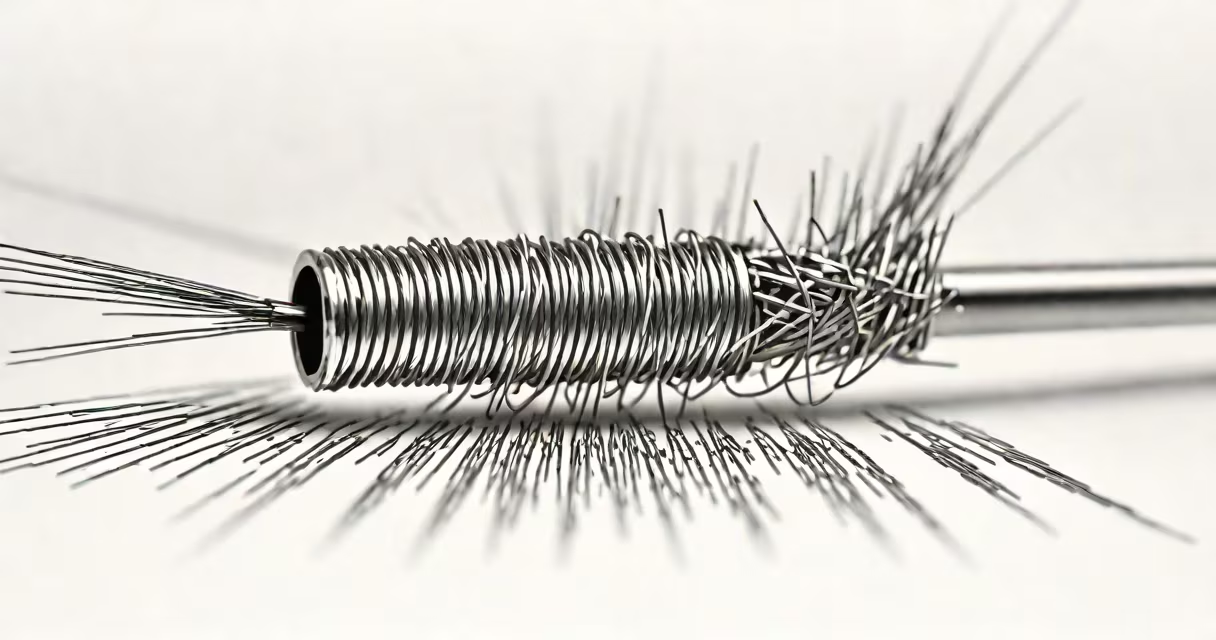
Paramagnetism is a form of magnetism where certain materials are weakly attracted to external magnetic fields due to the presence of unpaired electrons in their atoms. This effect disappears when the external field is removed. Materials like aluminum, oxygen, and many transition metals exhibit paramagnetism.
When exposed to a magnetic field, unpaired electrons align their spins with the field direction, creating a net magnetic moment. This alignment is temporary and only occurs while the field is applied. The strength of the attraction is proportional to the number of unpaired electrons and inversely proportional to temperature-higher temperatures disrupt alignment.
Unlike ferromagnetic materials such as iron, which maintain magnetization after the field is removed, paramagnetic substances lose their magnetic properties instantly when the field is gone. This behavior contrasts sharply with diamagnetic materials, which repel magnetic fields slightly due to induced electron currents.
How It Works
At the atomic level, electrons possess intrinsic spin and orbital angular momentum, both contributing to magnetic moments. In most atoms, electrons pair up with opposite spins, canceling out their magnetic effects. But in atoms with odd numbers of electrons or incomplete electron shells, some electrons remain unpaired.
These unpaired electrons act like tiny magnets. When a material containing such atoms is placed in a magnetic field, the electron spins tend to align with the field. This alignment creates a net magnetic dipole moment in the direction of the field, resulting in weak attraction.
The degree of alignment depends on the balance between thermal motion and magnetic energy. At higher temperatures, random thermal agitation disrupts alignment. As temperature decreases, alignment improves. This inverse relationship is described by Curie's Law: magnetic susceptibility is inversely proportional to absolute temperature.
Types and Examples
Materials exhibiting paramagnetism fall into distinct categories based on their electronic structure:
| Type | Electron Configuration | Examples | Key Behavior |
|---|---|---|---|
| Free ions | Unpaired d or f electrons | Cu²⁺, Mn²⁺, Gd³⁺ | Strong paramagnetism; common in lanthanides |
| Metals | Delocalized unpaired electrons | Aluminum, platinum, lithium | Weak attraction; measurable only with sensitive instruments |
| Molecular gases | Odd number of electrons | Oxygen (O₂), nitric oxide (NO) | O₂ is the only stable diatomic gas that is paramagnetic |
Oxygen (O₂) is a well-known example. Despite being a diatomic molecule with a double bond, it has two unpaired electrons in its antibonding π orbitals. This makes liquid oxygen visibly attracted to a magnetic field-a phenomenon visible in lab demonstrations using strong neodymium magnets.
Another example is gadolinium (Gd), a rare earth element with seven unpaired electrons in its 4f shell. Its high magnetic susceptibility makes it useful in MRI contrast agents, where it enhances image clarity by altering local magnetic fields.
Common Misconceptions
Many assume all metals are magnetic. That's false. Iron, nickel, and cobalt are ferromagnetic. Aluminum, copper, and gold are not. Aluminum is paramagnetic but so weakly that everyday magnets don't detect it. Only specialized equipment like SQUID magnetometers can measure its response.
Some confuse paramagnetism with ferromagnetism because both involve attraction to magnets. But ferromagnets retain magnetization and can become permanent magnets. Paramagnets do not. A piece of aluminum won't stick to your fridge door, even though it's technically attracted to magnetic fields.
A less obvious error is assuming that all materials with unpaired electrons are strongly paramagnetic. The strength varies widely. For example, manganese(II) sulfate shows strong paramagnetic behavior, while titanium(III) chloride shows much weaker effects due to crystal field interactions that reduce effective magnetic moments.
Real-World Applications
Paramagnetism enables techniques in scientific research and medical imaging. Electron paramagnetic resonance (EPR) spectroscopy detects unpaired electrons in radicals and transition metal complexes. It's used to study reaction mechanisms in chemistry and protein structures in biology.
In medicine, gadolinium-based contrast agents are injected during MRI scans. These compounds are paramagnetic and distort the local magnetic field, increasing signal differences between tissues. This improves lesion detection in brain and spinal imaging.
I once observed a demonstration using liquid nitrogen-cooled oxygen. When poured between the poles of a strong electromagnet, the oxygen formed a visible bridge, suspended by magnetic forces. The experiment showed how cooling reduces thermal disruption, enhancing paramagnetic alignment-even in a gas.
Another application is in magnetic separation. In mineral processing, paramagnetic ores like ilmenite (FeTiO₃) can be separated from non-magnetic gangue using high-gradient magnetic fields. This method is efficient and avoids chemical reagents.
Distinctions from Related Phenomena
Paramagnetism differs from diamagnetism and ferromagnetism in origin and magnitude:
- Diamagnetism: Present in all materials but usually masked. Arises from induced electron currents opposing the applied field. It's weak and independent of temperature. Water and bismuth are strongly diamagnetic.
- Ferromagnetism: Strong, persistent magnetization due to aligned spins in domains. Occurs below a critical temperature (Curie point). Iron becomes paramagnetic above 770°C.
- Antiferromagnetism: Neighboring spins align in opposite directions, canceling net magnetization. Observed in MnO and FeO.
- Spin glass: Frustrated systems where spins freeze in disordered configurations. Not a standard magnetic phase.
Paramagnetism is also distinct from superparamagnetism, a phenomenon seen in nanoparticles. These particles behave paramagnetically at room temperature but can lock into magnetized states when cooled, making them useful in data storage and targeted drug delivery.
According to the National Institute of Standards and Technology (NIST), paramagnetic susceptibility values are typically on the order of 10⁻⁶ to 10⁻⁴ SI units, compared to ferromagnetic susceptibilities exceeding 10³. This scale difference explains why paramagnetism is often overlooked in daily life.
As confirmed by the American Physical Society, the magnetic moment of a single electron is approximately 9.27 × 10⁻²⁴ J/T (Bohr magneton). This value underpins calculations of paramagnetic response in materials.
Understanding what is paramagnetism clarifies how subtle quantum effects manifest in macroscopic behavior. It's not just a classroom concept-it powers technologies from medical diagnostics to materials science.