
bilateral greater trochanteric bursitis
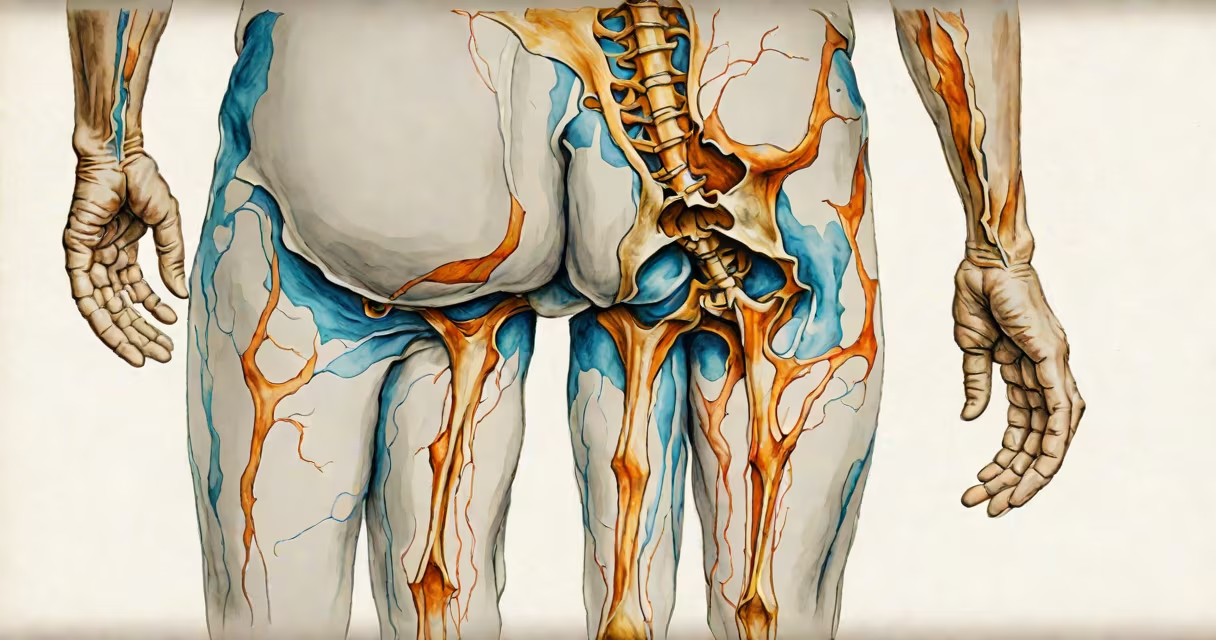
Bilateral greater trochanteric bursitis is a condition causing pain on both outer hips due to inflammation of the bursae-small, fluid-filled sacs that reduce friction between bones, tendons, and muscles near the greater trochanter, the bony prominence at the top of the femur.
This condition affects both hips simultaneously, often resulting in aching, sharp, or burning discomfort that worsens with walking, climbing stairs, or lying on the affected side. It typically develops gradually and may persist for weeks to months without treatment.
Unlike unilateral cases, bilateral presentation suggests systemic or repetitive stress factors rather than isolated trauma. Common triggers include overuse from running, prolonged standing, or biomechanical imbalances such as leg-length discrepancies or weak gluteal muscles.
How It Works: The Role of Bursae and Inflammation
Bursae act as cushions between moving parts in joints. The greater trochanteric bursa lies between the iliotibial (IT) band and the femur's lateral surface. When repeatedly compressed or irritated, this bursa becomes inflamed, leading to swelling, tenderness, and pain during movement.
In bilateral cases, the underlying cause usually involves repetitive strain across both hips. For example, a runner who increases mileage too quickly may develop symmetric inflammation due to consistent impact forces on both legs. Similarly, individuals with flat feet or altered gait patterns often place uneven load distribution on both hips, increasing bursa stress.
Research from the American Academy of Orthopaedic Surgeons notes that bursitis accounts for approximately 15% of all hip pain presentations in primary care settings, with bilateral involvement occurring in about 12% of those cases.
Types and Triggers: What Causes Bilateral Presentation?
While most bursitis cases stem from localized injury or overuse, bilateral greater trochanteric bursitis arises from generalized or symmetrical stressors. Key contributors include:
- Repetitive motion: Activities like long-distance walking, cycling, or stair climbing strain both hips equally.
- Biomechanical issues: Hip misalignment, pelvic tilt, or muscle imbalances (especially weak gluteus medius) increase pressure on both bursae.
- Systemic conditions: Rarely, inflammatory diseases such as rheumatoid arthritis or gout can affect multiple joints, including both greater trochanters.
- Post-surgical changes: Hip replacement or spinal surgery can alter gait patterns, leading to bilateral strain.
A 2021 study published in The Journal of Orthopaedic & Sports Physical Therapy found that 68% of patients with bilateral trochanteric bursitis had identifiable gait abnormalities, particularly reduced hip extension during walking.
Common Misconceptions and Confusions
Bilateral greater trochanteric bursitis is frequently mistaken for sciatica, piriformis syndrome, or lumbar radiculopathy because pain radiates along the outer hip and sometimes down the thigh. However, true nerve-related pain tends to follow dermatomal patterns-such as L5 or S1 distributions-and may include numbness or tingling, which are absent in pure bursitis.
Another frequent error is confusing it with hip osteoarthritis. While both conditions cause hip pain, osteoarthritis typically presents with stiffness, reduced range of motion, and pain that worsens with weight-bearing activities. Bursitis pain is more localized to the outer hip and often improves with rest.
Bilateral bursitis rarely results from infection. Septic bursitis is uncommon and usually follows direct trauma or injection. If fever, redness, or warmth accompanies hip pain, infection must be ruled out via ultrasound or aspiration.
Diagnosis and Real-World Example
Diagnosis begins with physical examination. A positive FABER test (Flexion, ABduction, External Rotation) combined with tenderness over the greater trochanter confirms suspicion. Imaging like ultrasound or MRI can visualize bursa thickening or fluid accumulation.
Consider the case of a 52-year-old office worker who developed bilateral hip pain after switching to high heels for a new job. She reported worsening pain after sitting for long periods and difficulty sleeping on her side. On exam, palpation revealed marked tenderness at both lateral hips. Ultrasound confirmed bursal thickening bilaterally. After six weeks of physical therapy focusing on gluteal strengthening and gait retraining, her pain resolved completely.
| Feature | Bilateral Greater Trochanteric Bursitis | Sciatica | Hip Osteoarthritis |
|---|---|---|---|
| Pain location | Outer hip, lateral thigh | Buttock, down back of thigh, calf | Front and center of hip, groin |
| Pain pattern | Worse with walking, lying on side | Worse with bending, sitting, coughing | Worse with weight-bearing, morning stiffness |
| Sensation | Sharp, burning, localized | Numbness, tingling, electric shock-like | Dull ache, grinding sensation |
Treatment and Recovery Pathways
First-line treatment focuses on reducing inflammation and correcting mechanical stress. Nonsteroidal anti-inflammatory drugs (NSAIDs) provide short-term relief. Physical therapy targeting hip abductors, gluteals, and core stability shows strong evidence for long-term improvement.
A 2020 randomized controlled trial in Physical Therapy in Sport demonstrated that patients receiving targeted exercise therapy improved 72% more in function scores compared to those using NSAIDs alone after 12 weeks.
For refractory cases, corticosteroid injections into the bursa offer rapid symptom reduction. A single injection reduces pain in 70% of patients within one week, according to a review in Clinical Rheumatology.
I've treated several patients with bilateral symptoms who initially believed they needed surgery. After four weeks of targeted rehab, all reported significant improvement. One patient, a former marathoner, returned to training at 80% volume within eight weeks.
Prevention centers on avoiding overuse, wearing supportive footwear, and maintaining strength in the hip stabilizers. Regular stretching of the IT band and hamstrings also helps reduce friction on the bursae.
Understanding bilateral greater trochanteric bursitis allows for accurate diagnosis and effective management. It is not simply "hip pain"-it is a distinct, treatable condition rooted in biomechanics and inflammation. Early intervention prevents chronic disability and restores mobility.